

A beautiful appliqué motif can stop a quilter in their tracks. You may love the design, but still wonder whether to fuse it, stitch it by hand, cut wool, or turn it into a full quilt. The best patterns for appliqué depend on your preferred technique, available time, project size, and desired finish.
TL;DR: Choose pre-fused shapes when speed matters, a digital PDF when you want to start immediately, or a wool pattern when portable hand stitching sounds relaxing. This guide compares seven trusted appliqué sources, from seasonal kits and free die-based designs to detailed art quilts and beginner-friendly décor. The Fabric Company can supply the precuts, batting, thread, scissors, rotary cutters, and finishing materials you'll need. Shop online or visit Our Springfield, Tennessee showroom to plan your project in person.
A good pattern should tell you more than where to place each shape. It should help you understand the construction method, fabric requirements, layering order, edge finish, and tools. The sources below include kits, free ideas, downloadable PDFs, printed patterns, precut shapes, wool blocks, and complete project inspiration.
1. Shabby Fabrics
Shabby Fabrics is a strong starting point if you want a seasonal appliqué project without spending most of your sewing time tracing and cutting. Its catalog includes original designs for holidays, home décor, wall hangings, and monthly or seasonal mini projects. Many projects use pre-fused, laser-cut appliqué shapes, so the pieces arrive ready for placement and pressing.
That makes this source especially useful for a beginner who wants a polished result without managing a large template set. It also suits gift makers working toward a seasonal deadline. Designs include cotton and wool options, with motifs that work well on door décor, table accents, and small wall quilts.
Best fit for fast seasonal projects
The main trade-off is cost. A laser-cut kit includes preparation work that you'd otherwise do yourself, so it can cost more than a pattern-only project. Stock can also change, especially for seasonal series, which means a favorite holiday design may not remain available indefinitely.
Before pressing any fusible pieces, confirm the adhesive instructions and test the iron temperature on a fabric scrap. A general fusible interfacing guide for appliqué can help you understand how the adhesive changes the handling of cotton shapes.
Practical rule: Pre-fused pieces save cutting time, but they don't remove the need for careful placement. Use the layout diagram before you press anything permanently.
For supplies, choose a stable background cotton, coordinating thread, a small pair of sharp scissors for trimming loose fibers, and low-loft batting if the finished piece will become a wall quilt. The Fabric Company's online shop and Our Springfield, Tennessee showroom are useful places to compare background fabrics, precuts, batting, and finishing notions in one visit.
2. Pine Needles by McKenna Ryan
Pine Needles by McKenna Ryan is the better choice when you want appliqué to look like a layered outdoor scene or an art quilt. The designs feature subjects such as wildlife, coastal scenes, Northwoods imagery, flowers, and holiday settings. Instead of a single simple motif, many projects build a complete picture from multiple fabric shapes.
The laser-cut kits include pre-cut, pre-fused pieces, which reduces the preparation burden without making the design feel basic. Downloadable patterns also provide immediate access when you're ready to begin with your own fabric. This combination makes the source appealing to intermediate makers who enjoy detailed construction but don't want to cut every small shape by hand.
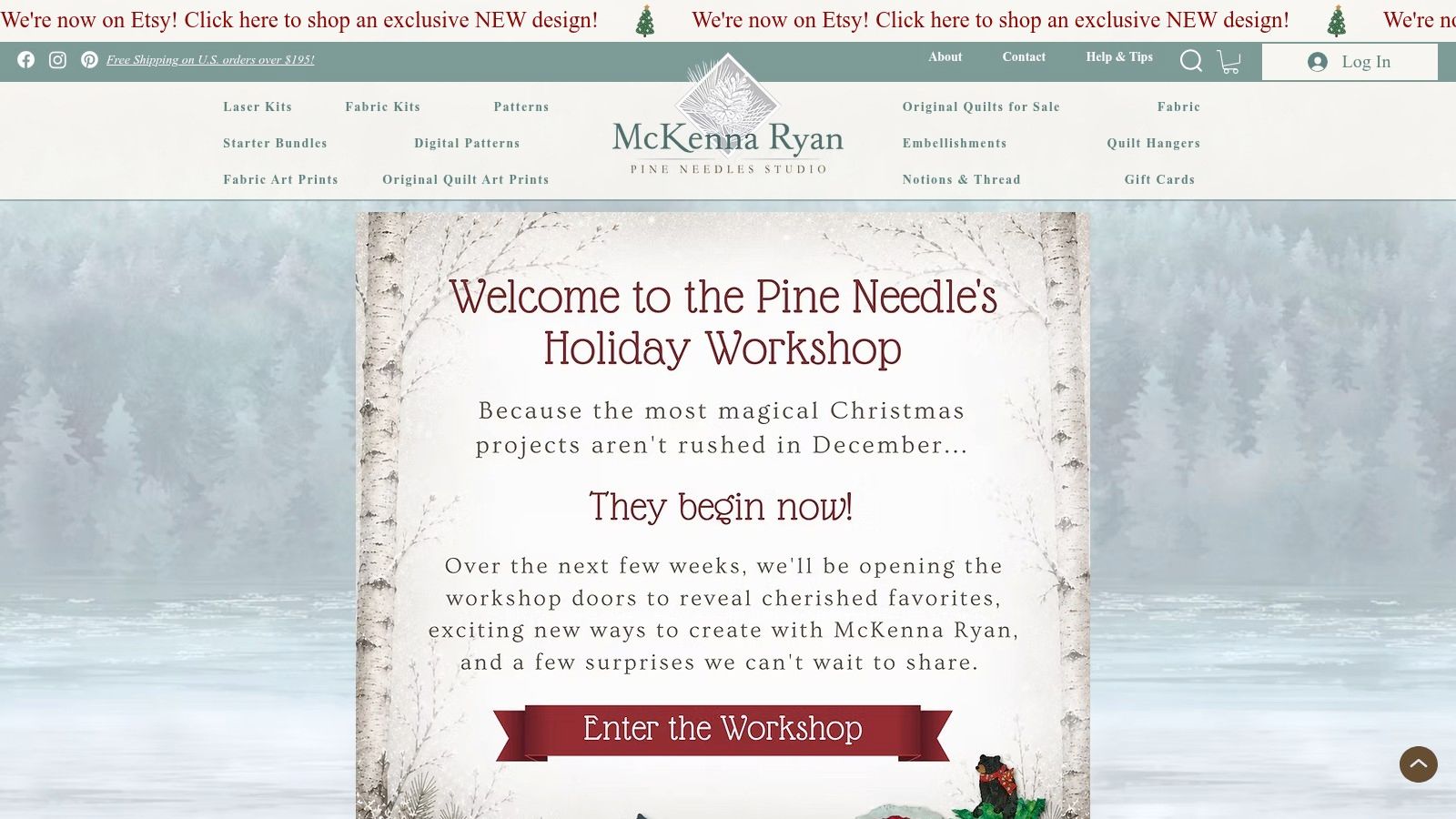
Pine Needles by McKenna Ryan patterns are suited to layered holiday and nature-themed appliqué projects.
Plan the layering order first
Complex appliqué rewards organization. Sort pieces by color or placement, then identify which shapes sit underneath others. Keep the pattern diagram visible as you work so a branch, animal feature, or background layer doesn't end up out of sequence.
A machine appliqué project may use zigzag or satin stitching around fused pieces. This appliqué quilt tutorial explains the broader workflow, including the importance of transferring the design to the right side of the background fabric and choosing a consistent edge finish.
Pine Needles projects can require more patience than a small raw-edge wall hanging. Full quilt kits may also be a larger investment, and limited-run kits can sell out. If you prefer to control the budget, compare the downloadable pattern with the kit and use stash fabrics, Fat Quarters, or coordinated precuts.
A good supply plan includes fusible web if you're working from a pattern, a pressing cloth, sharp fabric scissors, a fine-point marking tool, matching or invisible thread, and batting with enough loft to support the finished art quilt without overwhelming the appliqué.
3. Laundry Basket Quilts
Laundry Basket Quilts by Edyta Sitar gives stash builders plenty of room to choose. Its appliqué catalog includes floral designs, baskets, butterflies, and seasonal motifs, with both printed and PDF formats available. Matching precut appliqué shape packs, including Silhouettes, Snippets, and Expressions, can simplify projects that use repeated or intricate pieces.
This source works well for quilters who want a traditional look but don't necessarily want to create every template from scratch. You can select a printed pattern for a slower, physical planning process or use a PDF when you want to print and begin quickly. The range of designs also makes it easier to choose a project that matches your existing fabric collection.
Laundry Basket Quilts by Edyta Sitar offers traditional motifs for cotton appliqué and stash-friendly quilts.
Match the shape pack to the pattern
Some projects rely on companion shape packs, so read the supply list before buying fabric. A pattern may look suitable for scraps, but the construction can still depend on a specific set of pre-cut silhouettes. That isn't a problem, but it affects your budget and preparation time.
Laundry Basket Quilts is also a useful choice when you want to practice raw-edge appliqué. With this method, the fabric edge remains exposed and is secured with stitching. For needle-turn appliqué, the preparation is different. Pattern pieces should be traced without seam allowances, and directional shapes need to be reversed before tracing, as explained in this needle-turn appliqué guide.
A pretty motif is only half the decision. Check whether the shape pack, edge finish, and layering order suit the way you actually enjoy sewing.
Pair these patterns with cotton yardage, Fat Quarters, or remnants from your stash. Add a fine hand-sewing needle for turned edges, a machine needle and thread for raw-edge stitching, a rotary cutter for background pieces, and low-loft batting for a wall quilt or table project.
4. Piece O' Cake Designs
Piece O' Cake Designs by Becky Goldsmith is particularly helpful for quilters who want instruction alongside inspiration. The catalog includes instant-download ePatterns, books, block-of-the-month downloads, free ePatterns, technique resources, and guidance on color choices. The designs are bright and whimsical, but the teaching approach helps you understand why a particular appliqué method works.
A downloadable pattern is useful when you're ready to sew today. You don't need to wait for a printed pattern to arrive, and you can print the templates as needed. The source also supports both hand and machine appliqué, which makes it easier to compare techniques before committing to a larger quilt.
Piece O' Cake Designs by Becky Goldsmith pairs whimsical appliqué with technique-focused learning.
Choose your edge finish before cutting
Hand appliqué and machine appliqué ask different things from a pattern. Needle-turn shapes need smooth, manageable curves and accurate turning. Fusible machine appliqué depends on clean pressing, stable placement, and a stitch that protects the raw edge.
For a needle-turn project, keep the template line separate from the fabric cutting line because the template itself doesn't include a seam allowance. For a fusible workflow, the design is traced onto the dull side of freezer paper, the shiny side faces the wrong side of the fabric, and the shape is cut with about a ¼-inch allowance, according to this freezer-paper appliqué guide.
Piece O' Cake is a sensible pick for a beginner who wants to learn rather than just assemble. Availability can change as print runs and collections rotate, so a digital version may be the practical choice when a physical book isn't available.
Gather a background fabric, coordinated Fat Quarters, freezer paper or fusible web, a marking pencil, appliqué scissors, thread, and a small iron. If you're turning the project into a quilt, plan the batting and backing before you cut the first shape.
5. Sue Spargo
Sue Spargo is the source to choose when you want wool appliqué, hand embroidery, and surface embellishment in the same project. Her patterns include quilts, bags, small projects, and block designs. Pre-cut, studio-dyed wool kits make it easier to begin with coordinated colors, while books, classes, threads, and educational resources support the slower rhythm of hand stitching.
Wool appliqué has a different personality from cotton raw-edge appliqué. The fabric doesn't fray in the same way, so you can focus on blanket stitch, embroidery details, layered texture, and decorative thread choices. That makes these projects well suited to portable stitching. A block can travel in a project bag, then return to your sewing table when you have time.
Best for textured slow stitching
Sue Spargo patterns may not suit a maker who wants a cotton-only quilt or a fast machine finish. Specialized templates and bundles can also cost more than a simple pattern, especially when they include wool, threads, or embellishments. The reward is a project with tactile depth and many opportunities to build hand-stitching skills.
Use the pattern's construction method as your supply guide. You may need wool scraps or a pre-cut block kit, embroidery needles, perle cotton, embroidery scissors, pins, and a small hoop. Cotton batting can support a finished wall piece, while a firm stabilizer may be more useful for a bag or small.
For cotton projects, compare the different role of fusible web with wool appliqué in this appliqué fusible-interfacing tutorial. The method you choose affects the tools, stitch style, and amount of pressing required.
Best seasonal use: Wool flowers, birds, folk-art motifs, and holiday ornaments can move from a portable handwork project to a finished gift or wall hanging.
6. AccuQuilt
AccuQuilt is a practical choice for budget-conscious makers who want free appliqué patterns and consistent shapes. Its pattern library includes downloadable designs with cutting information, yardage guidance, letters, and motifs designed to work with GO! dies. Subscribers can also receive ongoing free block downloads.
The pattern cost is $0, but the most efficient workflow depends on having an AccuQuilt die cutter and the correct dies. Without those tools, you may need to adapt the templates or cut shapes by hand. That makes this source less universal than a basic PDF, but very efficient for quilters who already use a die-based system.
AccuQuilt patterns are designed around consistent die-cut shapes for fusible and raw-edge appliqué.
Good for repeated blocks and group sewing
Die-cut shapes are useful when you need several matching motifs. They can support a charity quilt group, a class, or a maker who wants repeatable cutting without measuring each shape individually. Pair the pattern with fusible web, then press and stitch the shapes using the edge finish recommended for your project.
A fusible product such as Steam-A-Seam 2 Lite can be part of that preparation, but always follow the product and pattern directions. Heat control matters. One beginner-focused guide recommends medium-high heat with no steam and pressing each shape for 5 to 8 seconds during a machine or fusible appliqué workflow. Read the full beginner appliqué pressing guidance before applying heat to your fabric.
For supplies, consider 2.5-inch strips, Charm Packs, Layer Cakes, or Fat Quarters for the surrounding quilt blocks. Add a rotary cutter for background pieces, a cutting mat, appliqué scissors, premium thread, batting, and a 108-inch backing if the project grows into a large quilt.
7. Art to Heart
Art to Heart by Nancy Halvorsen is a friendly option for holiday décor, table runners, table toppers, wall hangings, and giftable projects. The catalog includes printed patterns, books, and PDFs organized around seasonal themes. Many designs use approachable motifs that work well with stash fabrics and precuts.
This is a good place to look when you want a project that feels finished without committing to a full bed quilt. A table runner can showcase seasonal fabric, while a small wall hanging can become a repeatable gift idea. Coordinated motifs also make it easier to build a collection of décor pieces over time.
Art to Heart by Nancy Halvorsen focuses on approachable seasonal appliqué for home décor and gifts.
Use precuts to simplify color planning
Fat Quarters provide enough variety for many small appliqué motifs without requiring a large yardage purchase. Jelly Rolls and 2.5-inch strips can add borders or pieced backgrounds, while Layer Cakes can help coordinate a larger project. Before cutting, separate your light, medium, and dark values so the appliqué remains visible against the background.
For raw-edge machine appliqué, fuse each shape carefully, then test the stitch on a scrap sandwich. For a large table runner or wall quilt, choose batting that gives body without making the piece difficult to quilt. A pattern may also call for binding, embroidery thread, buttons, or hanging hardware.
The appliqué quilting resource from The Fabric Company can help you think through the difference between the motif, the background, the batting, and the finishing stage. If you're local, Our Springfield, Tennessee showroom is a practical place to compare seasonal cottons and notions before choosing a final palette.
Best seasonal use: Choose Art to Heart when the finished project needs to be welcoming, giftable, and easy to display on a table, door, or wall.
Appliqué Pattern Comparison: 7 Designers & Brands
| Item | Implementation Complexity 🔄 | Resource Requirements ⚡ | Expected Outcomes ⭐📊 | Ideal Use Cases 💡 | Key Advantages |
|---|---|---|---|---|---|
| Shabby Fabrics | Low, pre-fused, pre-cut; minimal prep | Low, kits include shapes; basic tools | High, fast, polished seasonal projects | Beginners; quick gifts; seasonal décor | Pre-fused laser-cut shapes; large seasonal selection; frequent promotions |
| Pine Needles by McKenna Ryan | Medium–High, intricate, multi-layered | Medium, detailed laser-cut kits or PDFs; skill helpful | Very High, dramatic art-quilt results | Intermediate makers seeking landscape/animal appliqué | Detailed designs; clear step-by-step instructions; downloadable kits |
| Laundry Basket Quilts (Edyta Sitar) | Medium, classic layouts; some dependency on shape packs | Low–Medium, print/PDF patterns; optional pre-cut packs | High, well-finished traditional and seasonal pieces | Stash builders; traditional appliqué and seasonal projects | Large catalog (90+); well-written instructions; matching shape packs |
| Piece O' Cake Designs (Becky Goldsmith) | Low–Medium, whimsical, approachable techniques | Low, instant ePatterns, BOMs, educational aids | Good, quick starts and reliable results | Beginners; classes; learning color and technique | Immediate PDFs; strong teaching resources and freebies |
| Sue Spargo (Folk‑Art Quilts) | Medium, hand-appliqué + embroidery focus | Medium, studio-dyed wool kits and embroidery supplies | High, richly textured, decorative pieces | Slow-stitching, hand-embroidery, wool projects | Pre-cut wool kits; embroidery education; strong community |
| AccuQuilt | Low with tools / Medium without, optimized for die use | Low, free patterns; best paired with die-cutters (hardware needed) | High, consistent shapes, efficient batch production | Batch sewing; die users; budget-conscious makers | Free die-optimized patterns; consistent, fast shape production |
| Art to Heart (Nancy Halvorsen) | Low, approachable, gift-sized motifs | Low, PDFs and printed patterns; stash-friendly | Good, quick giftable home décor and table pieces | Quick gifts; seasonal décor; beginners | Consistent approachable style; fast PDF access; themed seasonal designs |
What You'll Need
Your supply list should follow the pattern's construction method, not just its cover image. A pre-fused kit needs fewer preparation materials than a needle-turn project, while a wool block calls for embroidery threads and hand-stitching tools rather than fusible web.
Start with fabric that matches the scale of the design. The Fabric Company carries Precuts and Fat Quarters, including options that can supply appliqué shapes, pieced backgrounds, borders, and binding. Look for Jelly Rolls, 2.5-inch strips, Charm Packs, Layer Cakes, and one-yard bundles when you want coordinated color without cutting a large amount of yardage.
A practical appliqué supply plan includes:
- Background fabric: Choose quilting cotton with enough body to support the shapes and stitching.
- Appliqué fabric: Use Fat Quarters, precuts, wool, remnants, or pieces from your stash, depending on the pattern.
- Batting: Select low-loft batting for wall hangings and table décor, or a suitable quilt batting for a larger project.
- Backing: Consider a 108-inch quilt backing when you're making a wide quilt and want to avoid piecing the back.
- Thread: Keep premium hand and machine threads on hand in colors that blend with the appliqué or create intentional contrast.
- Cutting tools: Use sharp scissors for small shapes and a rotary cutter, ruler, and mat for background pieces and borders.
- Pressing tools: An iron, pressing surface, and pressing cloth help you control fusible pieces without shifting them.
- Finishing supplies: Plan for binding, needles, pins, marking tools, and any hanging hardware named by the pattern.
The Fabric Company also carries Batting and batting rolls, along with sewing notions and equipment from brands such as SINGER, PFAFF, Oliso, and Arrow Sewing. If you work in a studio, buy batting in a package or roll based on how often you make quilts and how much storage space you have.
Turn Inspiration Into a Finished Project
The best pattern isn't always the most detailed or colorful one. It's the one that matches your working style. Choose pre-fused, laser-cut shapes when you want to reduce cutting and move quickly toward a seasonal wall hanging. Choose a digital pattern when immediate access matters and you already have suitable fabric in your stash.
Free die-based designs from AccuQuilt make sense when you want to control pattern costs and already own compatible cutting tools. If you enjoy portable handwork, wool and embroidery from Sue Spargo offer a slower project with texture, layered color, and decorative stitches. For a traditional cotton quilt, compare needle-turn, raw-edge, fusible, and machine satin-stitch directions before you cut.
The most important technical decision is the edge finish. Needle-turn pieces are traced without seam allowances, while freezer-paper workflows use a shiny adhesive side against the wrong side of the fabric and a cutting allowance around the shape. Machine appliqué requires a stable fused piece and a stitch plan that handles curves, corners, and overlapping layers without distortion.
Build the rest of the project around that choice. Use Precuts and Fat Quarters for flexible color options, Jelly Rolls for borders and pieced backgrounds, and 108-inch quilt backings when a larger quilt needs a wide, efficient backing. Add Batting, batting rolls, premium threads, scissors, rotary cutters, and the pressing tools your pattern specifies.
You can shop The Fabric Company online or visit Our Springfield, Tennessee showroom for help comparing fabric weight, loft, thread color, and finishing supplies. For a verified product image, use alt text such as “The Fabric Company cotton precuts, appliqué scissors, batting, and thread arranged beside an appliqué quilt block.” A suitable caption could identify the actual product brand shown, such as Riley Blake Designs or Robert Kaufman, only when that brand is visible in the selected image.
Shop our latest applique collection here. Join The Weekly Thread for more tips and 10% off your first order.
The Fabric Company offers quilting cottons, precuts, batting, 108-inch backings, premium threads, patterns, scissors, rotary cutters, and sewing equipment for appliqué projects of many sizes. Visit The Fabric Company online or stop by Our Springfield, Tennessee showroom to gather the supplies for your next finished piece.