

You're at the kitchen table, scissors in hand, clipping seam allowances while a pile of soft fabric fringe gathers beside the quilt. Then you stop and wonder whether the batting you chose will make the finished rag quilt cozy and flexible, or turn those raw edges into a bulky wrestling match. The best batting for a rag quilt depends first on your fabric combination, then on the warmth, washability, loft, and crinkle you want.
For most projects, choose low-to-medium-loft cotton, polyester, or cotton-polyester batting. Before buying a batt, ask one more important question: does this fabric combination need batting at all?
What a Rag Quilt Asks of Its Batting
A rag quilt doesn't hide its construction. Its exposed seam allowances are clipped and washed until they form a deliberately frayed surface, while batting remains the insulating middle layer, just as it does in a conventional quilt. That difference changes the job batting has to perform. The layer must add comfort without crowding the seams where you'll sew, clip, and wash the quilt repeatedly. Louisiana Folklife's quilt history describes this distinction between rag quilts and conventional quilts and also traces batting through cotton, polyester, wool, and flannel.
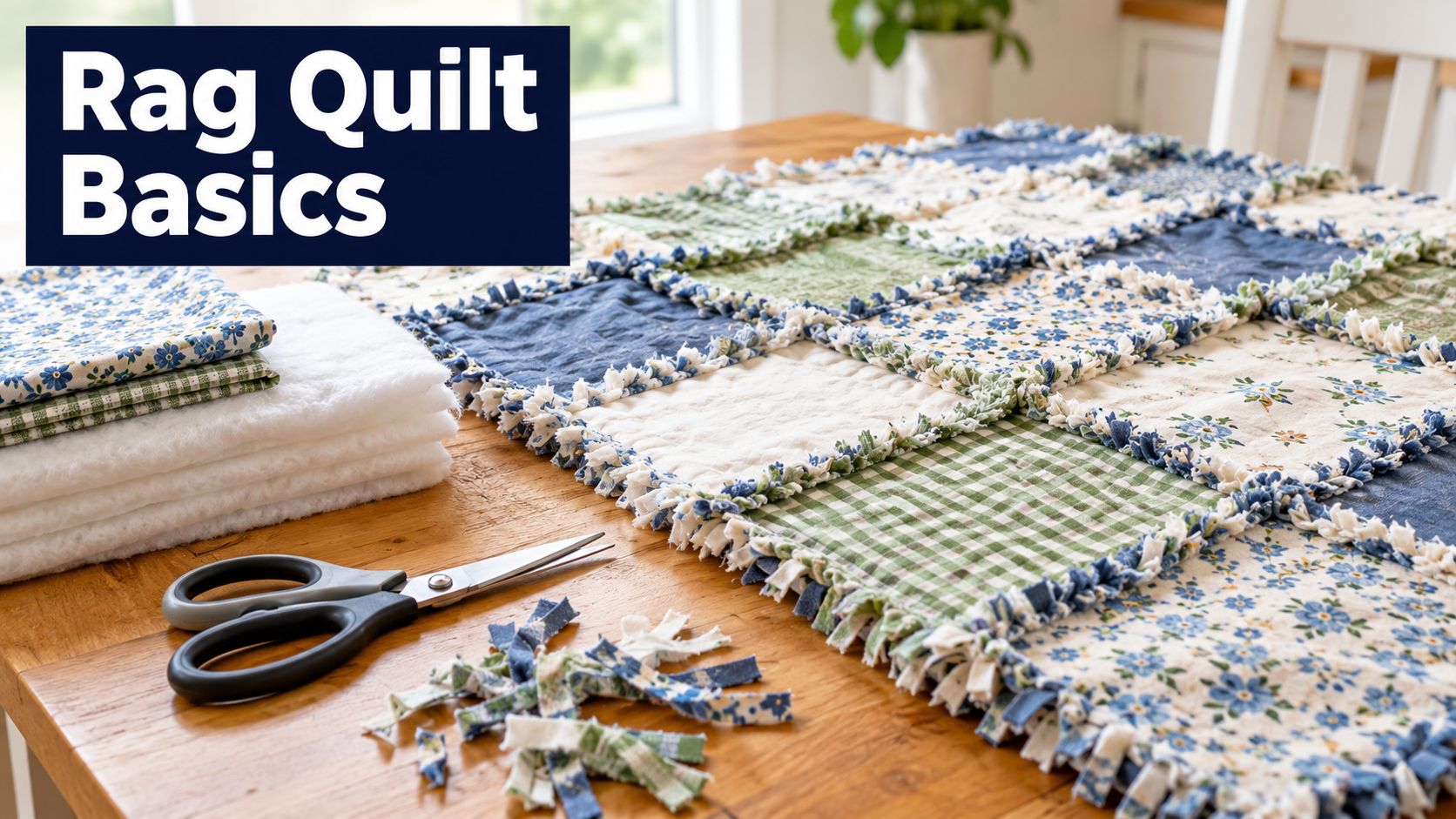
Traditional quilt advice can mislead here. A batt that flattens beautifully under a longarm machine may behave differently in a rag quilt after a hot wash, a tumble dry, and the use of fabric softener sheets. Rag quilts expose more raw edges, contain many seam allowances, and often rely on laundering to create their final texture.
Start with the fabric, not the batt
Hold the fabric layers together before you choose the middle layer. Heavy denim with flannel already has warmth and body. Several layers of flannel may provide enough comfort for a lightweight throw. Quilting cotton paired with a light flannel backing may need a thin batt if you want more insulation, but a lofty batt can make the seams hard to feed under a domestic machine.
A practical shelf-side check looks like this:
- Heavy fabric combination: Test the project without batting first.
- Lightweight cotton combination: Consider thin cotton or a cotton-poly blend.
- Warm, puffy throw: Choose a controlled polyester loft, but avoid excessive bulk.
- Breathable, crinkled finish: Lean toward low-loft cotton.
You can also review this guide to using quilt batting before layering your squares. The key is to match the batt to the entire sandwich, not just to the word “quilt” on the package.
Practical rule: If the seam allowance already feels thick before stitching, more loft probably won't improve the quilt.
The Four Qualities That Matter Most
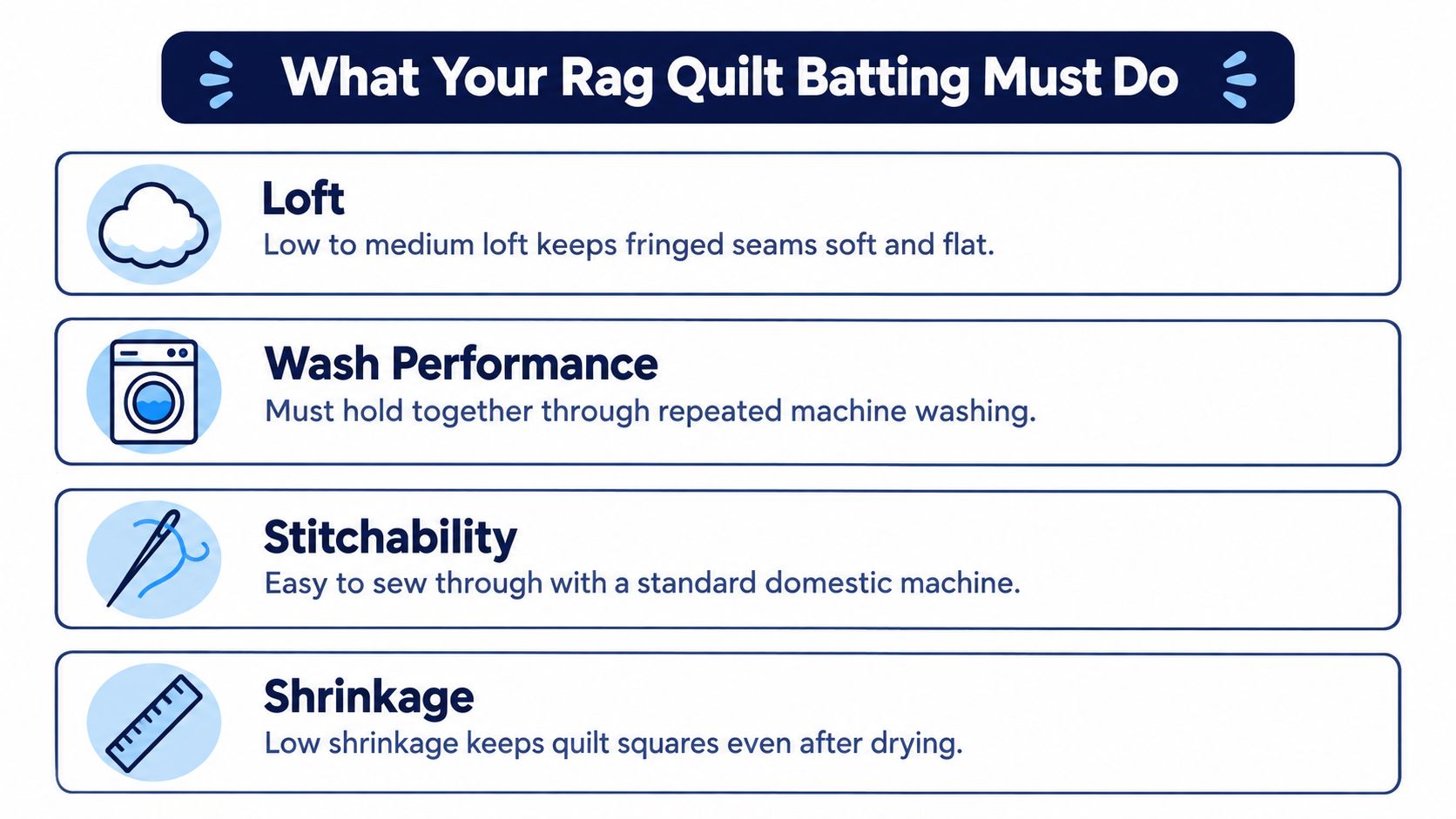
At the batting shelf, four qualities tell you more than a dramatic product description: loft, wash performance, stitchability, and shrinkage. Rag quilts need a middle layer that supports the design without overpowering the fringe.
Loft controls bulk
Low-to-medium loft is the safest starting point. Thin batting gives the quilt warmth while keeping raw-edge seams flexible enough to sew and clip. High-loft polyester can create a puffier appearance, but it also increases the amount of material packed into every exposed seam allowance.
Cotton generally creates a flatter drape. Polyester generally creates more loft and maintains that loft more consistently through washing. Wool offers warmth without the same dense feel as heavy cotton, but it needs more careful care planning.
Wash performance matters twice
Rag quilts are often washed to open the clipped edges and soften the surface. The batt must stay stable while the fabric develops its fringe. Polyester batting is commonly described as lightweight, machine-washable, non-allergenic, and effectively non-shrinking, making it useful when predictable maintenance matters. The SAQA batting article also recommends low-to-medium loft for rag quilts because excessive bulk makes seam allowances harder to sew and clip.
Cotton can settle and shrink, which may be exactly what you want for a puckered finish. It can also pull the fringe unevenly if the fabric and batting respond differently.
Stitchability is a real test
A batt can look wonderful on the roll and still be wrong for your machine. Run a layered sample with your actual top fabric, backing, seam allowance, thread, and needle. Check whether the presser foot feeds smoothly, whether the stitches remain even, and whether the seam opens flat enough for clipping.
This batting selection guide is useful when you're comparing fiber content and loft, but your sample remains the final authority.
Shrinkage can help or hurt
Cotton has the greatest shrinkage among the common batting fibers discussed here, while polyester changes very little. That makes cotton a strong choice for a visibly crinkled, breathable rag quilt, but a less predictable choice when keeping every square aligned is your priority.
Read the label, then test the actual product. Fiber category gives you a direction, not a guarantee of the finished fringe.
When to Skip Batting and Use Flannel Instead
Many batting conversations begin with the assumption that every quilt needs three layers. Rag quilts don't always follow that rule. Their exposed seams, multiple fabric layers, and repeated washing create a fabric-first decision that conventional quilt advice can miss.
Denim and flannel
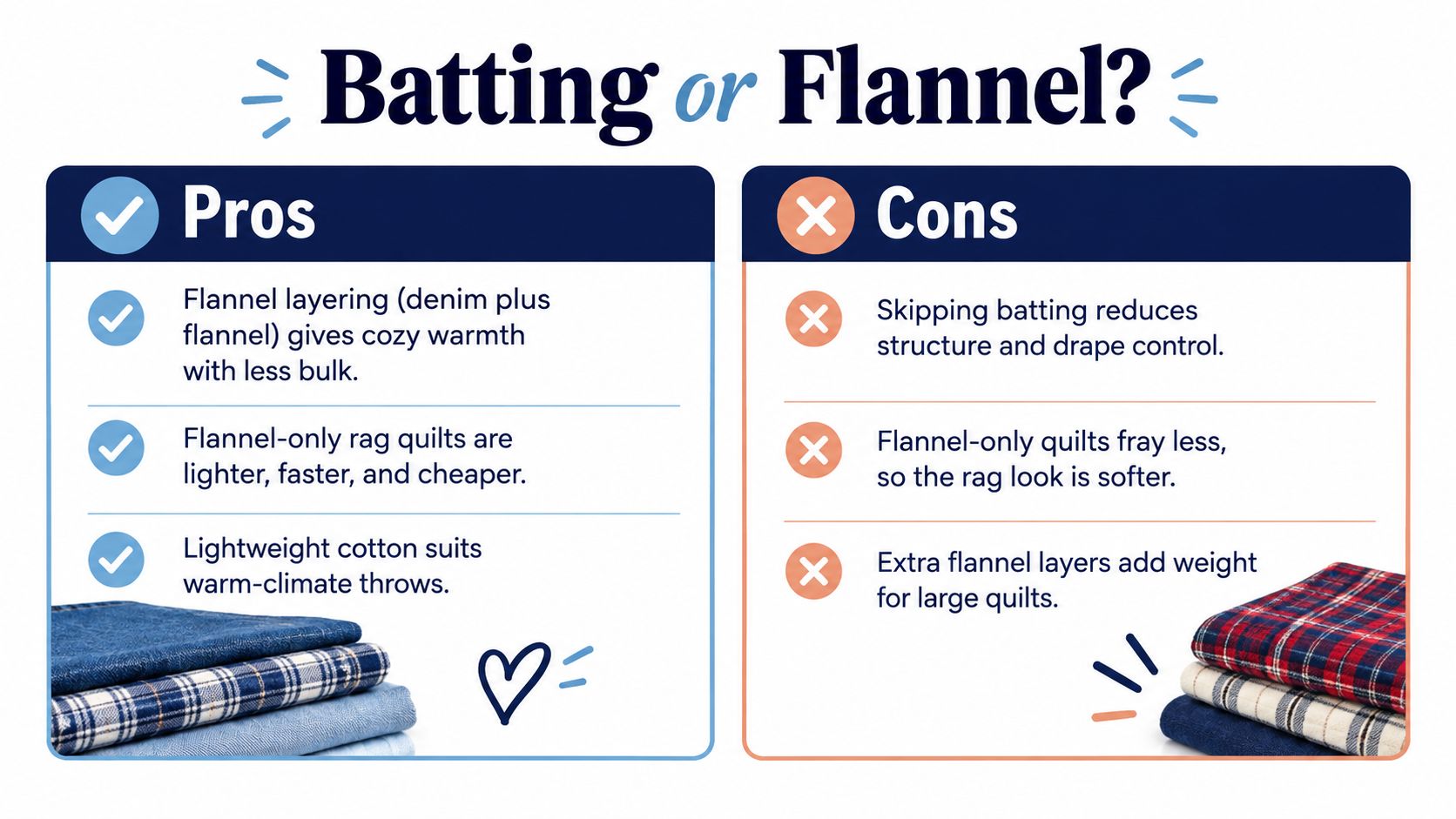
Heavy denim paired with flannel can provide warmth and structure without a separate middle layer. Adding batting to denim can make the quilt excessively heavy and difficult to stitch, a problem highlighted in this rag-quilt construction reference.
That combination works especially well for upcycling projects. Denim supplies weight and durability, while flannel adds softness and a fabric surface that frays naturally. You'll still need to test the seam thickness, especially where several blocks and rows meet.
Flannel-only layers
A flannel-only rag quilt is a practical choice for a lighter blanket, a travel quilt, or a project where cost and manageability matter. Flannel can replace conventional batting when you want a soft middle layer that participates in the frayed look rather than sitting behind it.
The trade-off is drape. Flannel layers can add weight, and a larger quilt may become tiring to handle under a domestic sewing machine. They also won't create the same loft as polyester or wool.
Lightweight cotton combinations
Quilting cotton with a flannel layer can suit a warm-climate throw or a decorative blanket where flexibility matters more than maximum insulation. If the fabric feels thin when stacked, add a low-loft batt. If it already feels substantial, sew a sample without batting first.
Use the flannel backing guide when deciding how flannel will function in your layers. The important question isn't just whether batting is available. It's whether another fabric layer gives you the warmth, structure, and fraying you want.
A useful test: Sew and wash one small sandwich with batting and one with flannel. Compare weight, drape, fringe, and seam bulk before cutting the full quilt.
Cotton vs Polyester vs Wool vs Blends
Rag quilts expose their seams and face repeated laundering, so batting choice depends on the fabric stack as much as the fiber label. Cotton emphasizes breathability and crinkle. Polyester offers steadier dimensions and easier care. Wool adds warmth without a dense hand, while cotton-polyester blends sit between those options.
| Fiber | Loft | Shrinkage | Wash Performance | Best Rag Quilt Use |
|---|---|---|---|---|
| Cotton | Typically flatter | About 3% to 5% after the first wash (Quilt Lab) | Washable, but expect settling and shrinkage | Breathable quilts with pronounced crinkle |
| Polyester | Usually more consistent and loftier | Little or no shrinkage | Machine-washable and dimensionally stable | Baby, charity, and everyday quilts needing easy care |
| Wool | Warm with useful volume | Product-dependent | Check the label and care instructions | Premium throws where warmth matters |
| Cotton-polyester blend | Moderate, balanced loft | Roughly 1% to 3% | More stable than cotton, softer and more breathable than many polyester-only options | Everyday blankets and flexible all-purpose projects |
Cotton for texture
Choose low-loft cotton when you want a lived-in surface and a clear cotton feel. It settles during washing and can strengthen the puckering that gives a rag quilt its character. That texture comes with less dimensional stability, so follow the product's care guidance and test the intended wash settings before committing to the full quilt.
Polyester for dependable maintenance
Polyester suits a quilt that will be washed often. It retains loft more consistently and resists size changes that can shift fringe and block alignment. Independent textile-performance testing reported polyester thermal conductivity of approximately 0.04 W/(m·K) and an air-content ratio of 0.7 in the cited test model. The same comparison found broadly similar insulation performance for polyester and cotton. Review the textile-performance report for its testing context.
Wool for a premium throw
Wool creates a warm, comfortable throw without the dense hand of several heavy fabric layers. Its care requirements make it a better fit for a special-use rag quilt than one washed routinely in a machine, unless the label specifically permits that treatment. The CITYSHEEP throw blanket selection offers useful design references when comparing wool's warmth and drape with the finished feel of a rag quilt.
Blends for the middle ground
A cotton-polyester blend is a practical compromise for everyday projects. Polyester contributes loft and structural resilience; cotton contributes softness and breathability. The cotton content still allows some shrinkage, so treat a blend as more stable than cotton, not completely stable.
For a closer look at batting structures, including scrim and needle-punched cotton, use this guide to types of quilt batting.
Sewing and Finishing Tips for Rag Quilt Batting
Good batting can still produce a frustrating rag quilt if it reaches into the seam allowance. Cut the batt smaller than the fabric so the exposed edges contain fabric, not a thick layer of insulation. One documented method subtracts the seam allowance from both sides. With a 1/2-inch seam allowance, that means reducing the batting square by 1 inch in both length and width. Hello Sewing's rag-quilt instructions illustrates this approach.
Build a cooperative sandwich
Use low-loft cotton, thin polyester, or a restrained cotton-poly blend when your fabric already has body. Keep the batting centered inside the fabric layers, then secure the sandwich with pins or a temporary stitch so it doesn't drift before you sew the block.
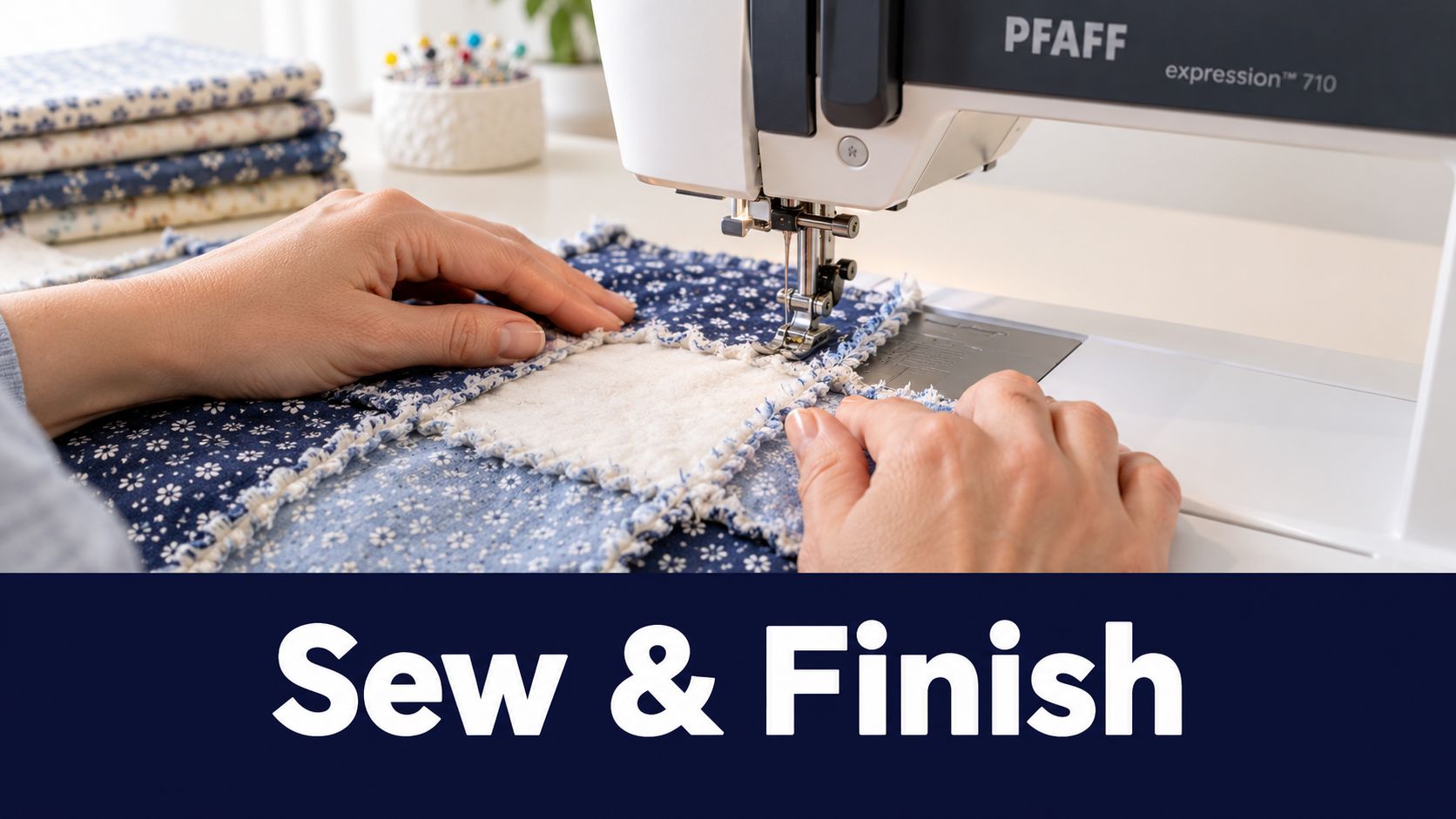
A walking foot helps move multiple layers evenly. A sturdy needle and sharp rag-quilt scissors also make a noticeable difference. If you're using a PFAFF machine, keep the speed controlled as the seam intersections become thicker.
Choose the seam width deliberately
Rag-quilt patterns commonly use seam allowances from 1/2 inch to 1 inch, with the finished fringe affected by that width. A wider allowance provides more fabric to fray, but it also creates more bulk. This documented rag-quilt pattern recommends keeping every clip short of the stitching line.
The construction checklist is simple:
- Sew consistently: Use your chosen seam allowance across blocks and rows.
- Flatten intersections: Press or finger-press thick joins so the machine doesn't climb abruptly.
- Clip carefully: Make clips approximately 1/4 to 1/2 inch apart, stopping before the stitched line.
- Wash and dry deliberately: Let laundering open the fringe, then inspect the seams before using the quilt.
Here's a visual reference for making a quilt sandwich before you begin.
A sample is especially important with wool, high-loft polyester, denim, and layered flannel. If your scissors fight the seam or the machine struggles at each intersection, reduce the loft or remove the batt rather than forcing the construction.
Best Batting Picks for Common Projects
The right choice changes with the project sitting on your cutting table. In Our Springfield, Tennessee showroom, quilters often start with the fabrics they've already selected, then compare batt samples by hand. That approach works better than choosing by fiber label alone.
For a crinkled heirloom rag quilt
Choose a low-loft cotton such as Hobbs Heirloom Cotton when breathability and a pronounced washed texture matter most. It suits a rag quilt made from quilting cotton and flannel, especially when the finished piece is intended to feel soft, relaxed, and visibly handmade.
Plan for cotton's post-wash change. A controlled sample lets you see whether the fringe develops evenly with your fabric, thread, seam width, and dryer setting.
For baby and charity quilts
Hobbs Poly-Down is a practical option when the quilt will face frequent laundering and you want dimensional stability. Polyester batting is lightweight, machine-washable, and effectively non-shrinking according to the product guidance summarized in the verified batting reference. Keep the loft modest so the exposed seams remain easy to clip.
For charity quilting, consistency often matters more than a dramatic crinkle. A thin polyester batt can simplify care instructions and produce a predictable finished size.
For a premium throw
Hobbs Tuscany Wool belongs on the shortlist for a warm throw where fiber feel and insulation matter more than the simplest wash routine. Use it with fabrics that can support its loft without making the seam allowances too dense. Check the care requirements before committing, particularly if the recipient expects routine machine washing.
If you're making a travel quilt, wool may be more warmth than you need. A thinner blend can pack and handle more easily.
For everyday blankets
An 80/20 cotton-polyester blend, such as Choice Supreme Batting, gives a useful middle path. The cotton adds softness and breathability, while polyester improves loft retention and structural resilience. Choice Supreme is available as a 15-yard roll, which can make sense for a studio, guild, or maker cutting several projects.
Browse batting packages and rolls when you need a single project quantity or a larger continuous supply. Our Springfield, Tennessee showroom can also help you compare a roll against packaged batting when storage and cutting space are part of the decision.
For large backing needs, keep 108-inch backings in mind. A wide backing can reduce piecing on larger quilts, although it doesn't replace the need to test the batting and fabric sandwich.
Quick Decision Guide and Common Questions
Choose the batt after weighing the fabric layers, seam bulk, and washing routine.
| Your fabric combination | Start with | Why |
|---|---|---|
| Heavy denim plus flannel | No batting | The fabric layers already provide warmth and structure |
| Quilting cotton plus flannel | Thin cotton or cotton-poly blend | Adds comfort without overwhelming the fringe |
| Lightweight cotton layers | Low-loft cotton or thin polyester | Supplies structure and insulation with manageable bulk |
| Thick flannel layers | Test without batting first | Extra loft may make the quilt heavy |
| Premium throw fabrics | Wool or a controlled blend | Adds warmth while preserving a softer drape |
Does cotton batting ruin the fringe?
Cotton batting can produce the crinkle many rag-quilt makers want, but it also changes finished dimensions during laundering. As the fiber comparison above shows, cotton shrinks roughly 3% to 5% after the first wash, while blends are closer to 1% to 3%, as outlined in Quilt Lab's batting guidance. That difference can pull the fringe unevenly when the fabric layers and batt respond at different rates. Prewashing compatible fabrics and testing the full sandwich gives you better control.
Can wool batting go in a washing machine?
Follow the product label. Wool care varies, so a machine-washable fabric combination does not make every wool batt suitable for machine laundering. Choose polyester or a blend when the recipient needs a simpler routine, and confirm that its care instructions match the intended use.
How should I test a batting?
Make a small sample with the actual fabrics, batt, seam allowance, and clip spacing. Wash and dry it using the settings you expect for the finished quilt. Then check the fringe, seam strength, loft, weight, and drape. This test often reveals that thick flannel or denim needs no batting at all.
Our Springfield, Tennessee showroom carries batting, flannel, quilting cotton, precuts, 2.5-inch strips, Charm Packs, Layer Cakes, and project supplies for side-by-side testing. The Fabric Company also offers batting rolls and 108-inch backings for larger or repeated projects.
Choose a low-to-medium-loft batt, or use flannel instead when the fabrics already provide enough body. Browse the Batting collection at The Fabric Company for project supplies and care options.