

You've found a patriotic fabric panel that looks perfect online, but now the practical questions begin. Will the colors match your border fabric? Is the design right for a lap quilt, wall hanging, or gift? Patriotic fabric panels work best when you choose the recipient, finished use, backing, and care plan before you make the first cut.
Why Patriotic Fabric Panels Deserve a Better Starting Plan
A quilter may begin with a bold flag panel, add the brightest red and blue fabrics in the stash, and only later realize the finished quilt feels too loud for its recipient. Another maker may choose a full flag image for a service-related gift, then worry that the result looks too formal or resembles a casket flag. The panel itself wasn't the problem. The starting plan was too narrow.
Patriotic fabric panels come from a long textile tradition. The American flag was formally adopted in 1777, and its design changed 27 times as states entered the Union. The current 13-stripe, 50-star version has remained unchanged since 1960, making it the longest-running U.S. flag design. Early flags used wool, cotton, linen, or silk, while durable wool bunting became especially important for outdoor flags. Thomasnet's history of American flag manufacturing explains how sewn stripes, blue canton areas, and attached or embroidered stars helped establish the visual language quilters still recognize.
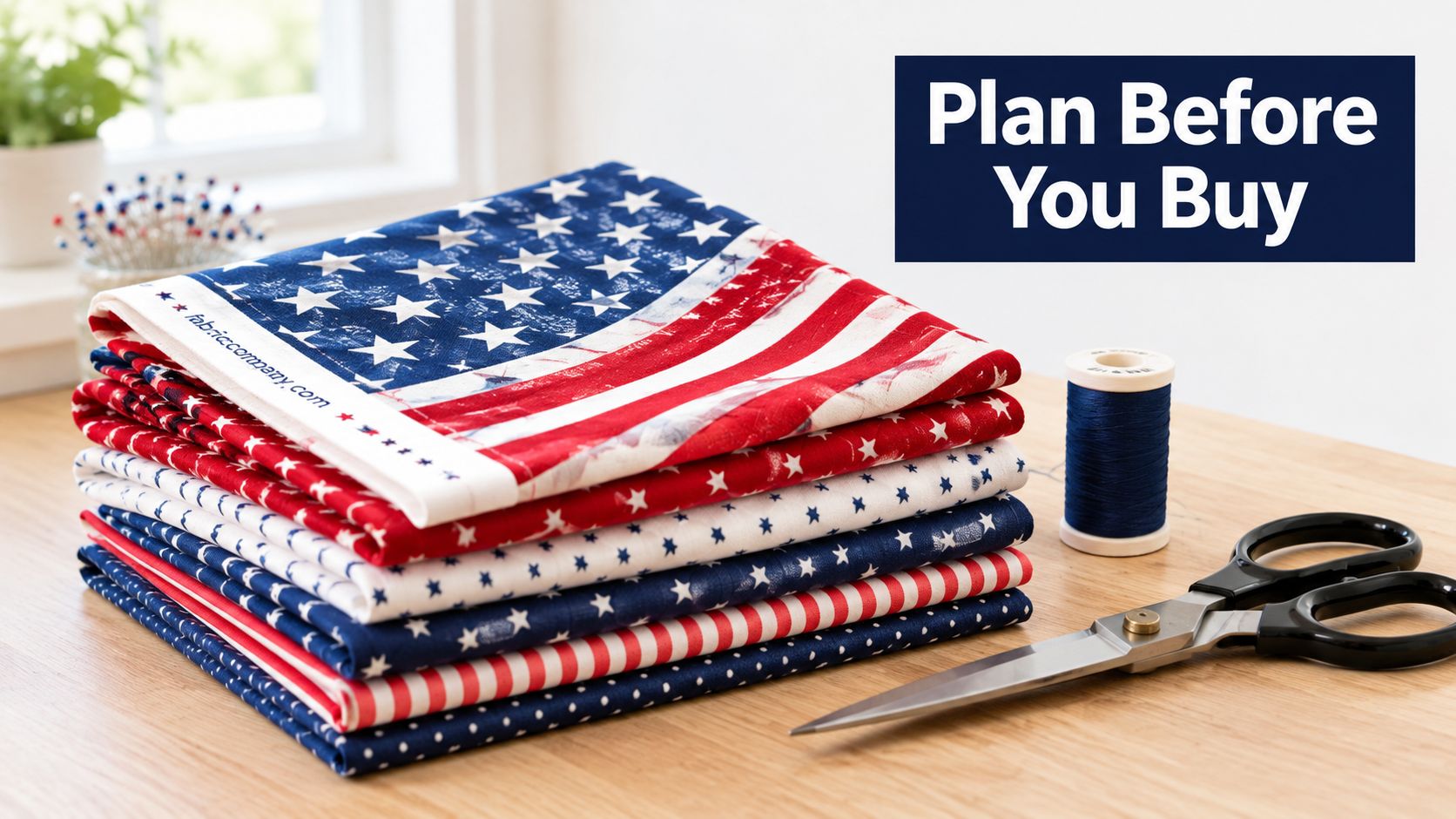
Start with the person and the setting
Before choosing a panel, ask:
- Who will receive it? A veteran, family member, charity recipient, or unknown household may call for different symbolism.
- Where will it be used? A wall hanging can protect a detailed print, while a frequently washed quilt needs durable construction and practical care instructions.
- What feeling should it create? Bold celebration, quiet remembrance, community pride, or farmhouse Americana can all be patriotic without looking alike.
Quilts of Valor guidance notes that patriotic colors are popular but not required. A panel may include additional colors, and the maker should design for the recipient instead of automatically choosing generic flag imagery. Adult-appropriate, quilt-weight 100% cotton is a sound starting point, while juvenile designs, branch-specific imagery, and full-size flag layouts may not suit every service-related gift. See The Fabric Company's guide to choosing quilt fabric before building your fabric pull.
Practical rule: More patriotic isn't always more meaningful. A restrained panel with calm borders can honor the subject better than the boldest flag print in the shop.
A thoughtful panel can also sit comfortably beside other Americana decor. If you're planning a coordinated room display, you may want to browse canvas wall art collections for ideas about scale, color balance, and how much visual weight a central motif should carry.
Standard Panel Sizes and Recognizable Motifs
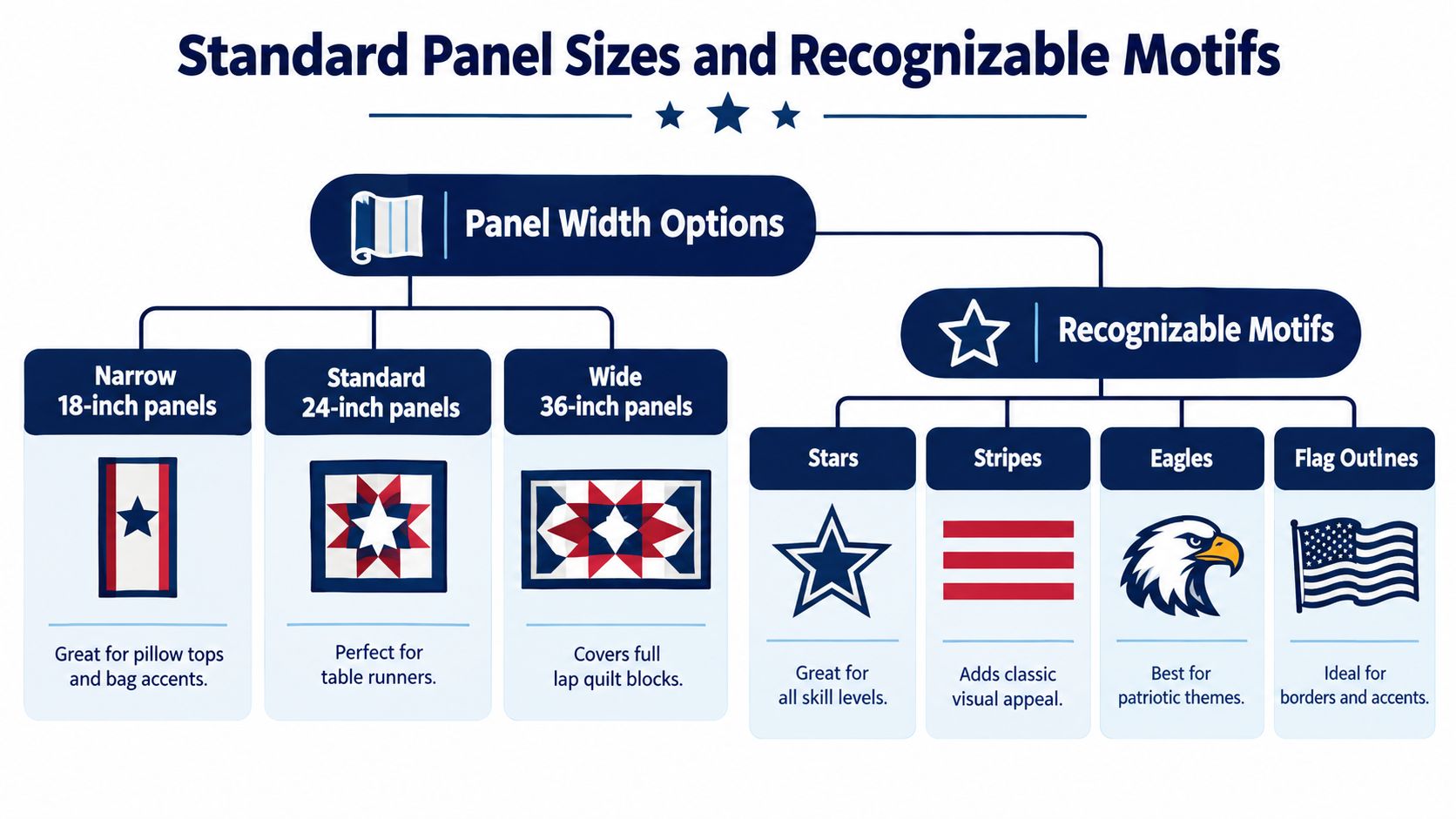
Panel dimensions determine the project before the sewing begins. A narrow design may suit a pillow top or tote accent, while a broader panel can become the center of a lap quilt. The printed area, not the raw fabric edge, is the measurement that matters because selvage, margins, and trimming can reduce the usable space.
A practical design guide often groups panels into narrow 18-inch panels, standard 24-inch panels, and wide 36-inch panels. Narrow panels suit pillow tops and bag accents. Standard panels work well for table runners and wall hangings. Wide panels can cover a full lap quilt block or serve as the main field for a larger quilt top. Treat those sizes as planning categories, then verify the actual finished dimensions on the product listing.
Match the motif to the layout
Patriotic motifs carry different visual demands:
- Stars can repeat across borders, cornerstones, sashing, or background blocks without competing with a central image.
- Stripes create direction, so check whether they should run horizontally, vertically, or around the panel.
- Eagles and other central emblems need breathing room. A narrow border may crowd the image, while a wide frame can make it feel intentional.
- Flag outlines usually have a clear top and bottom. Mark the orientation before cutting or rotating pieces.
- Commemorative wording needs enough surrounding space to remain readable after quilting and binding.
Directional designs also affect backing placement. A flag, eagle, or message should stay upright on the finished quilt, and borders should support rather than interrupt the focal point. Take a photo of the panel beside possible yardage in daylight and under indoor lighting. Navy can look nearly black in one setting and noticeably blue in another.
For more panel-specific ideas, compare construction approaches in this guide to quilting panels for sale. Look for sharp print edges, even color coverage, and a clean repeat. If a coordinating fabric comes from another print run, compare it directly against the panel instead of trusting an online color name.
Backing Math and 108 Inch Options That Actually Help
Backing calculation starts with the finished quilt top, not the raw panel. Measure the completed top after borders and trimming. Then add 4 inches beyond the top on every side, which creates 8 additional inches in both width and length. A 90-by-108-inch quilt therefore needs backing measuring at least 98 by 116 inches. The example and allowance are outlined in this quilt backing calculator.
Use the finished top as your starting number
Write the calculation down before shopping:
- Measure the finished quilt top.
- Add 8 inches to the width.
- Add 8 inches to the length.
- Confirm the quilting method and studio loading requirements.
- Choose standard-width or wide backing based on seams and motif placement.
Standard quilting cotton is commonly about 42 inches wide after usable width is considered. For the 98-by-116-inch example, that means approximately three joined panels and about 9⅞ yards. A 108-inch-wide backing can cover the required width in one piece, which avoids a center seam and simplifies positioning behind a large patriotic panel. See how 108-inch quilt backing fabric changes the plan.
A true 108-inch backing is particularly helpful for a 90-inch-wide quilt. Three standard 42-inch widths can reach the needed span, but they create multiple seams and require each length to be calculated separately. With wide backing, you can position one continuous field behind the top, keep a seam away from the center emblem, and trim after quilting.
If wide backing isn't available, join standard-width fabric side by side across the quilt's width. For a required backing width of 68 inches, two 42-inch usable widths provide enough material for trimming. For a larger quilt, a wider center section with narrower side sections can keep a seam away from an eagle, flag, or commemorative message. Cut each section to the full backing length before joining, and press seams consistently.
| Quilting Method | Recommended Overhang per Side | When to Confirm with Studio |
|---|---|---|
| Longarm quilting | 6 to 8 inches | Always confirm with the longarm quilter before cutting |
| Domestic-machine quilting | 4 inches as a safer general rule | Confirm if the quilt is bulky or heavily quilted |
| Hand quilting | 4 inches as a practical planning allowance | Confirm if the frame or hoop needs additional fabric |
Some calculators identify 2 to 3 inches per side for hand quilting or domestic-machine work, but 4 inches per side gives more room for loading, pinning, and maneuvering. Longarm work may require 6 to 8 inches per side, so ask the studio before cutting. Insufficient overhang can force extra piecing or prevent proper loading.
Choosing Projects That Fit Your Skill Level and Timeline
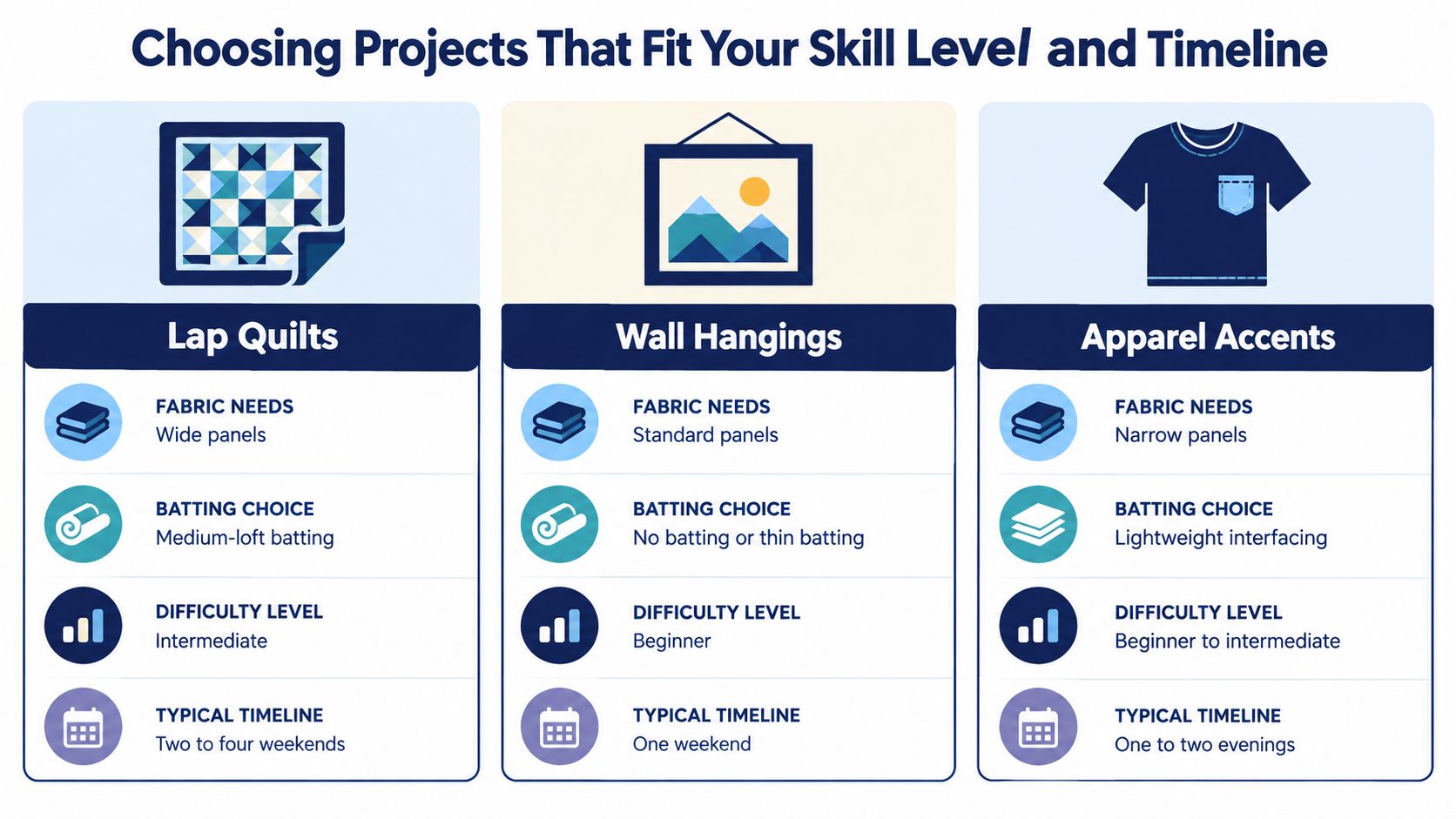
The same patriotic fabric panel can become a polished wall hanging, a comforting lap quilt, or a small apparel accent. The right choice depends on how much piecing you want, whether the project needs batting, and how soon you need the finished item.
Lap quilts
A lap quilt gives the panel room to act as a focal point. Use a wide panel with coordinating yardage for borders, sashing, and binding. A medium-loft batting can add comfort without hiding the printed design, while needle-punched cotton batting offers a traditional quilted hand. Hobbs is a familiar name to consider when comparing batting options, and you can also evaluate batting rolls when making several related quilts.
Lap quilts suit intermediate makers who are comfortable with accurate borders, pressing, and quilt-sandwich preparation. A service-related quilt doesn't need a literal full-size flag. Stars, eagles, restrained wording, or a calm Americana print can carry the message without making the project feel juvenile or overly military.
Wall hangings
Wall hangings are a strong choice when the panel has detailed artwork or a message you want to preserve. A standard panel may need only borders, backing, binding, and a hanging sleeve. You can use no batting for a flatter display, or thin batting for slight dimension.
This option favors beginners because there is less piecing and less bulk to manage. Riley Blake Designs, Cloud9, and Robert Kaufman offer different approaches to coordinating solids, low-volume prints, and small-scale motifs. Keep the border quiet if the panel already contains lettering or a central emblem.
Apparel accents
Apparel projects need a softer hand and careful testing. A narrow panel can become a pocket, yoke, tote accent, apron detail, or bandana feature. Lightweight interfacing can stabilize the panel without making it stiff, but test the layered fabric before cutting the garment.
For clothing, prewash testing deserves more attention because the finished item may rub against skin and face repeated laundering. Use a small motif rather than a large central flag if the garment needs movement and flexibility. A Charm Pack, Layer Cake, Jelly Roll, or set of 2.5-inch strips can supply coordinating trim, but the panel should remain the visual anchor.
What You'll Need
- Panel: A patriotic fabric panel sized for the project, with its finished dimensions confirmed.
- Coordinating fabric: Yardage, Fat Quarters, or precut quilting fabrics for borders, sashing, and binding.
- Batting: Medium-loft or thin batting for quilts and wall hangings, selected by the intended drape.
- Backing: Standard yardage or a 108-inch backing collection for larger tops.
- Tools: Rotary cutter, ruler, mat, sewing machine, thread, clips, and a pressing setup.
- Machine option: A PFAFF machine can be useful when you want controlled piecing, quilting, or decorative stitching.
Color Matching, Prewashing, and Care Decisions
Shoppers commonly wonder whether a panel's navy, red, and white will match coordinating yardage and remain attractive after washing. Product photos rarely show how a print behaves under different lighting or after laundering, so a small test can prevent a large disappointment.
Recent textile research identifies color retention as a major consumer priority, sometimes influencing purchasing decisions more than fabric type, tactile properties, or price. Research on clothing care also connects frequent washing and high temperatures with faster material wear and greater environmental impact. The textile research paper on color retention and care supports a practical approach, test first when the outcome matters.
Use a small-swatch decision tree
Test before cutting if the project combines a strong red with white, includes several fabric sources, will be washed often, or must match an existing border. Cut a small piece from the panel and coordinating fabrics. Wash it using the care method you expect for the finished project, then check for dye transfer, shrinkage, distortion, and changes in hand.
Skip full prewashing when appropriate if the project is a decorative wall hanging, the panel and yardage are from a trusted coordinated collection, and dimensional stability matters more than pre-shrinking. You still need to follow the fabric maker's care information and account for the batting and quilting density.
Compare color under two light sources. Photograph the swatches near a window, then compare them under indoor lighting. A border that looks perfectly matched in daylight may appear too purple, too gray, or too dark at night.
Choose forgiving borders. A small-scale star, mottled print, low-volume background, or textured blender can disguise slight variation between print runs better than a flat solid placed directly beside the panel. If the quilt will be washed often, prioritize durable construction and conservative care instructions. If it will hang on a wall, protect visual fidelity by limiting direct light and unnecessary laundering.
For a broader look at the process, read how to preshrink fabric. Prewashing isn't a universal command. It's a choice based on shrinkage risk, colorfastness, final use, quilting density, batting, and the recipient's care habits.
Seasonal Ideas and Charity Drive Planning
A guild may begin with a simple goal, such as making patriotic quilts for a local organization before a holiday. The most successful drives start by asking the recipient group what it can accept, which sizes are practical, and whether literal flags or branch-specific symbols are appropriate. That short conversation prevents a stack of beautiful quilts from missing the audience.
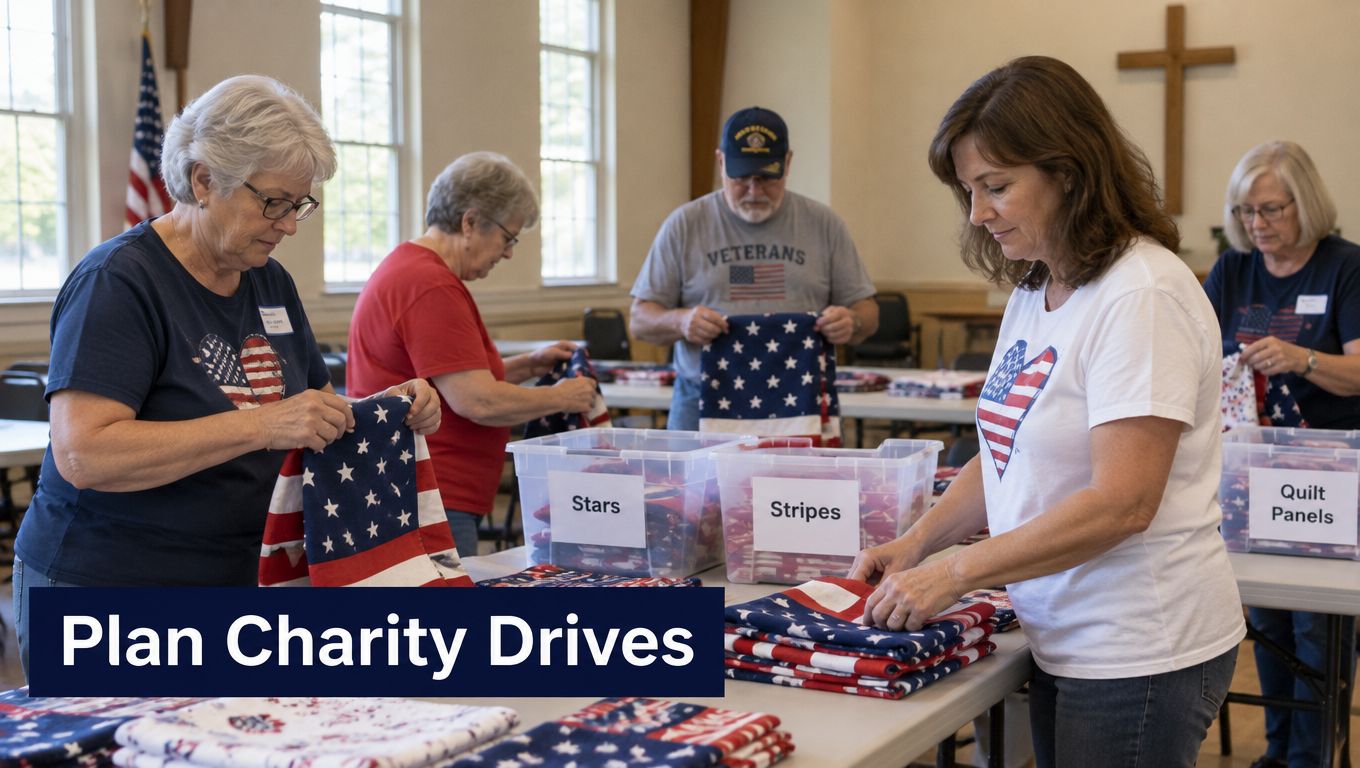
For Memorial Day, Independence Day, Veterans Day, and Labor Day, vary the mood instead of repeating the same flag design. Try vintage Americana, stars with low-volume backgrounds, national park imagery, or quiet red and navy florals. For a school or community event, a banner or table runner may be more useful than a large quilt. For a charity drive, precut bundles can help volunteers coordinate blocks while reducing cutting time.
For group projects: Decide the finished size, motif boundaries, color palette, quilting method, and care label before distributing fabric.
Clearance yardage, Fat Quarter bundles, and 108-inch backing can help a group plan repeatable projects without forcing every maker to shop separately. Project-ready fabric for charity quilts can also help organize the fabric, batting, backing, and notions needed for a shared effort.
A patriotic textile display can extend beyond quilts. For graduation or civic ceremonies, a custom graduation flag offers another way to connect fabric, identity, and celebration without copying a quilt layout.
Here's a short visual reminder for planning a group project:
Whether you visit Our Springfield, Tennessee showroom or shop online, bring your panel measurements and intended use with you. A clear plan makes it easier to choose borders, batting, backing, and binding that respect both the design and the person who will receive it.
The Fabric Company offers patriotic panels, coordinating precuts, batting, and 108-inch backings for quilts, wall hangings, apparel accents, and charity projects. Visit The Fabric Company to choose supplies for your next thoughtful patriotic project, then join The Weekly Thread for more tips and 10% off your first order.