

You're standing at the cutting table with a finished quilt top, a stack of fabric, and several batting options. One fill looks soft and puffy, another feels flat and firm, and the package of JOY cotton batting raises a practical question: will it give your quilt the drape, stitch definition, and lasting structure you want?
TL;DR: JOY cotton batting is associated with dense, natural cotton construction and a traditional, firm hand. For quilters, that makes it especially useful when you want a flatter drape, visible quilting texture, breathable natural fiber, and a classic heirloom feel. Your choice also affects shrinkage, final size, quilting ease, and how the finished quilt feels after washing.
What Is JOY Cotton Batting and Why Quilters Love It
At the cutting table, the most useful question isn't “Which batting is popular?” It's “What should this quilt feel like when it's finished?” A wall hanging needs a different structure from a bed quilt, and a hand-quilted heirloom needs a different needle feel from a thick comforter.
JOY cotton batting appears to be a proprietary cotton fill used prominently in Gold Bond futon mattresses. Product listings describe custom-blended, pre-compressed cotton batting designed for firmness and durability, rather than a lofty, cloudlike profile. The same listings identify all-cotton futon models containing 30 pounds in the FeatherTouch II, 40 pounds in four-inch models, 50 pounds in six-inch models, and 60 pounds in eight-inch models. These product details are described by Gold Bond's futon product listings.
That background helps explain the material's character. JOY batting is connected with dense, traditional cotton construction, while quilt batting is usually selected for loft, drape, warmth, and stitch definition. The names sound similar, but the intended use can differ. Always check the product label to confirm whether you're buying a quilt batting, a mattress fill, or a batting product intended for another construction.
Why density changes the result
A dense cotton fill can give a quilt a grounded, substantial hand. It won't have the same raised puff as a high-loft polyester fill, but it can make piecing, appliqué, and quilting texture look crisp and deliberate.
Quilters often choose natural cotton because it offers:
- A breathable hand: Cotton feels comfortable against the body and suits quilts used throughout the year.
- A flatter drape: Low-loft batting lets a quilt fall rather than stand away from the surface.
- Clear stitch definition: Dense fibers can make hand quilting and free-motion quilting easy to see.
- A traditional finish: Cotton is closely associated with heirloom quilts and softly puckered surfaces.
- A substantial feel: Pre-compressed or dense batting can feel more structured than airy fills.
Public product pages also reference long-running JOY cotton product families, including the 604 and 707 all-cotton futons. A separate listing describes a nine-inch FeatherTouch II construction that combines six two-inch foam layers with JOY natural cotton batting, showing how the material has also been used as part of layered comfort systems. That history places JOY batting in a tradition of durable, firm, layered bedding rather than lightweight cushion fill. A public product listing provides additional background on these JOY cotton constructions.
Practical rule: Choose cotton batting for the finished hand you want, not simply because the label says “cotton.”
If you're near the area, our Springfield, Tennessee showroom is a useful place to compare batting packages, fabric weight, and quilt backing in person. You can also review the differences between common fills in this guide to types of quilt batting before you buy.
Understanding Loft Density and Shrinkage Factors
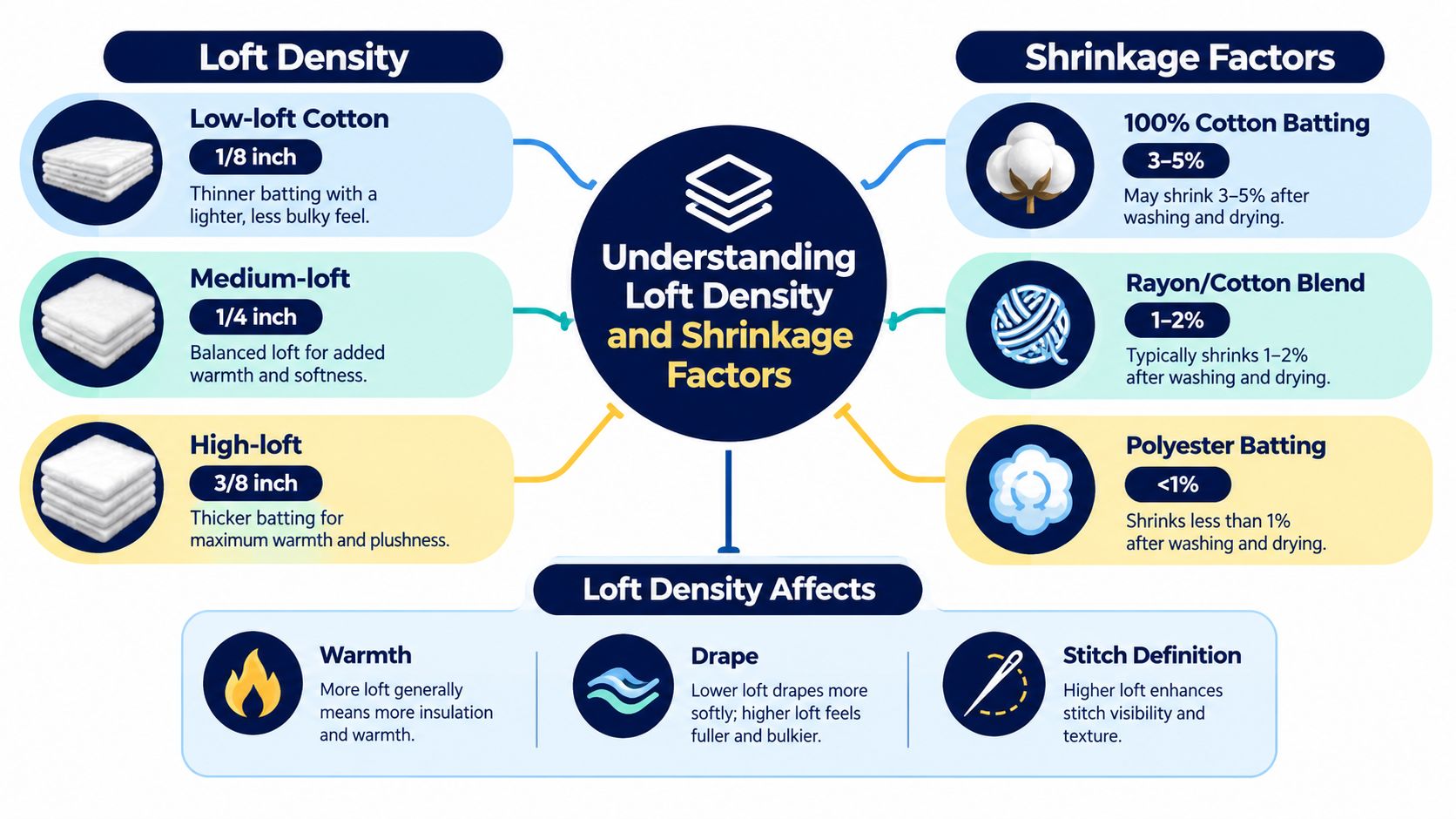
Loft refers to the thickness of the batting inside your quilt. Think of it as the height of the fiber layer between the quilt top and backing. A low-loft fill creates a flatter quilt, while a lofty fill creates more puff and can make quilting texture appear softer or more raised.
100% cotton batting is typically low loft, with a finished thickness around 1/16 to 1/8 inch, according to the Museum of Fine Arts glossary entry on batting. That flatter profile makes cotton easier to needle than many lofty fills and gives the quilt a heavier, less bulky drape.
Read the loft before you plan the quilting
A low-loft batting can be a good match for detailed work because the needle moves through a compact layer instead of a thick cloud of fibers. The tradeoff is that cotton usually needs closer quilting to help prevent shifting or bunching, especially when the quilt will be washed.
Before basting, ask yourself:
- Do I want visible stitch definition? Low loft often keeps the stitched line clear.
- Do I want a puffy surface? If yes, a loftier fill may suit the design better.
- Will the quilt be washed often? Plan for cotton's dimensional change.
- Do I need a specific finished size? Account for shrinkage before cutting.
Cotton batting usually shrinks about 3% to 5% after washing, according to Sew Much Easier's batting guide. That shrinkage creates the familiar crinkled or puckered finish associated with many traditional quilts. It can be beautiful, but it changes the finished dimensions.
Suppose your quilt top is carefully measured and your backing is cut to match. If you wash the completed quilt, the cotton layer can draw the layers together and create surface texture. If you need a more predictable final measurement, wash a test piece or account for the expected change while planning the top and backing.
Plan the finished hand, not just the unwashed sandwich
A quilt can feel relatively smooth on the sewing table and develop more texture after laundering. That isn't a defect. It's part of the material's behavior.
For a flatter, more controlled result:
- Use a stable quilt design with enough quilting to hold the layers together.
- Baste carefully so the batting doesn't ripple before stitching.
- Keep the backing smooth and properly supported.
- Measure after washing if the finished size matters.
- Test unfamiliar batting with a small sample before starting a gift or heirloom.
The guide to choosing quilt batting can help you compare loft, fiber, and intended use before you commit your full quilt top.
Comparing Cotton to Polyester Blends and Wool
No single batting fiber wins every project. The best choice depends on whether you value a classic crinkle, stable sizing, extra warmth, easy quilting, or a lofty surface.
Pure cotton is often selected for its breathable, traditional hand and flatter drape. Cotton-poly blends reduce some of the shrinkage and can offer a practical compromise for everyday quilts. Polyester keeps its shape more consistently after washing, while wool creates more loft and warmth but calls for careful handling.
The following comparison uses the shrinkage ranges documented by Quilt Lab's batting guide.
Quilt Batting Material Comparison
| Material | Shrinkage Rate | Loft and Drape | Best For |
|---|---|---|---|
| 100% cotton | About 3% to 5% | Usually lower loft, with a flatter and more traditional drape | Heirloom quilts, hand quilting, visible stitch definition, breathable everyday quilts |
| Cotton-poly blend | About 1% to 3% | Moderate drape with a balance of cotton hand and added stability | Gift quilts, washable utility quilts, makers who want less shrinkage |
| 100% polyester | No shrinkage | Can provide loft and consistent shape, with a different hand from cotton | Quilts where stable sizing and loft are priorities |
| Wool | Varies by product and care method | Naturally lofty and warm, with a fuller quilted surface | Warm quilts and projects where loft matters more than a flat drape |
Cotton-poly batting may be easier for a quilt that will be washed repeatedly or given as a gift when you want less dimensional change. Pure cotton may be the better fit when the quilt's character depends on a softly puckered surface and a natural, grounded feel.
Polyester can be useful when you need a steady finished size. It also tends to support a puffier appearance, but it won't create the same cotton crinkle. Wool can feel warm and dimensional, yet its care requirements deserve attention before you place it in a frequently washed quilt.
Fiber choice also matters outside quilting. If you work with heat-transfer projects or decorated apparel, this comparison of cotton and polyester for DTF transfers offers useful background on how fiber content changes material behavior.
Match the fiber to the person using the quilt
For a baby quilt, consider whether the family wants a soft, washable, low-bulk result or a warmer, loftier surface. For a wall hanging, a flatter fill can help the design stay neat. For a winter bed quilt, wool or a loftier batting may be more appropriate than a dense, low-loft cotton.
Hand quilters should also think about needle resistance. A dense cotton layer can produce a satisfying traditional stitch, but every batting has a different feel. Make a practice sandwich using the actual quilt top fabric, backing, thread, and needle before you begin the final piece. For more guidance on needle feel and hand quilting, see the guide to batting for hand quilting.
Best Project Matches for Natural Cotton Fills
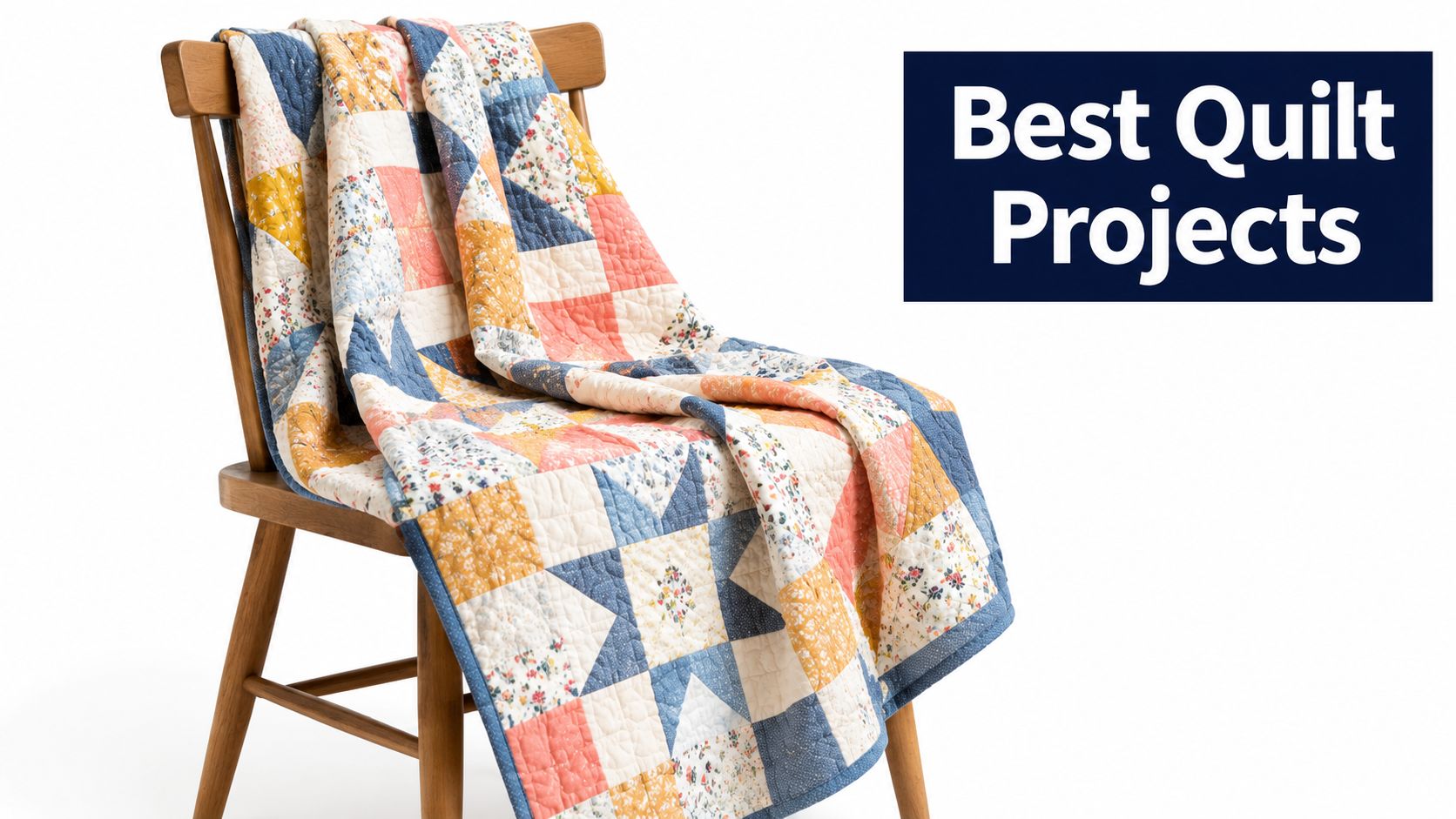
The strongest use for a low-loft cotton fill is a project where drape, stitch definition, and a soft but substantial hand matter more than maximum puff. It works particularly well when the quilting itself is part of the design.
Use it when the stitching should lead
Traditional patchwork, appliqué, and heirloom quilts benefit from a batting layer that doesn't overwhelm the fabric. A flatter sandwich allows dense free-motion quilting, crosshatching, echo quilting, and hand quilting to remain visible.
Good matches include:
- Heirloom quilts: Cotton supports a classic finish and a gently textured surface after washing.
- Wall hangings: Low loft helps the piece lie flatter instead of appearing overly puffy.
- Baby quilts: A soft, less bulky hand can be comfortable for small children, provided the completed quilt is constructed and cared for appropriately.
- Table runners and placemats: A compact batting layer gives structure without making the project feel thick.
- Traditional bed quilts: Cotton provides the familiar weight and drape many quilters expect.
- Detailed appliqué: A flatter foundation helps appliqué shapes remain visually clear.
A floral quilt with curved quilting may look more refined with low loft because the stitches create texture without hiding the fabric motifs. A star quilt with strong geometric lines can also benefit from a flatter surface, especially when you want the piecing to remain the main visual feature.
Scrap quilters can use the same approach with leftover strips, selvage pieces, and remnants. If you're building a small project from your stash, this resource on how to turn fabric leftovers into crafts can help you find a useful project for smaller cuts.
Know when to choose another fill
JOY cotton batting or another dense cotton fill may not be the right choice for a thick, puffy comforter look. If your design depends on strong loft, trapunto-style dimension, or a very raised quilting pattern, test a loftier batting first.
Your quilting density matters, too. Closely spaced stitches can make a cotton quilt feel firm, while more open quilting preserves a softer drape. Always check the batting manufacturer's quilting guidance because the correct spacing depends on the product construction.
Before cutting the batting, review batting sizes for quilting projects. A well-planned cut reduces waste and gives you enough margin to keep the layers aligned during basting.
Our Springfield, Tennessee showroom is another place to compare low-loft cotton with blends and loftier options by touch. Feel the difference between a flat hand and a springy hand before you decide what your next quilt should become.
Preparation Care and Washing Best Practices
Cotton batting rewards careful preparation. The goal isn't always to prevent shrinkage. Some quilters want the classic puckered finish, while others need the quilt to stay close to its planned dimensions.
A practical preparation sequence
Start with the product instructions. Batting construction varies, and needle-punched cotton may have different handling guidance from loose, unbonded cotton. Keep the package nearby until the quilt is complete.
Decide when you want the texture to appear. If you want the finished quilt to develop its crinkle after quilting, assemble and quilt it before the first wash. If you need to control the final size earlier, test-wash a sample or prepare the batting according to the product instructions.
Protect the batting from creases. Store a roll flat or in the shape recommended by the manufacturer. A permanent fold can be difficult to smooth once it has been pressed into the fiber layer.
Spread it before layering. Lay the batting on a clean sewing table or floor, smooth it with your hands, and let it relax before placing the quilt top. Don't stretch it aggressively, because uneven tension can create thin areas or ripples.
Baste from the center outward. Whether you use safety pins, thread basting, or spray basting, work outward from the center so the layers stay aligned. Close quilting helps reduce shifting during later washing.
Washing the completed quilt
Use a gentle cycle and avoid harsh handling. Cotton batting can shrink and create texture, so support the quilt when moving it from the washer to the dryer or drying surface. High heat can place extra stress on cotton fibers and may intensify dimensional change.
Lay the quilt flat to dry when possible. If you use an iron for the fabric or batting, choose a low setting and keep the iron moving. Never scorch the cotton layer while trying to flatten a crease.
A useful test: Make a small quilt sandwich from your actual fabric, batting, thread, and backing, then wash it before committing to the full project.
This guide to using quilt batting provides another reference for layering and handling. The video below can also help you review batting preparation visually.
If your batting shifts or bunches during quilting, stop and correct the problem before adding more stitches. A smooth, stable quilt sandwich is easier to finish and will usually wash more evenly.
What You Will Need for Your Next Quilt Project
A good batting choice works best when the rest of the project supports it. Start with the quilt's size, planned use, and washing routine. Then choose fabric, backing, thread, and notions that make the layers easy to handle.
Project checklist
- Quilt top fabric: Choose quilting cotton, flannel, or another fabric with a compatible weight. Precuts such as Charm Packs, Layer Cakes, Fat Quarters, Jelly Rolls, and 2.5-inch strips can shorten the cutting stage.
- Cotton batting: Select a package or batting roll with enough coverage for the quilt top and room for alignment during quilting.
- Backing fabric: For a large quilt, consider 108-inch quilt backing. Wide-back fabric can often create a single continuous backing panel for quilts up to about 100 inches across, according to the quilt backing calculator from Fibre||||Calculations. Standard quilting cotton is usually about 42 to 44 inches wide, so larger quilts often need pieced backing.
- Thread: Use a thread weight and fiber that suit your machine, quilting density, and fabric. Test the thread on the actual batting before beginning.
- Needles: A sharp quilting needle helps you move through the fabric and batting cleanly. Hand quilters should test needle size against the batting's density.
- Basting supplies: Safety pins, thread, or basting spray can all work. Choose the method that lets you keep the quilt flat and secure.
- Rotary cutter and ruler: A sharp blade and accurate ruler help prevent uneven top and backing edges.
- Iron and pressing surface: Pressing supports accurate piecing, but keep heat controlled around cotton batting.
- Stash management tools: Save useful remnants, selvage, and leftover strips in labeled containers so future scrappy projects start with organized materials.
You can browse batting rolls and packages, 108-inch quilt backings, precut quilting fabric, Jelly Rolls, and Fat Quarters while assembling your supply list. Product availability may change, so check the current listing before planning a full quilt.
A roll may make sense for a longarm studio, guild, or charity quilting group that needs repeated cuts. A package can be more practical for one gift quilt or a small wall hanging. In either case, buy according to the finished project rather than choosing the largest option automatically.
If you visit our Springfield, Tennessee showroom, bring a swatch of your quilt top fabric when possible. Comparing the fabric, batting, and backing together gives you a better sense of the finished drape than judging each material alone.
Final Thoughts and Your Next Creative Steps
Batting isn't a hidden layer that you can choose at the last minute. It affects how your quilt hangs over a chair, how clearly the quilting shows, how much the finished piece changes after washing, and how the quilt feels in the hands of the person who receives it.
JOY cotton batting is associated with dense, natural cotton construction, which makes it a thoughtful option for traditional quilts, heirloom projects, and designs where a flatter drape matters. Its character differs from cotton-poly blends, polyester, and wool, so the right decision depends on your priorities rather than a single universal ranking.
Choose pure cotton when you want:
- A breathable, natural fiber hand.
- A flatter, more grounded drape.
- Clear quilting texture.
- A classic crinkled finish after washing.
- A traditional feel for heirloom or utility quilts.
Choose another fiber when you need a more stable finished size, greater loft, or a different warmth profile. A small test sandwich can answer questions that packaging can't. Stitch it, wash it, and handle it before you begin the full quilt.
The Fabric Company offers batting in packages and rolls, along with quilting fabric, wide backings, precuts, thread, rotary-cutting tools, and sewing equipment for projects from small wall hangings to large bed quilts. You can compare materials online or visit our Springfield, Tennessee showroom to make a more confident choice by touch.
Shop our latest batting collection and explore 108-inch quilt backings for a clean, practical finish. Join The Weekly Thread for more tips and 10% off your first order.
Choose the cotton batting, backing, precuts, and quilting tools that match the drape and durability you want, then visit The Fabric Company to prepare your next project with confidence. Whether you're making an heirloom quilt, a washable gift, or a detailed wall hanging, the right fiber choice will help your finished work look and feel intentional.