

You're standing in front of a sweet stack of soft, printed squares, thinking about a baby gift or a couch throw you could finish, and you're not sure if flannel will behave like the quilting cotton you've used before. A flannel layer cake gives you coordinated, precut speed, but it asks for a little extra care with shrinkage, seam bulk, and quilting choices. Choose larger, simpler blocks, prep the squares well, and you'll get warmth and softness without fighting the fabric.
What a Flannel Layer Cake Actually Is
Grab the bundle, fan out the prints, and you can start sewing. That's the promise of a layer cake, and flannel keeps that promise while changing the feel of the finished quilt.
A flannel layer cake is a quilting precut made from flannel, typically consisting of 42 coordinated squares measuring 10 by 10 inches each. The format is associated with Moda Fabrics, which introduced commercially standardized precuts at International Quilt Market in October 2006, and 10-inch square bundles became one of the major formats that followed. Other makers may call the same idea 10-inch squares or 10-inch stackers, so read the label rather than relying on the name alone.
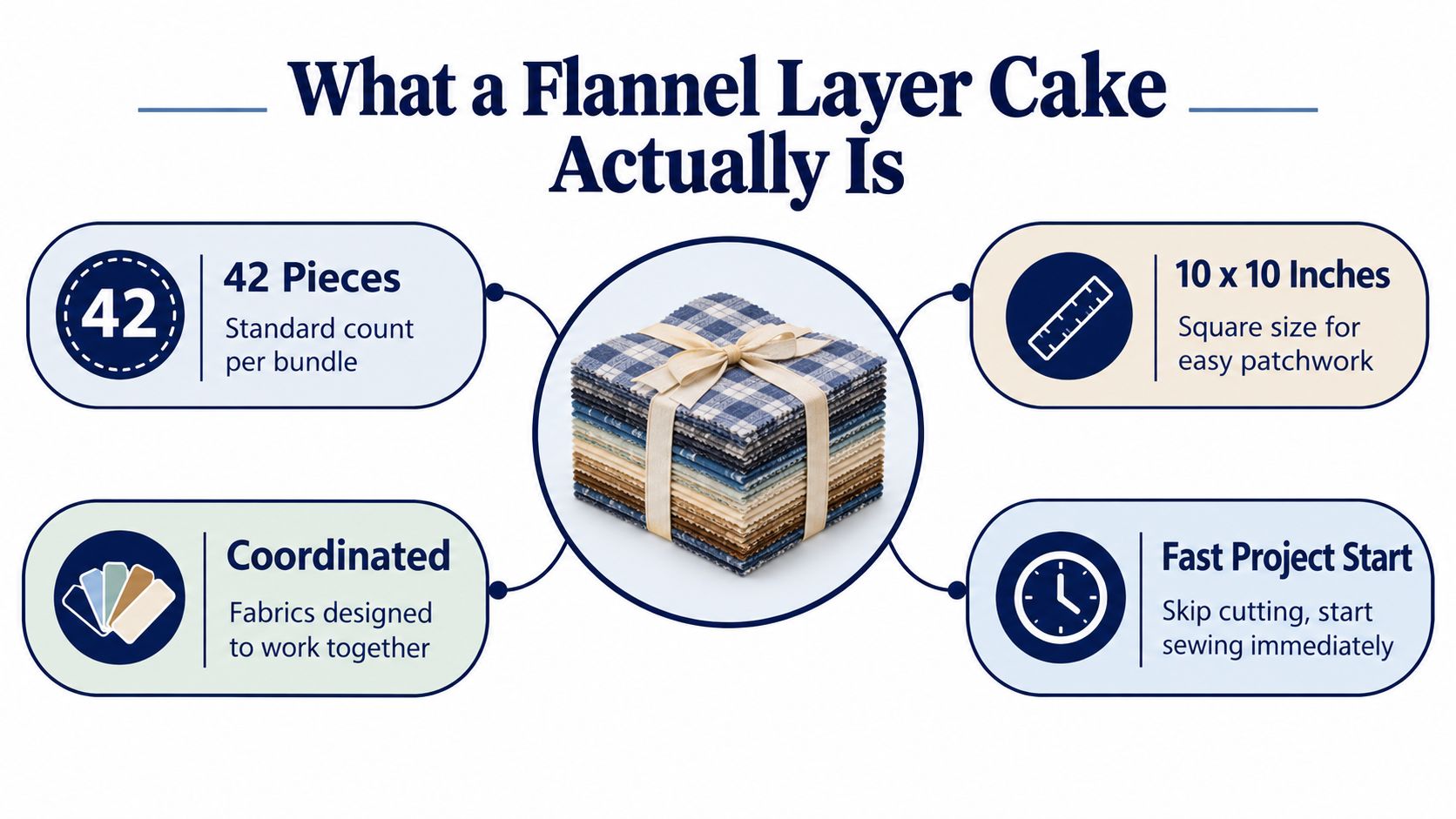
Caption: 42 coordinated 10-inch flannel squares arranged as a layer cake bundle, ready to use whole or subcut.
How Flannel Changes the Precut
Regular layer cakes use smooth quilting cotton. Flannel swaps that surface for a brushed, napped texture, the slightly fuzzy side you feel on pajamas and receiving blankets. That nap traps warmth, softens prints a touch, and adds a little thickness at every seam intersection.
Using a familiar pan in a different metal changes how cooking works. Your recipe still works, but heat and sticking change. With flannel, your block pattern still works, but grip, pressing, and washing need more attention.
- Whole squares: Show medium and large prints without slicing them into confetti.
- Half-square triangles: Use the full square efficiently and keep seams manageable.
- Cut strips or smaller blocks: Possible, but each extra seam adds bulk you need to plan for.
Practical rule: If a pattern looks fussy in quilting cotton, it'll feel twice as fussy in flannel. Let the 10-inch size do the visual work.
That size supports more flexibility than smaller 5-inch charm squares because you can use a square whole or cut it into triangles, strips, or smaller units while still showing the print. For shoppers, the decisions that matter most come next. You'll check the exact count, fabric weight, and shrinkage, then match batting and backing to a project that suits a soft, washable finish.
Start this weekend: Sort one bundle into lights, mediums, and darks on your table. That simple stack tells you at a glance whether you have enough contrast for triangles or whether whole-square patchwork will look calmer.
Flannel Layer Cakes Compared to Other Precuts
Precuts save cutting time, but they don't all save the same kind of time. Format decides how many seams you'll sew, how often you'll press, and how much flannel bulk you'll wrestle at intersections. If you're still sorting the vocabulary, this charm pack guide explains the 5-inch format before you compare sizes.
Flannel Precuts at a Glance
| Precut | Cut Size | Typical Count | Best For | Flannel Note |
|---|---|---|---|---|
| Layer Cake | 10 x 10 inches | 42 squares | Large patchwork, half-square triangles, disappearing nine-patch | Best balance of speed, print scale, and manageable seams |
| Charm Pack | 5 x 5 inches | Varies by maker | Small patchwork, scrappy blocks | More seams, more pressing, more chances for nap shift |
| Jelly Roll | 2.5-inch strips | Varies by maker | Strip quilts, sashing, borders | Long seams can bow if you pull the grippy fabric |
| Fat Quarter Bundle | Larger folded cuts | Varies by bundle | Patterns needing varied cuts, apparel | Most flexibility, but you do all the measuring yourself |
| Mini Charm | Smaller than charm squares | Varies by maker | Tiny patchwork, accents | Slowest in flannel and least forgiving of seam bulk |
A standard bundle is generally a set of precut 10-inch-by-10-inch squares from one coordinated collection, useful for large-block quilts, half-square-triangle designs, disappearing nine-patch patterns, table runners, pillows, and baby quilts. That coordination is a gift for beginners. You don't have to wonder whether the rust plaid argues with the cream floral. The collection designer already settled that argument.
Why Smaller Is Not Always Easier
New quilters often assume small pieces mean a small, easy project. In flannel, it's the opposite. Tiny patchwork multiplies seam allowances, and flannel seam allowances are thicker and fuzzier than quilting cotton ones. Points get bulky, intersections resist lying flat, and a slightly shifting nap can nudge a small unit out of square fast.
- Choose a flannel layer cake when: You want a throw, baby quilt, or table runner this weekend, with prints you can see.
- Choose charm packs when: You're making a small, scrappy project and you're happy sewing many short seams.
- Choose fat quarters when: Your pattern needs rectangles, appliqué shapes, or garment pieces that squares can't provide cleanly.
Start this weekend: Sew four whole flannel squares into one big four-patch. Press it, measure it, and drape it over a chair. That one test shows you seam bulk, print scale, and drape better than any product photo.
How to Judge Flannel Quality Before You Click Buy
Online, you can't rub the nap between your fingers. You can learn to read a listing the way experienced quilters read a bolt end, looking for weight, fiber, and collection details. If you'd rather compare yardage alongside precuts, this flannel by the yard guide covers the same quality checks.
Flannel itself is old, practical cloth. Historical accounts trace flannel-like cloth to Wales as early as the sixteenth century, with traditional versions made from carded wool or worsted yarn and modern versions in cotton, wool, synthetics, or blends. Cotton flannel became important for quilting because it offers softness and warmth without the full weight and heat of wool. That history matters when you shop, because fiber content changes washing, warmth, and how the quilt ages.
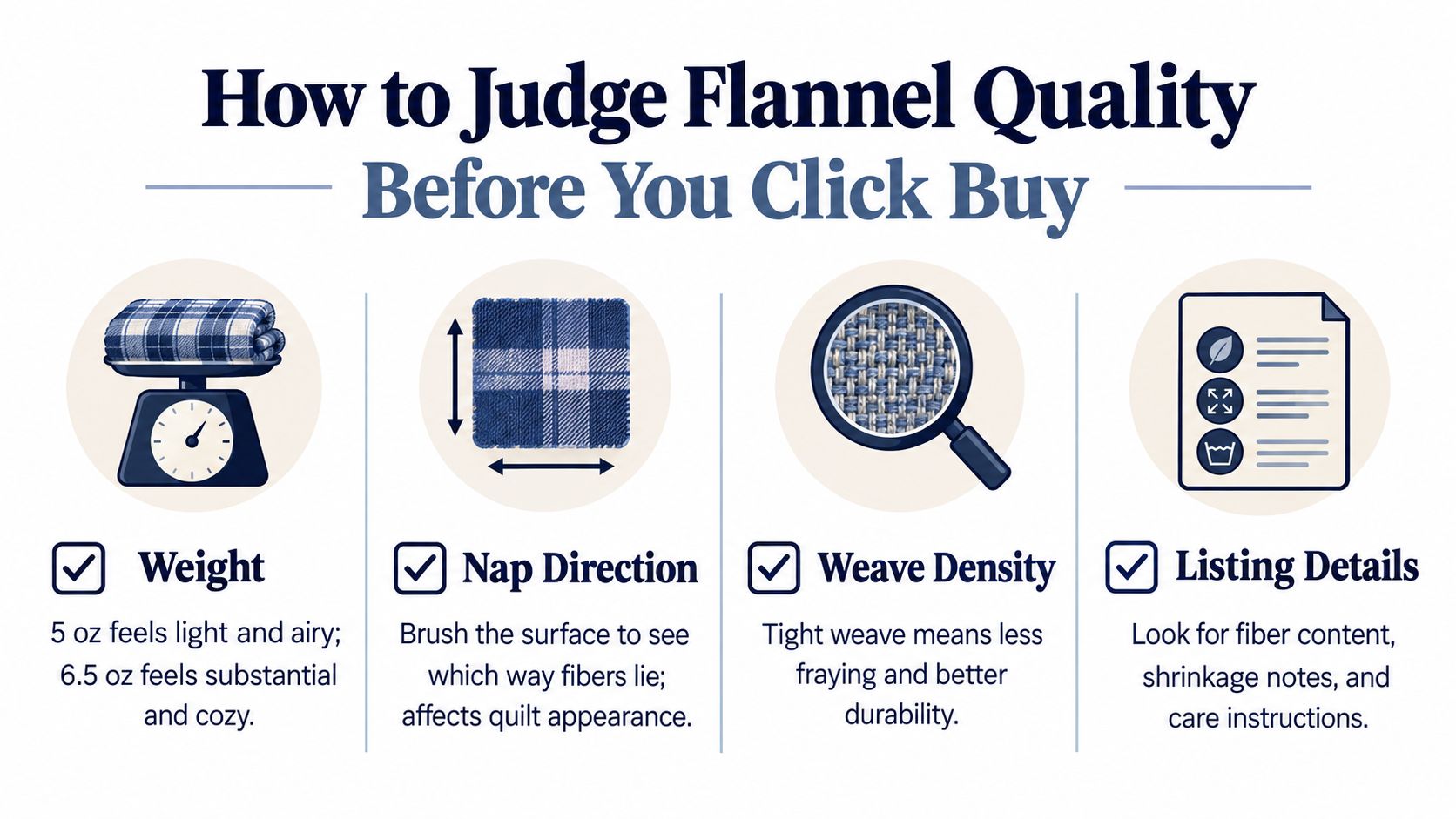
Turn Weight Into a Feeling
One industry guide describes medium-quality cotton flannel as at least 5 ounces per square yard, while high-quality cotton flannel commonly exceeds 6.5 ounces per square yard. Wool flannel is substantially heavier. In plain terms, a lighter cotton flannel feels airy and drapes easily, which suits a baby quilt that will be washed often. A heavier one feels substantial and cozy, which suits a winter throw, but it'll add more bulk where seams meet.
- Weight: Look for ounces per square yard when the listing provides it, and match weight to use, not just to a higher number.
- Nap consistency: Close photos should show an even brushed surface, not thin patches where weave shows through harshly.
- Nap direction: Brush your hand across a sample if you can. Fibers lying one way can make the same print look lighter or darker, so keep direction consistent in directional layouts.
- Color saturation: True-to-color photos help you judge whether prints will stay clear after the softening effect of the brushed surface.
A tight weave under the nap is your quiet durability clue. It frays less, holds seams better, and survives repeated washing with less thinning.
Check whether squares come from one coordinated collection, and confirm count and dimensions on the package. Listings for flannel collections include makers such as Robert Kaufman, Maywood Studio, Andover Fabrics, and Moda, with many packs listing 42 pieces, plus names like Riley Blake Designs in many shops. Brand alone doesn't guarantee a match, though. Two bundles can share a maker and still differ in weight or color story.
Shoppers also ask about sustainability signals such as organic cotton, plant-based or low-impact dyes, salvaged textiles, and recycled fibers. Treat those as listing details to verify, not assumptions. Look for clear fiber content and care language, then decide whether those priorities outweigh color, weight, or price for this particular gift.
Start this weekend: Make a three-line checklist before checkout. Write down fiber content, stated weight if available, and whether the bundle is one collection. If one line is blank, ask before buying.
Prepping Flannel Squares the Right Way
Flannel rewards a calm routine. Rush straight from bundle to machine and the fabric may shrink, shift, or fray in ways that surprise you after the first wash. Prep isn't busywork here. It's how you keep a simple project simple. For the washing mechanics in more detail, this preshrinking guide walks through fabric prep step by step.
Available buying guidance reports first-wash shrinkage commonly around 3 to 5%, with broader reported ranges reaching approximately 5 to 8% for untreated flannel. Even a 5% reduction turns a nominal 10-inch square into roughly 9.5 inches before sewing. That math explains why a pattern can fit beautifully on paper and finish smaller than expected.
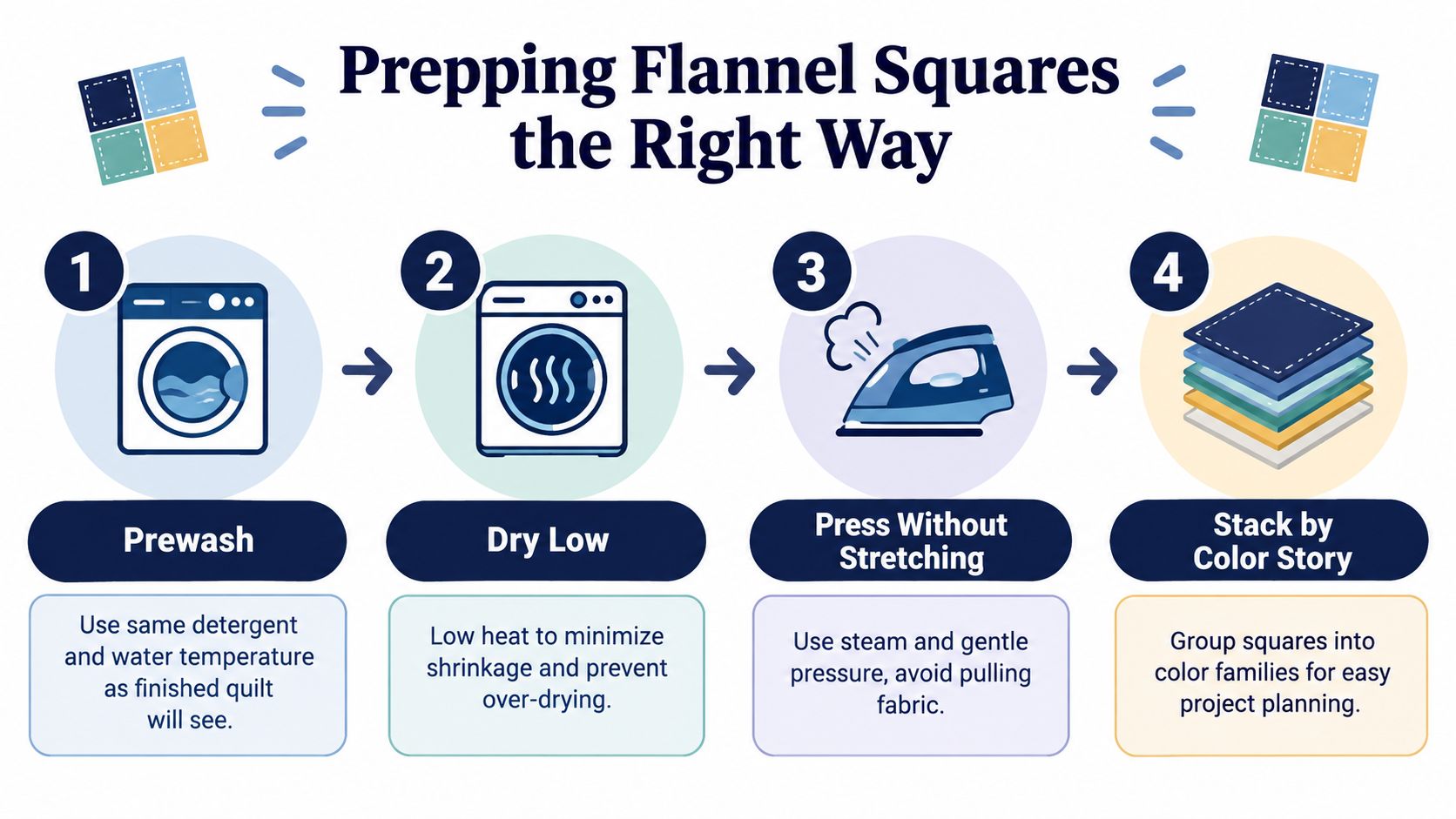
A Four Step Prep Routine
- Prewash like the finished quilt will live: Use the detergent and water temperature you expect for the completed quilt. If the baby quilt will face warm washing, don't prep it in cold water and hope for the best.
- Dry on low: Remove squares while they're manageable, and avoid aggressive heat that over-dries the brushed surface.
- Press without stretching: Lift and place the iron with gentle steam. Don't drag and pull, because damp flannel can distort while it looks perfectly flat.
- Stack by color story: Group lights, darks, plaids, and directional prints. You'll spot a runaway print now, not after it's sewn into row three.
Prewash a flannel top and any flannel backing together whenever possible. Different shrinkage rates can create puckering, skewed blocks, or a distorted quilt after washing. Think of it as introducing the fabrics before the wedding. They need to settle into their true sizes before you commit them to the same seams.
Sewing Setup That Prevents Drift
Use a sharp 75/11 or 80/12 needle, keep a consistent 1/4-inch seam, and reduce handling because the nap can shift layers and promote seam distortion. Flannel's grip helps in one way, since layers slip less, but that same grip can make a square creep under the presser foot if you tug it straight. Guide, don't pull. Pin at intersections, sew a test seam, and measure the result before chain piecing the whole bundle.
Shop-floor advice: If two squares feel like they're holding hands too tightly, slow down. Speed plus friction is where wavy seams are born.
Can you skip prewashing? Sometimes. If you want a deliberately crinkly baby quilt and your design accepts shrinkage, washing the finished quilt can give you that soft, lived-in texture. That choice works best with simple large patchwork, generous quilting, and no mixed fabrics shrinking at different rates. For precision blocks, gifts with a target size, or flannel paired with quilting cotton, prewashing is the safer teacher-approved route.
Start this weekend: Prewash just six squares, press them, and sew two into a half-square triangle. You'll learn your bundle's true size and seam behavior before the full project is at stake.
Project Ideas That Show Off Flannel Layer Cakes
The best flannel projects let softness be the point. They use large pieces, touchable surfaces, and patterns that don't punish a slightly thick seam. If you want more layouts after these starters, these easy layer cake quilt patterns show several beginner-friendly options.
After a 1/4-inch seam allowance on each side, a 10-inch layer-cake square provides about 9.5 inches of usable width, making the format especially efficient for large-patch designs, half-square triangles, and disappearing nine-patch blocks. Keep that finished scale in mind as you picture each project below.
Here's a baby quilt scale that keeps the prints readable and the piecing calm.
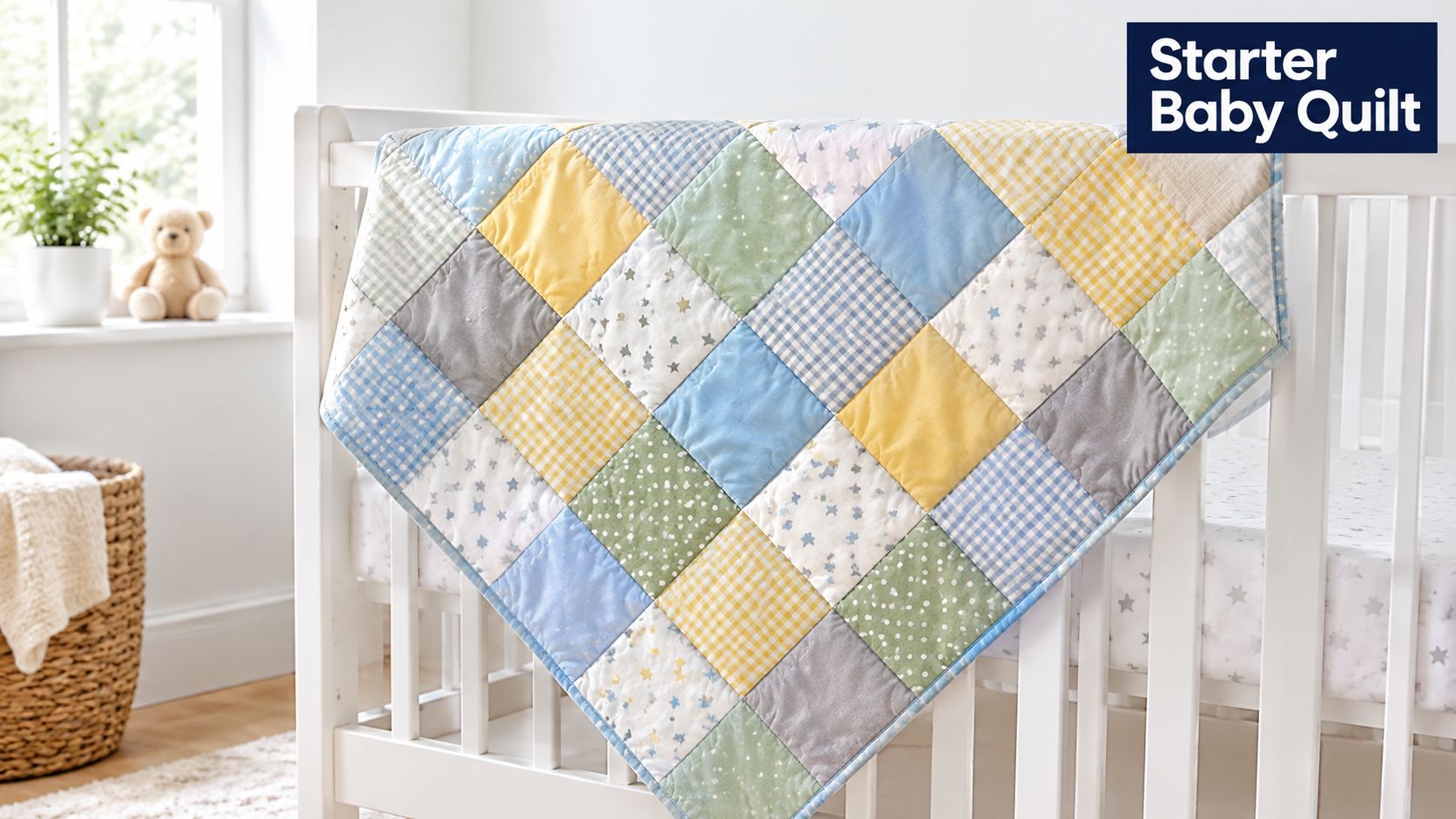
Caption: Whole 10-inch squares keep a Riley Blake Designs style baby print visible while the flannel nap stays soft against skin.
Three Projects You Can Picture Finishing
1. Whole-square baby quilt. Arrange squares in a simple grid or set them on point if you're comfortable adding setting triangles from coordinating yardage. Whole squares mean fewer seams, faster pressing, and big areas of soft print for tummy time. Pair the top with low-loft batting and a smooth or flannel backing, then quilt in wide, gentle lines that won't stiffen the drape.
2. Disappearing nine-patch couch throw. Sew nine squares into a large nine-patch, cut it into quarters, rotate the pieces, and sew them back together. It looks clever, but every unit starts from forgiving 10-inch squares. This is a smart step up from whole squares because the cuts are few and the blocks stay large. Use strong light and dark contrast so the secondary pattern reads clearly through flannel's softer surface.
3. Child's pajama top or patchwork apron. A small apparel piece can use a handful of squares for the front, with flannel or cotton lining depending on warmth. An apron is even more forgiving, since fit is loose and patchwork becomes the design feature. Keep seams simple, finish edges carefully because flannel can fray, and avoid tiny patchwork at stress points like straps and armholes.
What You'll Need
- Precuts: One flannel layer cake for the top, plus coordinating yardage if your layout needs setting pieces or borders.
- Batting: A low-loft Hobbs needle-punched cotton batting for softness without extra bulk.
- Backing: A 108-inch wide backing when you want to skip piecing a seam across the back of a throw.
- Thread and needles: Coordinating thread and a sharp needle suited to flannel's thicker seam crossings.
- Tools: Rotary cutter, ruler, pins or clips, and a presser foot setup that helps you keep a true quarter-inch seam.
Watch the block construction once before you cut into a favorite print, especially if directional fabrics need to stay upright.
Caption: Notice the stitch quality on this PFAFF machine class example as seams cross, a useful check before quilting a full flannel top.
For backing yardage, measure your finished top first, then add enough extra for quilting and trimming based on your quilter's requirements. That order matters with flannel. Shrinkage and seam choices can change the top you have, and backing bought for the top you imagined can come up short.
Start this weekend: Pick the baby quilt layout if this is your first flannel bundle. Lay out the grid on a bed, take a photo, and leave it overnight. Fresh eyes catch a too-dark corner faster than a seam ripper fixes it.
Batting, Backing, and Quilting Choices for Flannel
A flannel quilt sandwich needs balance. The top already brings warmth, texture, and some thickness, so batting and quilting should support it without turning a cuddly throw into a stiff mat. If you're considering flannel on the reverse side too, this guide to backing a quilt with flannel covers that choice directly.
Build the Sandwich in Order
Start with low-loft needle-punched cotton batting, such as a Hobbs batting, when you want softness and drape. Needle-punched batting has a stable structure, and options with scrim can help layers hold together during quilting. A thin wool or cotton blend earns its place when the quilt is meant for a cold room, a drafty couch, or an extra-warm bed layer. For a baby quilt that needs frequent washing and easy folding, thinner is usually kinder.
Backing choice changes both feel and machine behavior. A quilting cotton backing gives you a smoother surface against the machine bed or longarm frame. A flannel backing doubles the coziness and increases grip between layers. A 108-inch backing removes a center seam, which is helpful because flannel tops already have enough seam texture without adding a ridge on the back.
- Pin basting: Gives you control and lets you reposition, useful when flannel layers grip before you're ready.
- Spray basting: Speeds up a domestic-machine project, but test it and work in a ventilated space.
- Fusible options: Can steady layers for small projects, though you should confirm the finished hand feels soft enough for a blanket.
Domestic Machine or Longarm
Flannel's brushed surface can increase grip and reduce layer slip, yet that same friction may create drag during longarm quilting and it behaves differently from smoother quilting cotton when seams are pressed and multiple layers meet. Tell a longarmer the top and backing fibers before drop-off. Ask about quilting density, thread, and whether a simple large meander will suit the fabric better than dense custom work.
On a domestic machine, a walking foot helps feed the sandwich evenly. Straight lines, gentle waves, and a large meander respect flannel's visual texture. Dense quilting can flatten the nap, stiffen drape, and make every seam crossing harder. Choose thread that blends if you want prints to lead, or a soft contrast if the quilting pattern is part of the design. Test stitch length on a scrap sandwich made from the same flannel, batting, and backing. A beautiful setting on quilting cotton can look tight and puckery on flannel.
Flannel already has texture before you quilt it. Your stitches can guide the eye quietly instead of competing with every print.
Consider the end use before you decide. Flannel-only projects maximize softness and simplify shrinkage planning when everything is prewashed together. Flannel plus cotton can sharpen prints and reduce bulk, but the fabrics may press and shrink differently. Flannel as backing only gives a cotton top a warm reverse side while keeping piecing crisp. None is wrong. The mistake is choosing one without thinking about washing, weight, and how the quilt will be quilted.
Start this weekend: Build one small practice sandwich from leftover squares, your chosen batting, and backing. Quilt three patterns on it, wash it, and keep the sample with your notes.
Care, Storage, and Questions Shoppers Actually Ask
A finished flannel quilt should be used, washed, and loved without mystery. Care is simple when you remember that the brushed surface likes gentle handling and the fibers appreciate consistency. Shoppers in Our Springfield, Tennessee showroom ask the same practical questions you're probably asking now, usually while holding a bundle in one hand and batting in the other.
Care and Storage Checklist
- Wash consistently: Use the water temperature and detergent routine you planned during prep, so the quilt doesn't meet a new shrinkage surprise later.
- Dry on low heat: Remove the quilt while it's in good shape, then lay it flat to finish settling if needed.
- Block gently: Smooth the quilt on a flat surface after washing, easing it into shape without stretching seams.
- Fold with care: Use clean tissue at folds for longer storage to reduce sharp creases on the nap.
- Store breathably: Keep quilts in breathable cotton bags away from direct light, which protects color and the brushed surface better than sealed plastic.
Refold stored quilts now and then. Flannel remembers a crease the way a favorite shirt does, and a quick shake, smooth, and refold keeps one line from becoming permanent.
Questions Shoppers Actually Ask
How much usable fabric is in a 42-square bundle? Forty-two 10-inch squares provide 4,200 square inches of nominal fabric area, equivalent to approximately 2.75 to 3.25 square yards depending on selvage, cutting loss, and usable width accounting. Your usable quilt area will be less after seams, shrinkage, and trimming, so plan from finished block size, not bundle math alone.
Can I mix flannel and cotton layer cakes in one quilt? Yes, with prep and realistic pattern choices. Prewash both, expect different hand and pressing behavior, and keep blocks large enough that seam differences don't control the project. A test block is not optional here, it's your insurance.
What if squares arrive slightly off-size? Measure several squares from the same points, press them flat first, and check whether the difference is consistent. If the whole bundle is consistently sized, you can often adjust seam allowance or trim units to a shared size. If sizes vary widely, sort squares and use the most consistent ones for precision blocks, saving outliers for whole-square patchwork or backs of pillows.
Start this weekend: Write the quilt's fiber content, washing plan, and bundle name on a card. Tuck a copy with the project now, and attach care notes when you gift it. Future you, standing at the washing machine, will be grateful.
Shop our latest Precuts collection here through The Fabric Company, where you'll find flannel, 10x10 Layers, batting, 108-inch backings, thread, and patterns to finish the baby quilt, throw, or apron you planned above. Join The Weekly Thread for more tips and 10% off your first order, then bring your questions to our team online or in store so your first flannel layer cake becomes a finished, washable quilt you're proud to give.