

You've picked out a rust-and-navy print for a fall quilt, but the pattern calls for more yardage than you expected, and the online color looks different on your screen than it does in your sewing room. The best way to shop for fall fabric by the yard is to look beyond the print: match fiber, weight, care needs, and yardage to the job the fabric must do.
Start with the project, then check how the fabric will wear, wash, and sew. A few simple tests and a written yardage plan can help you choose with confidence, whether you're browsing online or visiting Our Springfield, Tennessee showroom.
Planning Your Fall Fabric Project Before You Buy
A fall quilt for the couch has different needs from a flannel pajama set or a table runner that gets washed after every family meal. Before you choose a print, write down what you're making and where it will live. That small pause can prevent a fabric that looks perfect on the bolt from becoming a struggle under your needle.
Use these five decisions to shape your shopping list:
- Name the project. A quilt, garment, pillow, and table runner each need a different balance of drape, warmth, and durability.
- Record the finished size. Note the dimensions from your pattern, including borders, binding, cuffs, or other pieces that need extra fabric.
- Think about wear and washing. A frequently used throw needs to handle regular laundering. A wall hanging won't face the same wear.
- Consider the room or climate. A warm blanket for a chilly bedroom calls for different materials than a light layer for a heated home.
- Be honest about your sewing setup. A beginner using a basic domestic machine may find stable quilting cotton easier to manage than stretchy, slippery, or thick fabric.
Bring this checklist to the shop or keep it beside you while browsing fall fabric by the yard online. At Our Springfield, Tennessee showroom, you can handle a fabric and ask how its feel and construction suit your pattern. When shopping online, look for fiber content, width, care details, and any notes about directional prints before you add yardage to your cart.
A useful rule: Choose for the finished project first, then choose the print. A beautiful fabric that's hard to sew or care for may not be the right one for the job.
Comparing Cotton, Flannel, Minky, Fleece, and Wool-Blend Yardage
There isn't one ideal fall fabric. Quilting cotton is stable and easy to piece, flannel feels soft and warm, and plush fabrics add coziness but can take more control at the machine. Wool blends offer another option for garments and accessories, but they need care suited to their fiber and finish.
Fall Base Fabrics at a Glance
| Fabric | Typical Weight (oz/yd²) | Best For | Care Level |
|---|---|---|---|
| Quilting cotton | Varies by fabric; check the product specification | Pieced quilts, table runners, and many home décor projects | Usually straightforward; check the care label |
| Brushed cotton flannel | Varies by fabric; check the product specification | Pajamas, quilt tops, and cozy backings | Pretest for shrinkage and color transfer |
| Minky | Varies by fabric; check the product specification | Plush blankets and soft accents | Handle gently and follow the maker's care instructions |
| Polar fleece | Varies by fabric; check the product specification | Throws, blankets, and warm accessories | Check the label; account for stretch and bulk |
| Wool or wool blend | Varies by fabric; check the product specification | Garments, scarves, blankets, and lined accessories | Pretest and follow the specified cleaning method |
Weight figures aren't included here because they vary by fabric, and guessing can mislead you. Check the product listing or ask the shop for the actual specification before comparing yardage.
Quilting cotton is a dependable choice for crisp blocks, patch pockets, and table projects. Its stable feel makes it easier to line up seams than a stretchy knit or plush pile. Flannel has a brushed surface that feels warm against the skin, making it a natural pick for sleepwear and cozy quilts. Don't assume every flannel behaves alike; check its care instructions and test a swatch before cutting.
Minky feels soft and inviting, but its pile can shift as you sew. Clip or pin thoroughly and consider a walking foot to help move layers evenly. Fleece can stretch and feel bulky, so it may need a different approach from woven cotton. For more on choosing and working with fleece, see this guide to fleece fabric by the yard.
Wool or wool-blend yardage can buffer changing comfort by absorbing and releasing moisture. Research reports that wool can absorb up to roughly one-third of its weight in moisture, compared with less than 2% for polyester, and that moisture sorption produced temperature changes of up to 15°C in controlled fabric tests (research on wool's moisture and thermal behavior). That behavior doesn't make every wool blend warm in the same way. Weave, finish, and care matter, so pretest the fabric and follow its cleaning instructions.
Reading Weight, Thread Count, and Hand Like a Specification
Fabric descriptions can feel like a list of numbers without a clear answer to the question: how will this cloth behave in your project? Start with weight, usually listed as ounces per square yard when the information is available. Use that specification to compare fabrics of the same kind, but don't assume weight alone tells you whether a cloth will drape, stretch, or feel soft.
Thread count can help describe how closely a woven cloth is constructed, but it doesn't work as a stand-alone quality score. The fiber, weave, finish, and intended use also shape the result. If a product listing leaves out a specification you need, ask before ordering several yards.
Match the hand to the job
Hand means how the fabric feels and moves. A crisp cotton can hold a crease for binding and stay steady under a rotary cutter. A softer cloth may drape better for a garment. For quilt backs, consider how the fabric moves across the quilt and through your machine, not just how it feels folded on the bolt.
A smooth, stable fabric is often easier to sew on a domestic SINGER or PFAFF machine than a stretchy or bulky one. Thick layers may call for a walking foot, a longer stitch, or a test seam. For clothing, drape and comfort often matter more than a crisp press. For home décor, consider whether the fabric will hold its shape and stand up to handling.
Try this quick feel test in the shop:
- Hold it up to the light to get a sense of how open or dense the weave appears.
- Rub a small area between your fingers to check texture and surface feel.
- Gently stretch it across and along the grain to notice give or recovery.
- Fold and press it with your fingers to see whether it forms a firm crease or falls softly.
Don't use a feel test as a replacement for product specifications or care instructions. It's a practical first check, especially when you can compare several fabrics side by side.
Choosing Autumn Prints and Palettes That Coordinate
A seasonal palette doesn't have to mean pumpkin orange from selvage to selvage. Warm browns can ground a quilt, muted yellow-greens bring a quiet contrast, and heritage blues add depth. Textured prints and low-volume blenders help busy feature fabrics sit comfortably together.
A print collection often includes different roles. Feature prints carry the largest motifs and draw the eye. Blenders add color without competing. Low-volume prints use gentle contrast and small-scale patterns, which makes them useful for backgrounds and pieced blocks. Directional prints can be striking in borders or binding, but they may need careful cutting to keep motifs upright.
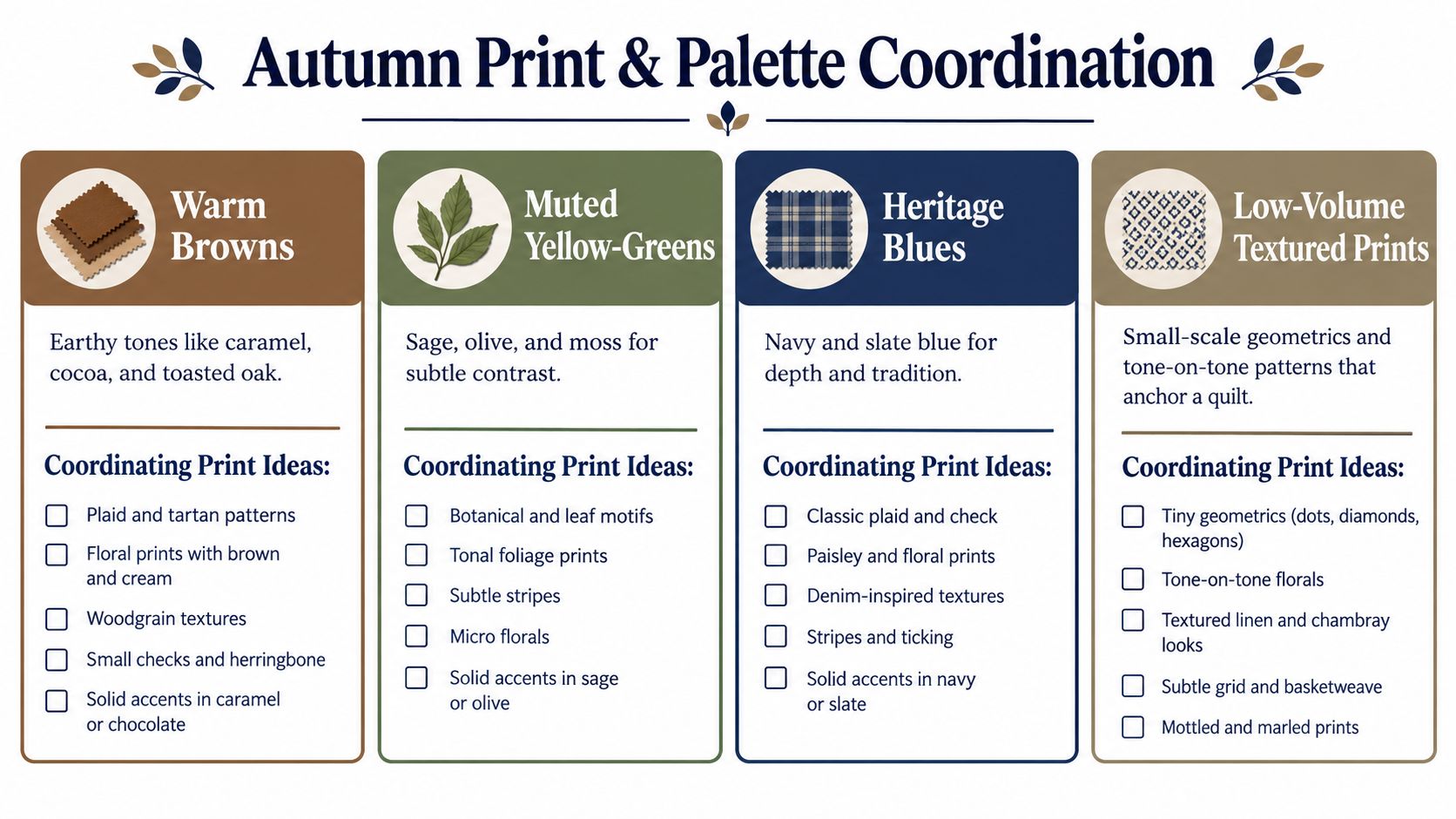
Search-based trend reporting says cotton-fabric interest peaked in November 2025 with a normalized value of 94, marking a strong seasonal shopping window (trend reporting on fall color and cotton-fabric interest). Trend colors can inspire a quilt, but you don't need to replace your stash to use them. Pull a few colors from a feature print, then look for coordinating pieces in your existing neutrals.
A quick coordination check
- Pick a lead print. Choose the fabric you want people to notice first.
- Pull supporting colors. Look for a blender or low-volume print that repeats one color from the lead.
- Add a calm neutral. Cream, charcoal, or another stash neutral can give the eye a place to rest.
- Check scale. Pair larger motifs with smaller prints so they don't compete.
- Test in your lighting. Screens can shift a shade, and indoor bulbs can change how colors look. Request a swatch before ordering several yards when close matching matters.
If you're coordinating a bundle, this guide to curated fat quarter sets for color matching can help you think through how prints and shades work together. Read the color in daylight and under the lighting where the project will be used. For a directional print or an exact match to your stash, a small sample is a safer first purchase than several yards based on a screen image.
Yardage Planning for Common Fall Projects
Yardage is easier to estimate when you start with the pieces your pattern needs. Write down the fabric width, the dimensions of each piece, and any seam allowance. Then account for a print repeat if you need to line up motifs.
Basic formula: measure the fabric width needed for each piece, add seam allowances, account for the motif repeat when matching a print, and calculate the total for all pieces. A pattern's estimate is the best starting point. Check the layout before buying, especially if you're using a directional print or want to match motifs at seams.
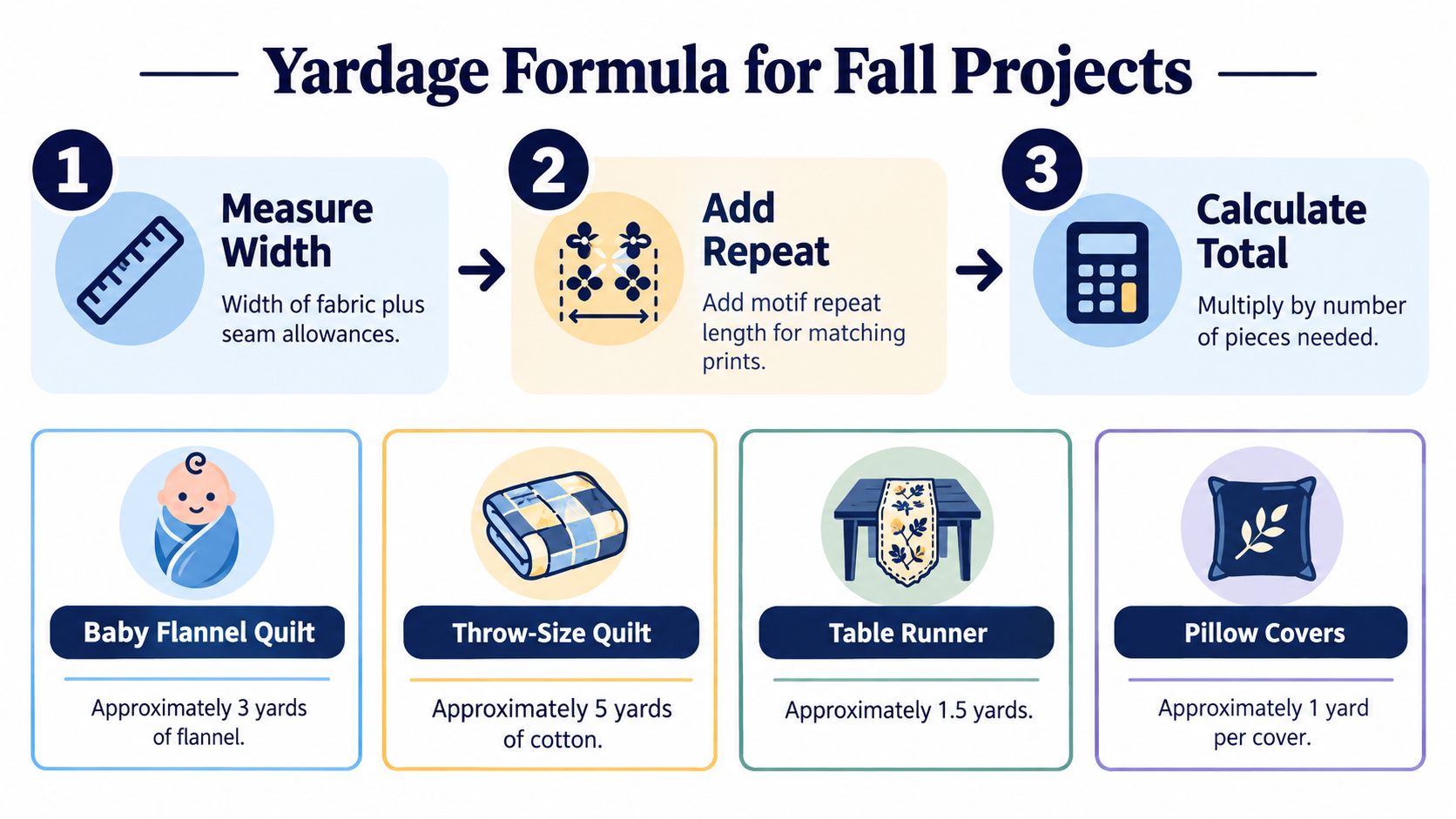
The amounts below are planning examples, not guaranteed pattern requirements. Fabric width, shrinkage, piece layout, and print matching can change what you need. Check your pattern before you order.
| Project | Planning example | Before you cut |
|---|---|---|
| Baby flannel quilt | Approximately 3 yards of flannel | Confirm quilt dimensions and allow for shrinkage |
| Throw-size cotton quilt | Approximately 5 yards of cotton | Check whether that covers the top, backing, or both |
| Table runner | Approximately 1.5 yards | Account for borders, binding, and motif placement |
| Pillow covers | Approximately 1 yard per cover | Check the finished size and closure style |
A child's flannel pajama set needs a different calculation from a quilt. Use the pattern's size-specific yardage estimate, then check whether the print repeat affects matching at the seams. The same rule applies to quilt blocks: a bold directional motif can require more careful layout than an allover print.
For twin or queen quilts, calculate the top and backing separately. A 108-inch backing can reduce the need for a center seam, but you still need enough fabric for the quilt dimensions and the finishing method. Use this fabric yardage calculation guide to check your math, then compare it with the pattern's instructions before placing an order.
Prewashing, Shrinkage, and Seasonal Care
A saturated autumn print can look dependable on the bolt and still release dye when wet or rubbed. Before cutting, test a representative swatch, especially when you plan to pair deep colors with cream or another pale fabric.
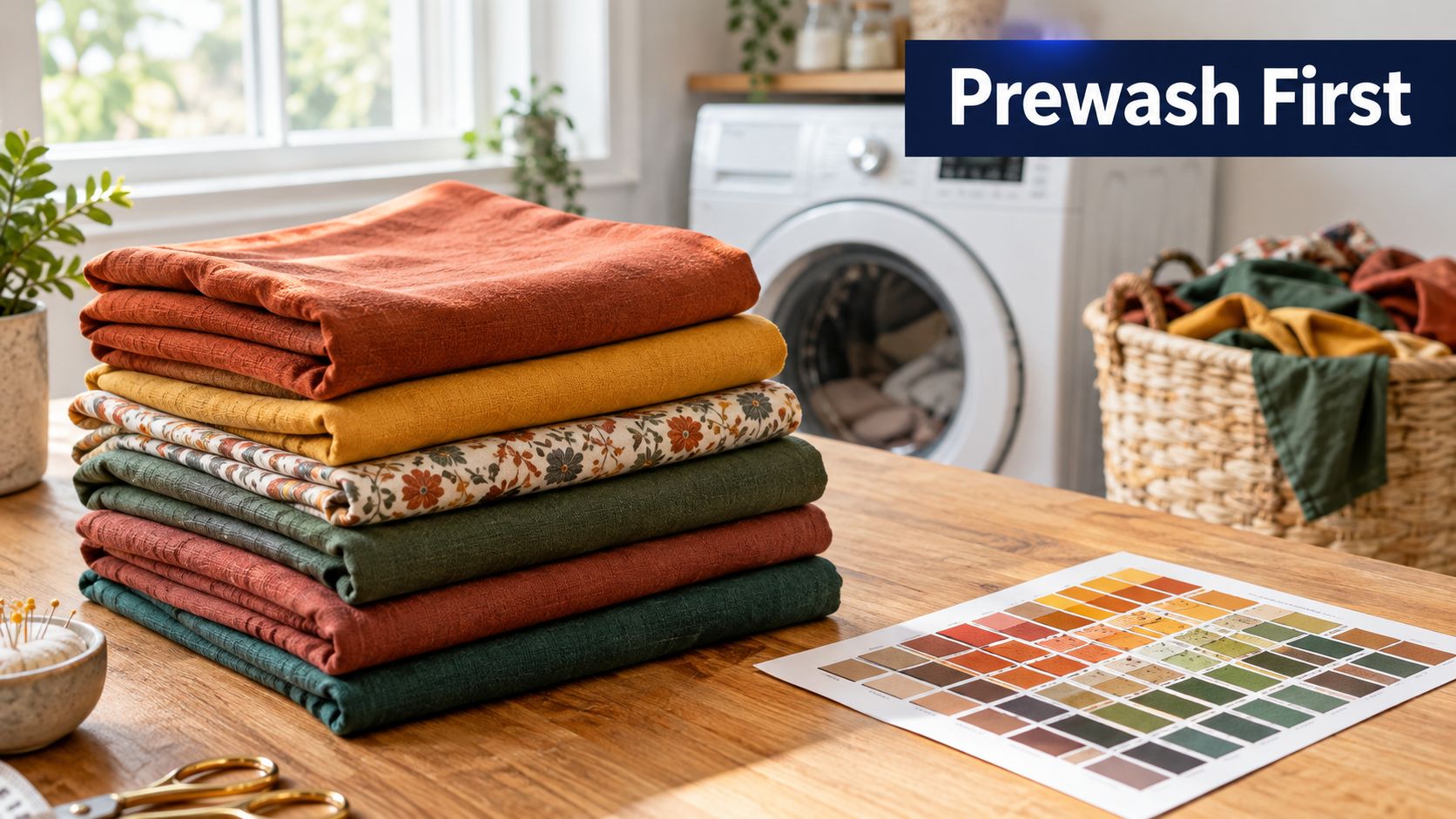
Prewash with the finished project in mind
Follow the fabric maker's care instructions rather than using one washing rule for every fiber. Cotton and flannel may shrink, while minky and fleece can respond differently to heat and agitation. If the finished project will be washed, prepare a swatch using the care routine you expect to use later.
Colorfastness is separate from abrasion resistance. ASTM lists different test methods for effects such as light exposure, crocking, laundering, and dry cleaning, so a fabric's fiber content or weight alone can't tell you how its color will hold up (ASTM textile standards). For a practical home check, rub a swatch with a clean white cloth while dry, then repeat with a damp cloth. If color transfers, take extra care before combining it with light fabrics or laundering the project.
A color-catching sheet can help manage loose dye in a mixed load, but it isn't a substitute for testing. Prewash and dry a swatch before cutting if shrinkage or bleeding would affect the fit or finished size. For step-by-step preparation, follow this guide to preshrinking fabric before sewing.
When the project is clean and dry, store it in a dry place away from direct sunlight. Refold stored quilts occasionally so one crease doesn't bear all the wear, and keep fabric away from damp areas through a Tennessee summer. If your project combines cotton and wool-blend pieces, test and stabilize each fabric as appropriate. Different fibers can respond differently to heat and moisture, which may pull seams or borders out of shape.
For a quick visual reminder of fabric-care basics, watch the video below.
Matching Notions, Threads, Battings, and Wide Backings
A quilt top is only one part of the finished project. Batting, thread, needles, and backing all affect how the layers move under your machine and how the quilt feels when it's done.
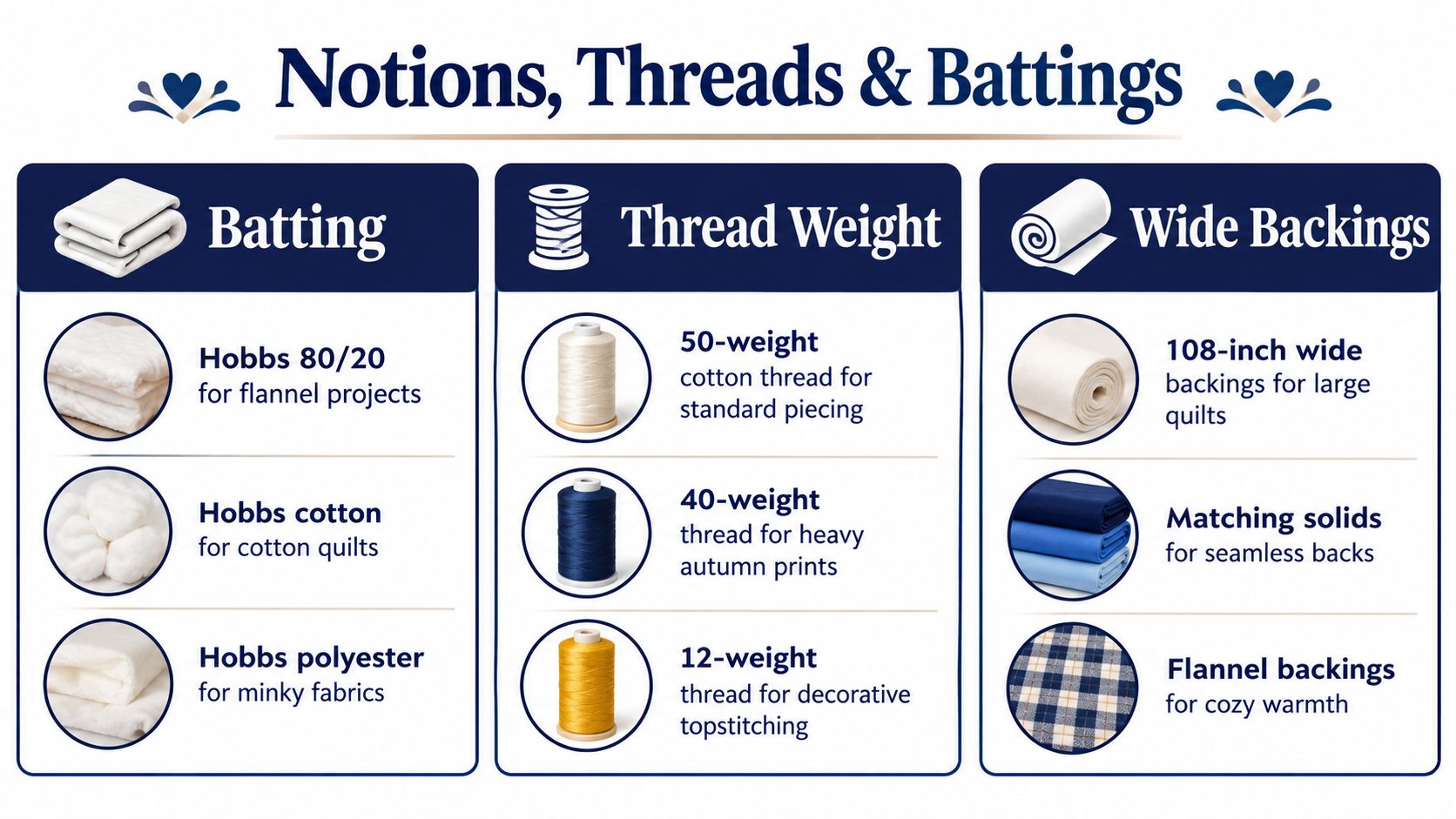
The batting shown in the guide is a starting point for comparing materials, not a universal pairing rule. Check the manufacturer's guidance and the project's care needs before choosing Hobbs 80/20, cotton, or polyester batting. Consider loft, how you plan to quilt the layers, and whether the finished quilt needs frequent washing. Batting packages can suit a single project; rolls may be more practical when you make quilts often or prepare several for a guild or charity project.
Thread choice depends on the fabric, machine, needle, and look you want. A fine thread may blend into a print, while a heavier thread can show more clearly in decorative stitching. Test a seam on layered scraps before quilting, and change the needle if it's dull or struggling with the fabric.
A walking foot can help feed layered or plush fabrics evenly. A SINGER or PFAFF machine with the right needle and presser-foot setup can handle many home projects, but thick stacks still benefit from a test run. Keep a fresh rotary blade nearby for accurate cuts through folded yardage.
Build your supply list
- Precuts: Choose fat quarters and other fabric precuts when the pattern calls for smaller, coordinated pieces.
- Batting: Compare batting options by fiber, loft, and care requirements.
- Wide backing: Consider a 108-inch quilt backing for a large quilt when a wide fabric suits the design.
- Tools and thread: Check that your needle, rotary cutter, and thread suit the fabric and planned stitching.
A wide backing can avoid a center seam, but it won't eliminate the need to check dimensions, overhang, and pattern requirements. Choose a coordinating solid when you want a calm reverse, or a flannel backing when added softness fits the project.
Avoiding Common Fall-Fabric Mistakes and Shopping Smart
Buying a whole collection before testing one swatch can leave you with yardage that doesn't match your project or your sewing setup. Color matters, but so do fabric width, care instructions, dye transfer, and whether a print's direction will create extra cutting work.
Before you buy, check:
- Dye lots: If a project needs several cuts of the same solid, buy what you need together when possible and compare labels.
- Swatches: Test color and feel before ordering several yards for a close match.
- Prewashing: Prepare a representative sample when shrinkage or dye transfer could affect the finished project.
- Machine capacity: A very bulky flannel or plush backing may need a walking foot and a test seam.
- Backing width: A 108-inch backing may avoid a center seam, but confirm its usable width against your quilt layout.
For online shopping, read the product details and compare the fabric with your pattern before you commit. In person, take your project notes to Our Springfield, Tennessee showroom and feel the fabric before deciding. The goal isn't to buy the most seasonal prints. It's to choose yardage you can sew, care for, and enjoy using.
The Fabric Company offers fall fabric by the yard, precuts, batting, and wide quilt backings to help you plan a project from first cut to finished quilt. Browse the selection at The Fabric Company, or visit Our Springfield, Tennessee showroom to compare fabrics in person.