

You've found the perfect batik for a quilt block, but you're wondering whether its dense color will overpower the design, or whether the fabric will behave differently from your usual printed cotton. Batiks by design are chosen for more than their surface pattern. Their wax-resist dyeing creates color depth, crisp motifs, and a distinctive hand that can transform quilts, garments, bags, and other slow-fashion projects.
This guide will help you read those qualities before you cut. You'll learn how the dye process affects fabric, how to judge color and motif scale, and how to coordinate batiks with batting, backing, precuts, and everyday sewing tools.
What Makes Batiks by Design Special
You're standing at the cutting table with two fabrics in front of you. One is a standard printed cotton with a clear design on the surface. The other is a batik, full of layered color and tiny variations. Both may look suitable for a quilt block, but they'll create different results once you cut, sew, press, and wash them.
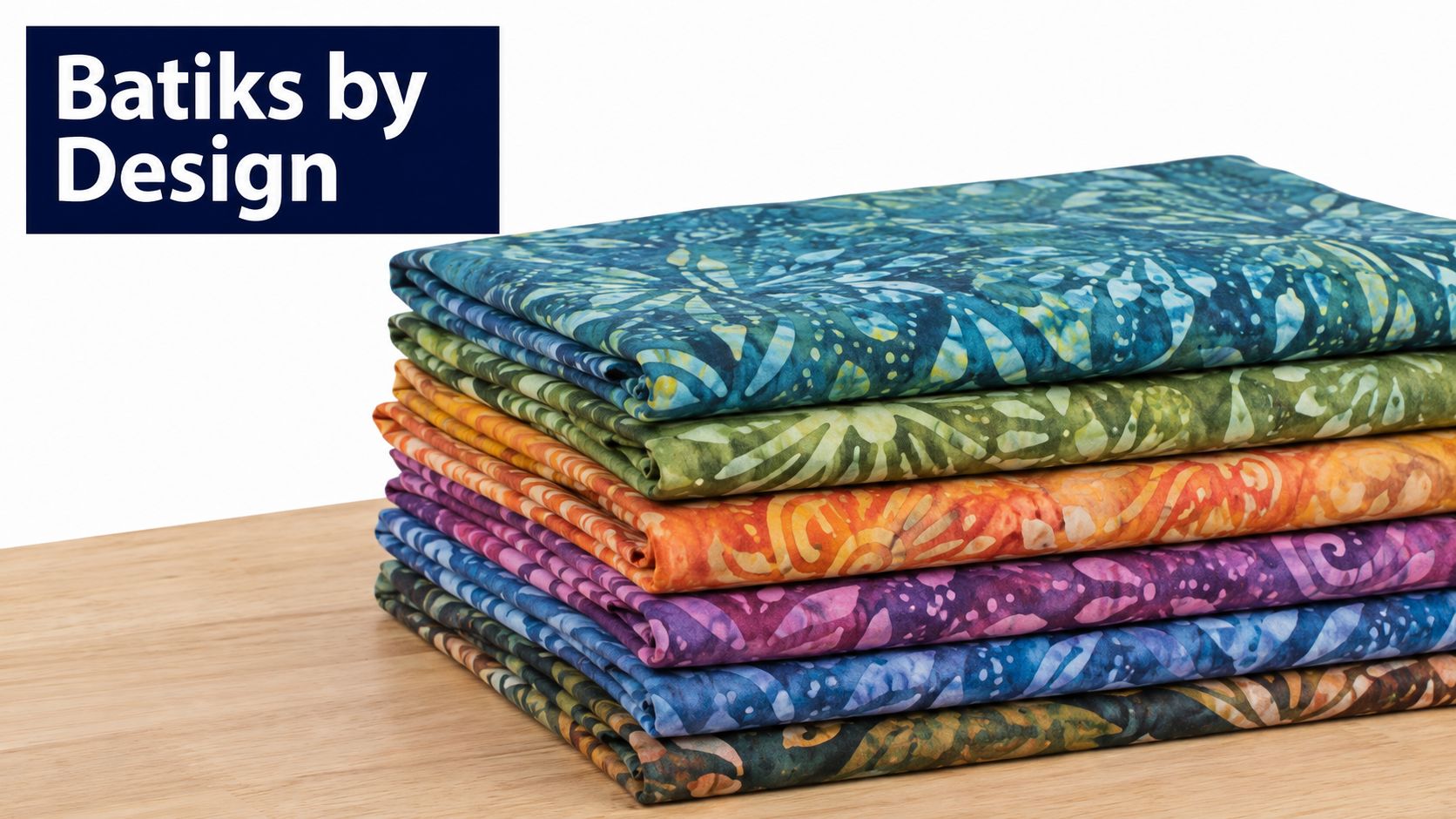
Batiks by design begin with process rather than decoration. Instead of placing a finished image only on the face of the cloth, makers use wax to block selected areas while dye moves into the remaining fabric. That approach creates visual depth and often gives batiks a more integrated appearance. Many batiks also have less obvious right and wrong sides, which gives you flexibility when arranging patchwork pieces.
The tradition behind the fabric matters, too. UNESCO formally inscribed Indonesian batik on the Representative List of the Intangible Cultural Heritage of Humanity in 2009. UNESCO recorded the decision as 4.COM 13.44, and the global designation was announced on 2 October 2009. The organization describes batik-making as a traditional resist-dye textile technique used in Indonesia and parts of the wider region, with handcrafted batik tulis continuing alongside industrial batik cap and printed batik. You can explore more background in this guide to the best quilting fabric brands.
Why makers keep reaching for batiks
UNESCO's materials state that Indonesian batik has been passed down through generations in Java and elsewhere since the early nineteenth century. The national batik industry is also reported to absorb more than 200,000 workers across more than 47,000 business units (Indonesia Travel). That combination of cultural continuity and broad production gives batik a place in both heritage craft and contemporary fabric design.
For a maker, the practical takeaway is simple:
- Use batiks for visual depth: Layered dye creates movement that can support a simple block.
- Use quieter batiks as blenders: Tonal patterns can connect stronger prints without adding a competing focal point.
- Use active motifs with restraint: A vivid batik can anchor a border, bag panel, or statement garment.
- Read the fabric as a design tool: The question isn't only whether you like the color. Ask what the fabric will do beside your other materials.
Batik also connects naturally with presentation and product design. If you're documenting a handmade collection, a bespoke packaging artwork guide can help you think about how fabric color, motif, and finished-product presentation work together.
The Art of Wax-Resist Dyeing
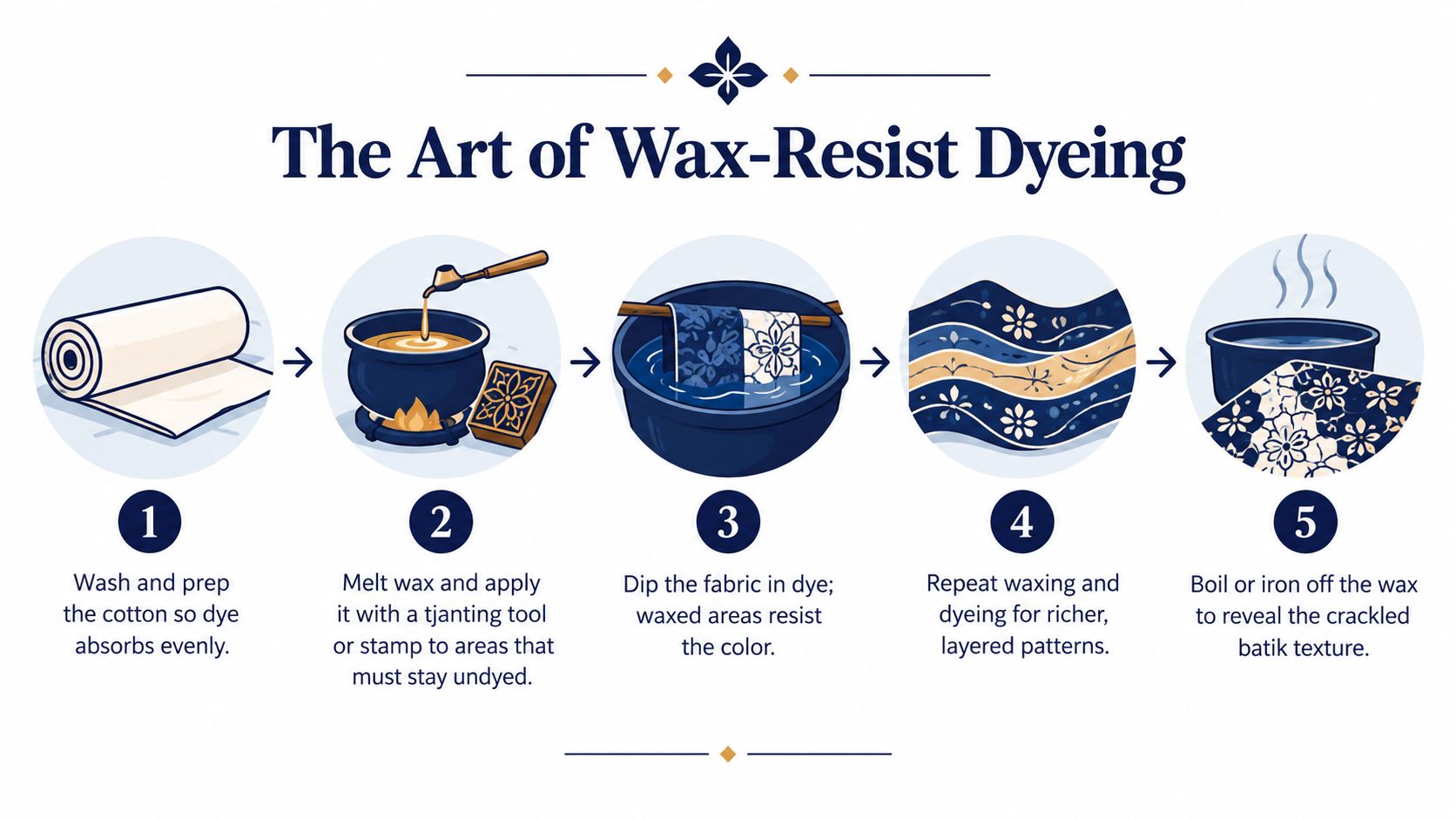
The signature look of batik comes from a controlled interruption. A maker applies hot molten wax to selected areas of fabric, then immerses the cloth in dye. The waxed sections resist the color, while the unwaxed sections absorb it. Repeated waxing and dyeing can build a layered surface in which earlier colors remain visible beneath later ones.
What changes the final result
Wax coverage, fabric structure, and dye handling all affect the finished cloth. Incomplete coverage, thin lines, or weak penetration can let dye bleed into areas meant to stay protected. When wax cracks during dyeing, color enters those openings and creates the familiar crackle or veining effect (technical explanation of batik resist dyeing).
Fabric weight matters because wax must travel far enough into the cloth to form a reliable barrier. Heavier materials may need waxing on both sides, while sheer materials can be penetrated more easily. For a crisp motif, makers need even preparation, consistent wax temperature, and fabric with predictable absorbency.
Practical rule: A sharp batik motif starts before the dye bath. Consistent preparation and an even resist layer matter as much as the pattern itself.
Wax formulation changes the balance between crackle, dye resistance, adhesion, and removal. A more brittle blend can encourage intentional crackling, while stronger adhesion can help the resist survive multiple dye baths. The tradeoff may be extra effort during de-waxing, so the desired surface effect should guide the formulation (research on wax blends and fabric behavior).
A standard printed cotton receives color through a different route. Printing can place a precise motif on the surface, while batik dyeing allows color to move through the fabric according to the resist pattern and fiber structure. If you want to compare these approaches before choosing a fabric for a project, this resource on how to compare fabric printing techniques offers useful terminology.
This short visual reference can help you connect the process to the finished cloth:
For a ready-to-use example, Expressions Batiks Watercolor Daisies in Antique Gold shows how a layered batik effect can bring both color variation and a recognizable motif to a project.
Signature Colors and Motifs
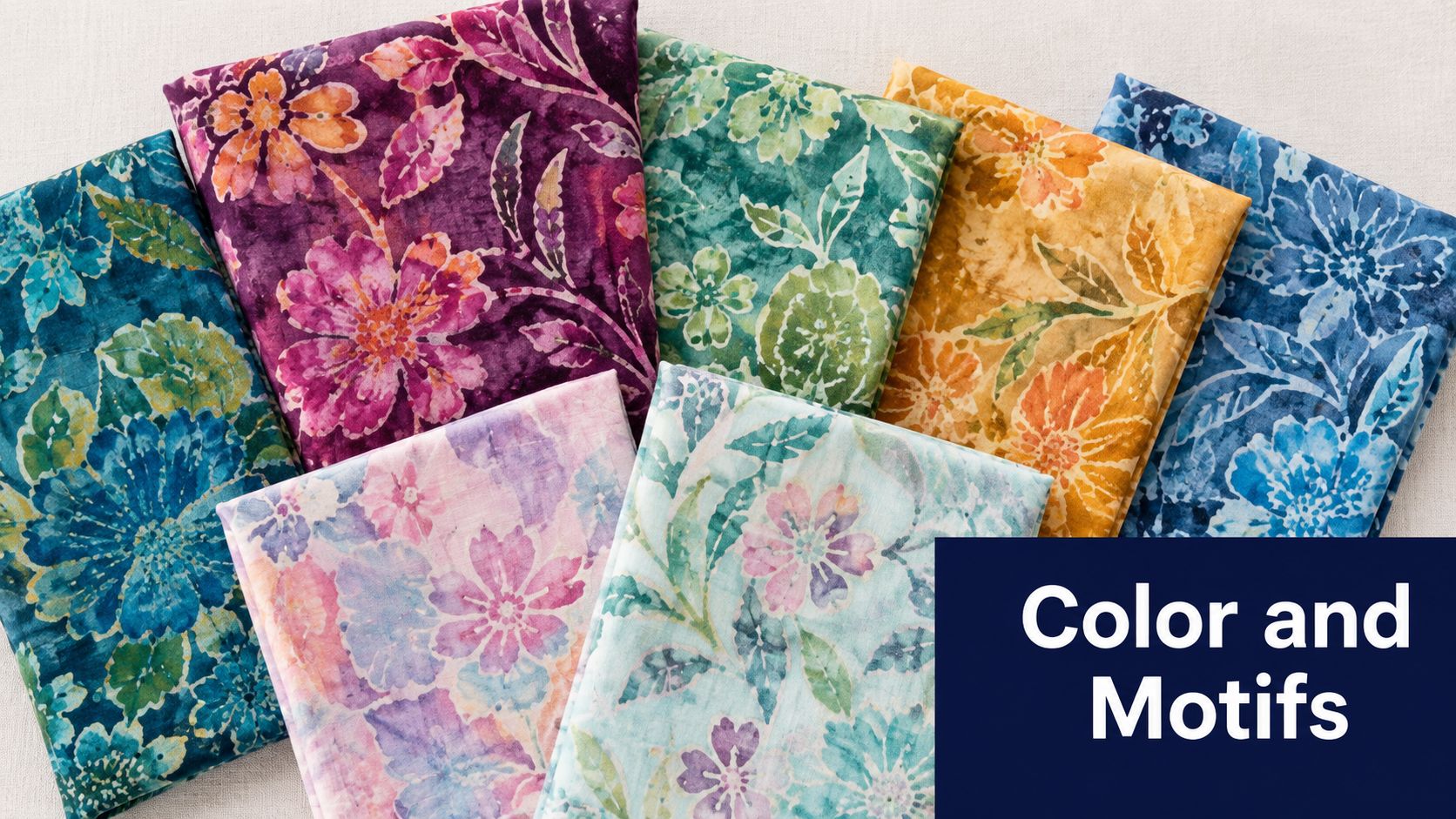
Color is often the first thing you notice in a batik, but value is what determines whether the fabric will support your design. A batik may contain several related shades, from deep jewel tones to pale, watercolor-like transitions. Those shifts can make a small patch look lively, or they can make a large garment feel visually busy.
Start by deciding what job the fabric needs to do. A bold, high-contrast batik can become the focal point of a quilt medallion or the front panel of a tote. A low-contrast tonal batik may work better as a background, sashing substitute, lining, or garment with a larger uninterrupted surface.
Match motif scale to the project
Traditional batik may feature marks associated with hand-drawn canting work or stamped designs. Modern collections reinterpret those ideas through splatters, leaves, florals, abstract lines, and layered backgrounds. The motif's scale changes how the fabric reads after cutting.
- Small motifs: Useful for precuts, narrow strips, curved pieces, and detailed piecing because the design remains visible in small sections.
- Medium motifs: Flexible for blocks, bags, aprons, and children's garments.
- Large motifs: Better when you want the pattern to remain legible across a bodice, pillow front, quilt border, or jacket panel.
A simple value check can prevent disappointment. Fold or photograph the fabric from a distance, then view it in grayscale if possible. If the batik loses all separation from its neighbor, the fabrics may merge in the finished project. If every piece has the same intensity, the quilt may lack resting places.
You can also use a palette tool to test combinations before ordering yardage. A relaxing palette tool can help you explore related hues while you decide whether your project needs contrast, harmony, or a quieter transition.
Splatter Batiks City Lites is the kind of fabric that can serve as a lively blender. Its scattered marks can connect stronger prints without behaving like a plain solid.
A batik improves readability when its value and motif scale support the structure of your design. Beautiful color alone isn't enough.
Best Uses in Quilting and Apparel
Batik and standard quilting cotton can both be useful, but they answer different design needs. Standard printed cotton often gives you a clearly defined motif, familiar softness, and predictable surface placement. Batik brings layered color, a distinctive texture, and visual activity that can make simple shapes feel more complex.
For quilting, batiks are especially helpful when the pattern depends on clean geometry or intricate piecing. Their fabric structure can support crisp seams, while their color variation adds interest without requiring many separate prints. That makes them a natural choice for strip piecing, modern blocks, scene-inspired work, applique, bags, and pouches.
A practical comparison
| Project need | Batik may be a strong choice when | Consider another cotton when |
|---|---|---|
| Intricate piecing | You want color variation inside small cut pieces | You need a very precise surface motif |
| Background fabric | You want texture without a flat solid | You need a calm, nearly invisible field |
| Apparel | You want a structured cotton garment or accessory | You need soft drape or substantial stretch |
| Hand quilting | You enjoy working through a firm, tightly woven cloth | You prefer an easier needle path |
| Modern slow fashion | You want a one-of-a-kind visual effect from a simple silhouette | You need exact print placement across seams |
For garments, test the drape before cutting a complete pattern. A batik that looks fluid on the bolt may feel more structured once you make a skirt, shirt, apron, or bag. Motif scale matters even more in apparel because the fabric may cover a larger continuous area than it would in patchwork.
Pre-treatment also deserves attention. Batik fabric and resist formulation influence wax penetration, dye uptake, and wash-out behavior, so handle deep or highly saturated colors thoughtfully. Test a small piece, especially when combining a strong batik with pale fabric or delicate material.
Our Springfield, Tennessee showroom lets you see color, hand, and drape in person before committing to a project. If you're sewing garments from quilting cotton, this guide to soft quilting cotton for apparel sewing offers a useful comparison point.
For finishing, don't overlook 108-inch backings and batting rolls. A carefully chosen top can lose balance if the backing competes with it or the batting changes the intended loft.
Coordinating Your Batik Projects
A successful batik quilt usually needs contrast, not constant intensity. If every fabric has a strong motif and saturated color, the eye has nowhere to rest. Pair active batiks with solids, low-volume prints, or tonal fabrics that repeat one hue without repeating the same visual noise.
Begin with the fabric that carries the project's main idea. It might be a floral batik, an abstract blue, or a multicolor piece with a strong value range. Pull secondary fabrics from that anchor rather than trying to match every shade exactly.
Build the palette in practical steps
- Choose the anchor: Select the batik you want people to notice first.
- Find a resting fabric: Add a solid or low-volume print that gives the eye a pause.
- Repeat one color: Use a second batik that shares a hue with the anchor, even if its motif differs.
- Check value: Place the fabrics together in natural light and look for clear separation.
- Test the cut size: A motif that looks balanced as a fat quarter may feel different as a narrow strip.
Precuts make this process easier because you can audition small amounts without buying a full collection. Fat Quarters, Charm Packs, Layer Cakes, and 2.5-inch strips also let you test how a batik's color movement behaves at the scale of your pattern. For a guided approach, browse these curated Fat Quarter sets for color matching.
Choose the supporting materials
Batiks can work with many batting types, but the loft should match the project. Needle-punched cotton, batting with scrim, and loftier blends will each change how quilting lines show and how the finished piece hangs. For a flat modern quilt, a lower loft may preserve piecing detail. For a dimensional wall hanging or bed quilt, more loft can make quilting texture stand forward.
Backing deserves the same care. A wide backing can reduce seam planning on a large quilt, while a contrasting backing can turn the finished piece over for a second visual experience. Wash and handle your fabrics according to the needs of the project, and keep a small swatch from any colorfastness test with your notes.
Project Ideas and Essential Supplies
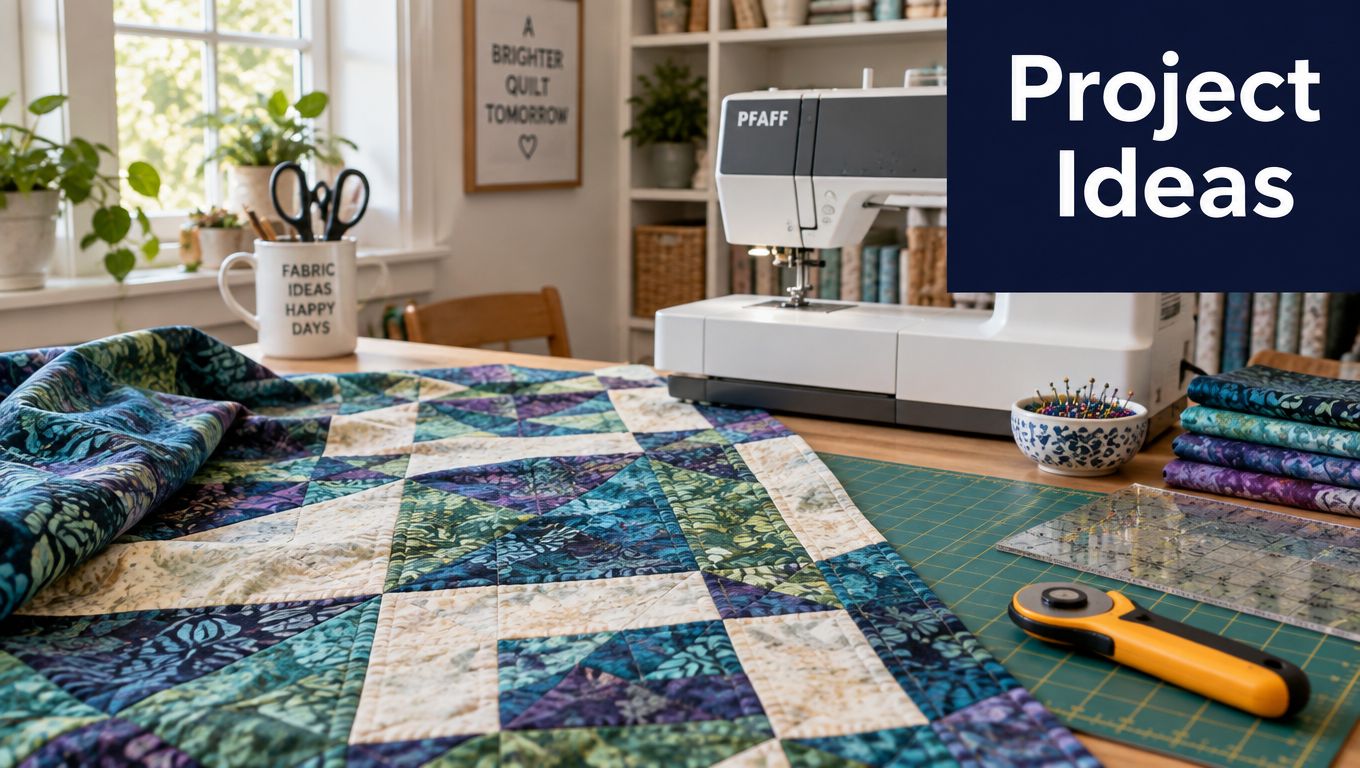
A first batik project doesn't need to be a full bed quilt. A maker might begin with a small table runner, using one active batik for the center, a quiet tonal fabric for the border, and a simple straight-line quilting plan. That project quickly reveals how the fabric cuts, presses, and responds to thread without demanding a large investment of time or yardage.
Another approach is to let the motif guide the form:
- For a modern quilt: Combine tonal batiks with strong value changes and wide negative space.
- For a bag: Use a medium-scale batik for the exterior and a calmer cotton for the lining.
- For slow-fashion sewing: Try a structured apron, overshirt, skirt, or simple top where the fabric can remain the focus.
- For home decor: Use a large motif on a cushion, lampshade panel, or wall piece.
- For gift projects: Choose a Fat Quarter bundle for coordinated pouches, table mats, or small quilted accessories.
Your supply list should reflect the fabric's behavior, not just the pattern envelope. Gather a sharp rotary blade, fine pins, a suitable machine needle, quality thread, a reliable ruler, and an iron. Add Precuts when you want efficient cutting, and choose Batting with the loft and drape your finished piece needs.
A project may also call for Jelly Rolls, Layer Cakes, or one-yard bundles. If you're working on a larger quilt, compare standard backing yardage with 108-inch quilt backings before you cut the top. The right width can simplify the finishing stage.
A good first test: Make one small block or accessory before committing your full batik cut. You'll learn more from that sample than from guessing at the bolt.
The Fabric Company offers batik fabrics, precuts, batting in packages and rolls, threads, patterns, rotary tools, and sewing equipment from brands such as SINGER and PFAFF. Our Springfield, Tennessee showroom is a useful place to compare fabric hand and color in person, while online shoppers can review collections, project supplies, and 108-inch backings from home.
Choose a batik with the finished design in mind, then build around its value, motif scale, and fabric hand. Visit The Fabric Company to shop batiks, precuts, batting, threads, and backing options for your next quilt or slow-fashion sewing project, or stop by our Springfield, Tennessee showroom for hands-on help. Join The Weekly Thread for more tips and 10% off your first order.