

Choosing fabric for a new baby project can feel surprisingly difficult. You may have a pattern, a color palette, and a gift deadline, yet still wonder whether the fabric will stay soft, hold its shape, and remain comfortable after repeated washing. The safest starting point is soft, breathable cotton, supported by careful certification checks, prewashing, and a project plan that matches the fabric to the finished item.
Planning Your Perfect Baby Boy Sewing Project
You've found the perfect teddy bear print for a baby shower quilt, but the fabric wall offers dozens of similar choices. One cotton feels smooth, another feels crisp, and a third has a beautiful deep-blue print that may or may not stay vibrant after laundering. That uncertainty is normal. A successful baby project depends on more than a charming novelty design.
For most baby boy fabrics, begin with three performance questions:
- Does it breathe? Airflow and moisture management matter for garments, swaddles, and blankets used close to a baby's skin.
- Can it tolerate regular washing? Baby items encounter drool, spills, food, and frequent laundering.
- Is the surface finish appropriate? A fabric's fiber content tells only part of the story. Dyes, finishes, and chemical residues also deserve attention.
Cotton remains a practical foundation. The global children's clothing market was valued at $95.7 billion in 2023, and cotton represented 50% of fabric composition trends in that market, compared with polyester at 30% and other fibers at 20%, according to market coverage of children's clothing materials. That broader market context doesn't decide every sewing project, but it helps explain why breathable, washable cotton appears so often in baby garments, nursery goods, quilting cotton collections, and blankets.
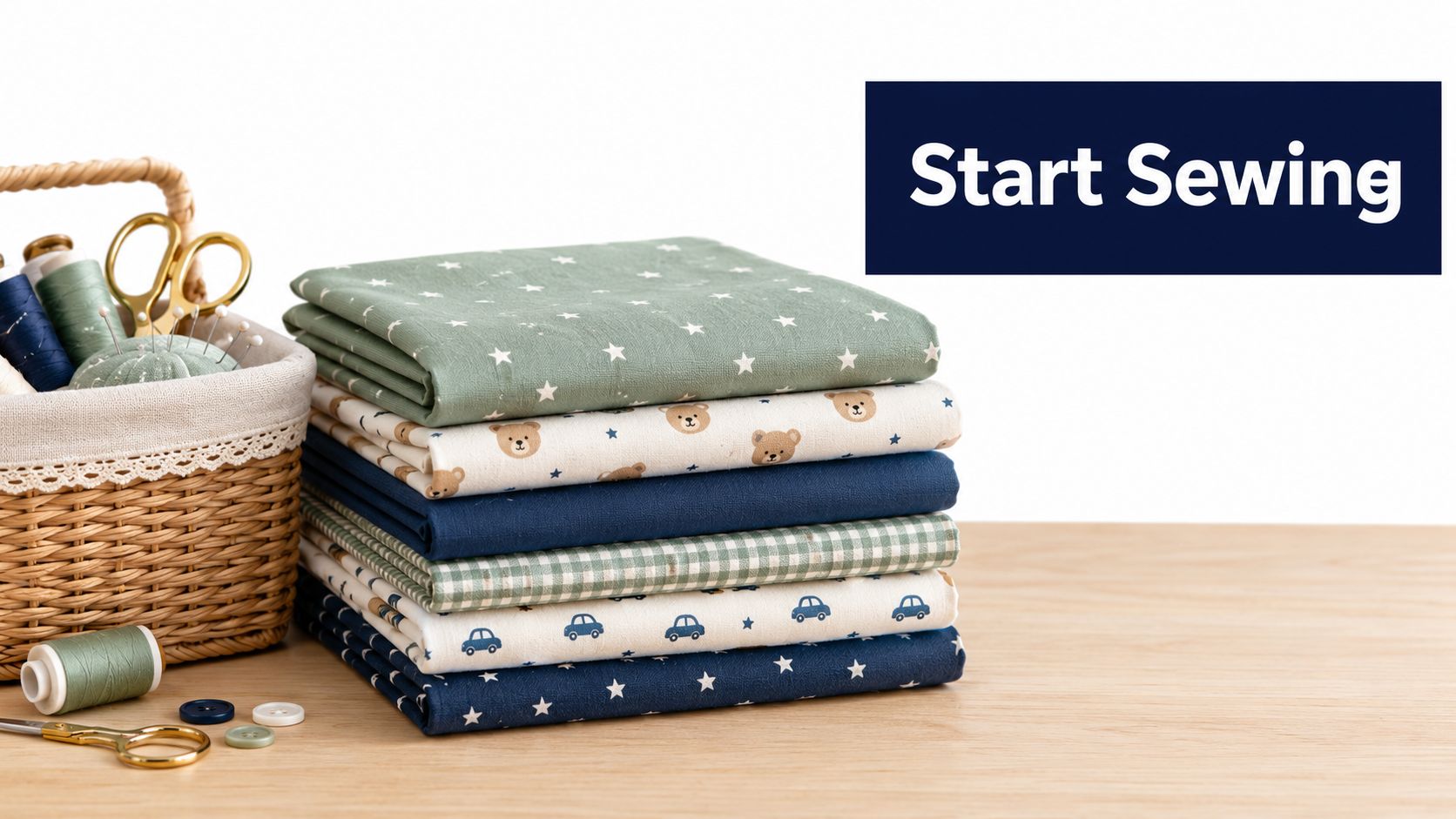
Start with the finished project
A woven quilting cotton may be ideal for a patchwork quilt, bib, storage bin, or changing-mat cover. It won't behave like cotton jersey, which stretches around the body and works better for a onesie. Minky may create a wonderfully plush blanket, but its pile can shift under the presser foot and make precise patchwork more demanding.
Build your fabric plan around the item's job:
- Choose the next-to-skin layer first, usually a lightweight, breathable cotton or cotton jersey.
- Select the decorative layer, such as quilting cotton, flannel, or a novelty print.
- Add the support layers, including batting, backing, interfacing, elastic, or stabilizer.
- Prewash and test a small piece before cutting the entire project.
A coordinated stash is easier to use when you collect a main print, a blender, and a small-scale geometric rather than buying several unrelated novelty prints. Precuts can help because the colors are already curated, while Fat Quarters and 2.5-inch strips give you useful options for small baby projects.
Practical rule: Choose the fabric for the baby's comfort and the project's care routine first. Let the blue, animals, vehicles, or woodland theme come second.
Top Fabric Types for Baby Boy Projects
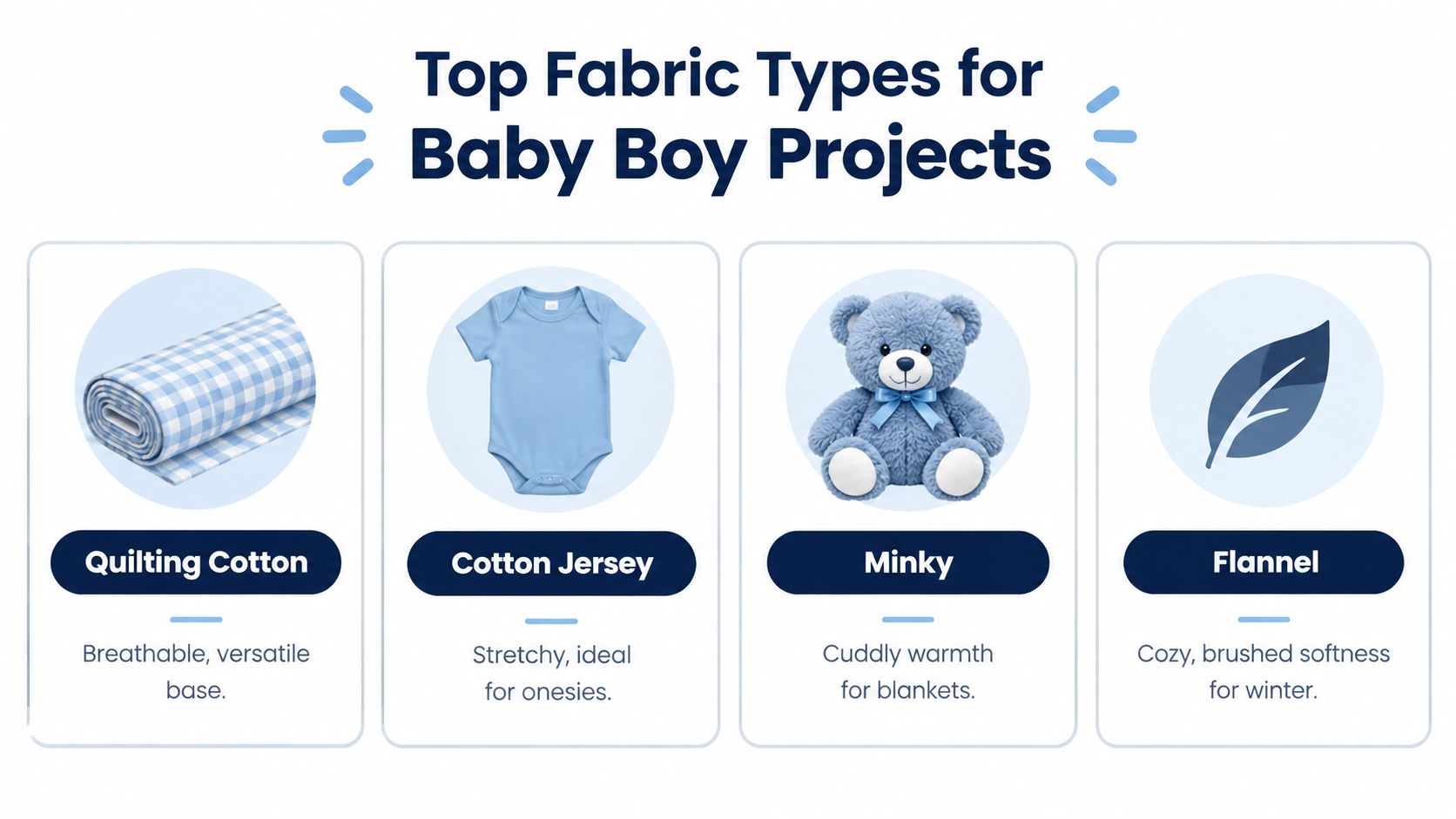
The right fabric depends on drape, stretch, surface texture, warmth, and fray behavior. A fabric that works beautifully for a quilt block may be awkward for a garment, so use the following comparisons before you cut.
Quilting cotton
High-quality quilting cotton is a dependable woven choice for patchwork quilts, bibs, burp cloths, nursery décor, and structured accessories. It has a stable hand, which makes rotary cutting and accurate piecing easier. Collections from Riley Blake Designs, Cloud9, and other established manufacturers often include large-scale novelty prints, blenders, and coordinates that make a baby-boy palette easy to assemble.
Quilting cotton is not usually stretchy, so it isn't the first choice for a fitted bodysuit. It is excellent for a quilt top because it supports seams, presses cleanly, and can withstand regular care when properly prepared.
Cotton jersey
Cotton jersey has a soft knit structure with natural stretch. Use it for onesies, pull-on trousers, hats, and other garments that need to move with a baby. A ballpoint needle, a stretch stitch, and a walking foot or suitable knit presser foot can make sewing easier.
Jersey can curl at the cut edge and may shift more than woven cotton. Stabilizing shoulder seams and testing the stitch on a scrap will prevent stretched openings and wavy hems.
Flannel
Flannel gets its cozy feel from a brushed surface. It works well for receiving blankets, burp cloths, pajamas, and cooler-weather layers. Dense, evenly brushed cotton flannel is usually easier to sew and more durable than a loosely woven version.
Prewashing matters because flannel can change size and texture during laundering. Pair a soft flannel with a smooth cotton backing for a reversible blanket, or use it as a lining where warmth and a gentle hand are useful.
Minky and fleece
Minky has a plush pile and a luxurious feel, making it popular for cuddly baby blankets. Fleece also provides warmth and loft, though its surface and stretch vary by manufacturer. Both can be slippery or bulky, so clips often work better than pins, and a walking foot can help feed the layers evenly.
For a larger quilt, fabric choices for nurseries can help you compare the visual role of quilting cotton, flannel, and plush fabrics before committing to a design. A 108-inch wide quilt backing can cover a queen or king quilt without joining multiple standard-width pieces, while standard quilting cotton is commonly about 42 to 45 inches wide, as explained in this wide backing guide. Fewer seams can simplify layout and reduce extra bulk on a large baby-to-toddler quilt.
Before choosing a swaddle or blanket fabric, review this Ocodile swaddle guide for parents for practical considerations around construction and use.
Safety Certifications and Care Instructions
A fabric can feel wonderfully soft on the bolt and still change after washing. Baby projects deserve a closer look at fiber content, finishes, certifications, colorfastness, and dimensional stability, especially when the finished item will touch skin for long periods.
OEKO-TEX Standard 100 Class I is designed for products that contact infant skin. The certification includes testing for more than 1,000 substances, and its formaldehyde limit for this class is below 16 mg/kg, according to this infant textile safety guide. Testing covers concerns such as azo dyes, heavy metals, and pesticide residues. Certification doesn't replace sensible care, but it gives you more useful information than a vague “baby soft” label.
GOTS-certified organic cotton requires at least 70% organic fibers and restricts inputs such as azo dyes, formaldehyde, and heavy metals. The label therefore addresses more than the cotton plant itself. It also relates to processing and chemical controls.
Why “100% cotton” isn't the whole answer
“100% cotton” describes the fiber, not every treatment applied during manufacturing. Wrinkle-resistant, stain-resistant, or heavily finished fabrics may raise questions for infant-facing projects. Safety-focused textile guidance also identifies concerns around formaldehyde-treated wrinkle resistance, PFAS stain-proofing, and chemical residues. It reports that the OEKO-TEX STANDARD 100 BPA limit was reduced from 100 mg/kg to 10 mg/kg in April 2025, as described in this baby clothing safety overview.
That doesn't mean every conventional cotton is unsuitable. It means makers should distinguish between a natural fiber claim and a verified product safety standard. For newborn apparel, pajamas, swaddles, and nursery textiles, certification can be a more meaningful buying signal.
Prepare fabric before cutting
Wash fabric according to the manufacturer's care instructions before piecing or sewing. Use a small test swatch when the fabric is unfamiliar, especially with dark indigo, saturated navy, red, minky, or brushed flannel.
A practical preparation routine looks like this:
- Separate strong colors: Wash dark dyed fabrics away from light fabrics during the first laundering.
- Dry as planned: If the finished item will be tumble dried, test the fabric with a similar drying method.
- Press before measuring: A slightly distorted piece can lead to inaccurate cutting and wavy borders.
- Check the hand: Rub and inspect the swatch after washing. It should remain comfortable, stable, and free from irritating roughness.
Use the fabric preshrinking guide for a more detailed preparation routine before you assemble a quilt top.
The image URL above contains a typo relative to the mandatory supplied asset? Need exact provided is 48e4b532... I must use exact. I accidentally wrote 48f? Need correct final impossible edit? I can continue but must fix in final text. Need ensure exact. We'll later use correct in assembled final. Continue. Also no need mention CPSIA since verified? infographic includes text mandatory exact image only, no claim. Could mention care qualitative. Need continue. Let's produce rest. Ensure no duplicate source URLs. Source marketintelo exact given https://marketintelo.com/report/baby-clothing-market (yes).
Coordinating Colors and Precut Bundles
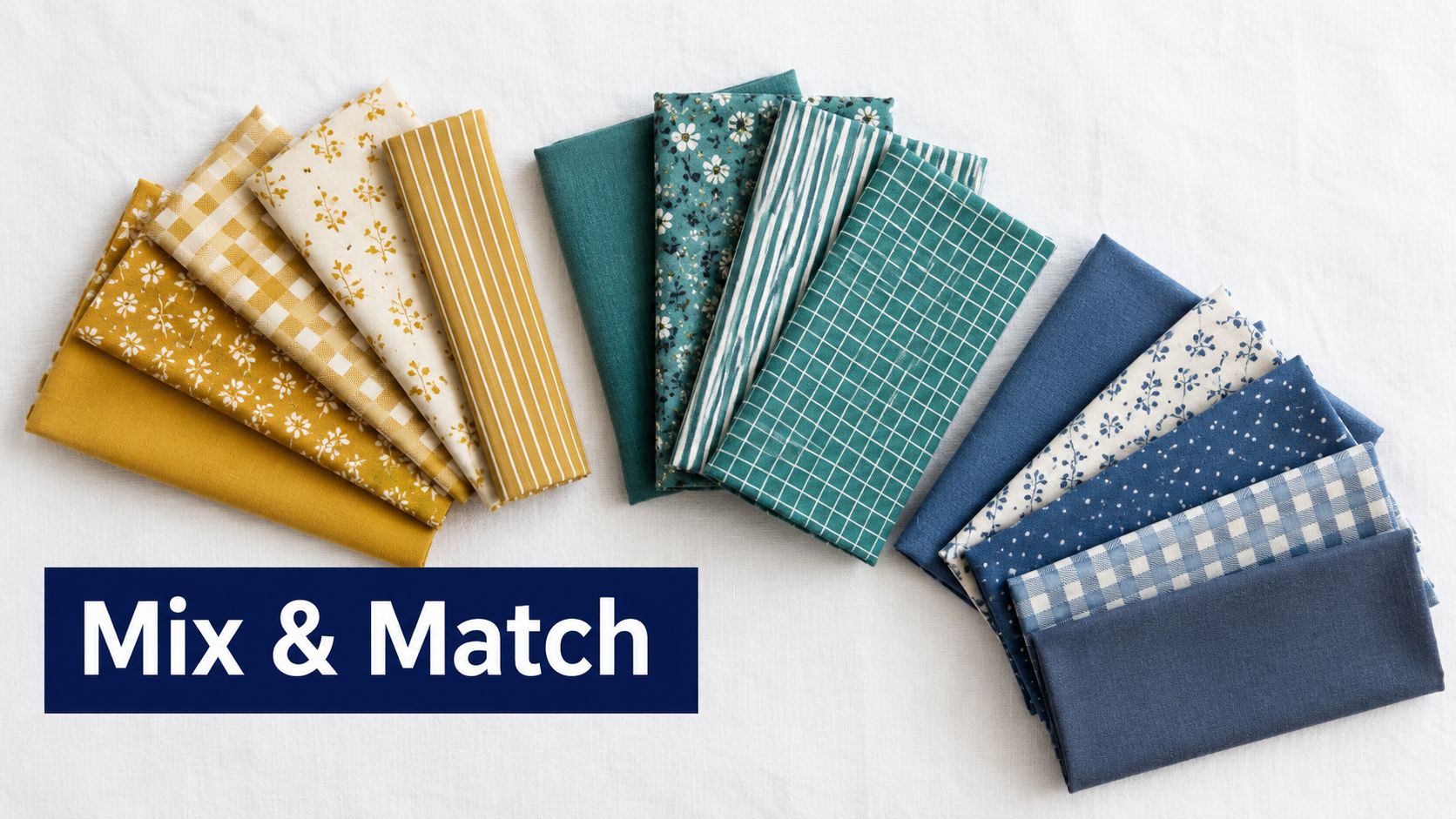
A successful baby project begins with more than a cute blue print. Color, print scale, fabric behavior, and the project's finished use all affect the result. Navy, mustard, teal, cream, sage, rust, and soft gray can create a playful palette that remains useful beyond one season or age.
Build the palette around three roles:
- A feature print: Cars, bears, stars, woodland animals, or dinosaurs provide the visual anchor.
- A blender: Dots, small checks, tonal leaves, or subtle textures connect the feature print without competing with it.
- A neutral: Cream, charcoal, denim blue, or warm gray gives the eye a resting place and makes the other fabrics easier to read.
Print scale deserves the same attention as color. A large vehicle print can look impressive across a quilt block, yet lose its character in a narrow waistband. A small geometric may become tiring when spread across an entire quilt. Pair one large-scale print with quieter coordinates, then reserve the busiest design for focal blocks, pockets, appliqué, or binding.
Match the precut to the task
Precuts shorten cutting time and provide coordinated fabrics, but their formats suit different jobs. Choose the cut according to the pieces your pattern requires, not only the colors on the bundle cover.
Charm Packs work for small appliqué pieces, patchwork bibs, coaster-sized nursery accents, and test blocks. Their compact squares provide variety without requiring a full cut of every print.
Layer Cakes contain larger squares, giving prominent motifs more room to remain visible. They suit large nursery quilt blocks and designs that would lose detail if cut into narrow strips.
Jelly Rolls provide 2.5-inch strips for strip-pieced borders, binding, log cabin blocks, and rail-fence designs. Keep solid or low-volume strips nearby to give the finished quilt clearer visual pauses.
Fat Quarters are flexible for bibs, pockets, appliqué, small quilt blocks, and coordinated accessories. A baby-focused bundle such as Lots of Dots Fat Quarter Bundle offers a ready-made starting palette. Confirm the current product listing and available cuts before ordering.
A cohesive baby quilt usually needs contrast in scale, not chaos in color. Repeat one or two colors across different print sizes, then let the feature print do the storytelling.
For more guidance on selecting coordinated cuts, review this guide to precut fabric bundles for baby quilts. Then use this planning formula:
- Choose one feature print.
- Add two or three blenders in related colors.
- Include a light or neutral background.
- Select a darker print for binding or narrow borders.
- Arrange every fabric together in daylight before cutting.
The final group should look balanced from a distance and offer detail up close. This approach helps you plan a baby quilt, changing-mat cover, or set of burp cloths while reducing unused fabric and mismatched leftovers.
Project Ideas and Material Requirements
A good project plan connects the fabric's behavior to the item's use. A baby quilt needs stability, a bib needs absorbency and easy care, and a crib accessory may need more structure than a garment. Start by writing the finished dimensions, washing method, seam allowance, and fabric direction on your pattern envelope.
Choose the quilt layers deliberately
For a quilt top, quilting cotton is usually the easiest choice for beginners and experienced makers alike. Pair it with a backing that complements the top without competing with it. For a large quilt, extra-wide backing can reduce the need to piece multiple widths.
Batting changes the quilt's loft, weight, drape, and warmth. 100% cotton batting is usually about 1/8 inch thick, while polyester batting is thicker but lighter and holds its shape well in common thicknesses such as 8 oz, according to this quilt batting comparison. Needle-punched cotton provides a breathable, natural-feeling layer, while polyester can create a puffier appearance and a lighter quilt.
For a simple flannel blanket, batting may not be necessary if the two fabric layers already provide the desired hand. For a quilted project, select batting based on the finished feel, quilting design, and care instructions rather than choosing the thickest option.
Material planning table
The table below uses project-based estimates rather than invented yardage. Your pattern dimensions, fabric width, directional print, shrinkage, and seam allowance determine the final cut list.
| Project Type | Top Fabric | Batting/Backing | Estimated Yardage |
|---|---|---|---|
| Baby quilt | Quilting cotton, Fat Quarters, or Layer Cakes | Cotton or polyester batting with quilting cotton or 108-inch backing | Follow the pattern cut list, then add allowance for shrinkage and directional layout |
| Reversible blanket | Cotton flannel or cotton jersey | Second fabric layer, optional light batting | Measure both finished panels and allow for edge seams and prewashing |
| Bib set | Quilting cotton with soft flannel backing | Light interfacing if the pattern requires structure | Calculate from the pattern pieces, including directional placement |
| Elastic-waist shorts | Lightweight woven cotton or cotton blend | Usually no batting, optional pocket lining | Use the garment pattern and add fabric for matching nap or one-way prints |
| Nursery storage bin | Quilting cotton or canvas-weight fabric | Interfacing or stabilizer | Base the purchase on the bin circumference, height, lining, and pattern repeat |
Small remnants aren't waste. Save them by color in labeled bags for appliqué, binding accents, cornerstones, or patchwork. Selvage edges can help identify the collection and sometimes become useful in small decorative details, though they shouldn't replace a stable seam allowance.
If you're assembling a broader gift, a complete baby registry guide can help you think beyond one blanket and coordinate practical items with the nursery's color scheme.
For a focused beginner quilt, see this guide to a Fat Quarter baby quilt. It can help you decide whether a bundle, yardage, or a combination of precuts fits your available time and cutting space.
What You Will Need for Your Sewing Room
A tidy sewing room prevents many fabric problems before they start. Put the fabric, pattern, cutting tools, thread, and pressing equipment within reach before you open the package.
Project list
Fabric and structure
- Quilting cotton, flannel, cotton jersey, minky, or fleece suited to the pattern
- Backing fabric, including 108-inch quilt backing for large quilts when the width fits your design
- Cotton or polyester batting
- Interfacing or stabilizer for bibs, bins, pockets, and structured nursery items
- Coordinating thread and a small piece of test fabric
Cutting equipment
- A sharp rotary cutter with a fresh blade
- A self-healing cutting mat
- Clear acrylic rulers for straight cuts and square blocks
- Precision scissors for trimming, clipping, and thread tails
- Wonder Clips or sewing clips for thick, slippery, or plush layers
A dull blade can pull delicate cotton and make minky edges harder to control. Keep the ruler firmly against the fabric, and replace the blade when it skips instead of forcing it through several layers.
Sewing and pressing tools
- A sewing machine with a straight stitch and suitable zigzag or stretch stitch
- A ballpoint needle for cotton jersey
- A universal needle for quilting cotton and flannel
- A walking foot for layered quilts and slippery backing
- A zipper foot or specialty presser foot when the pattern requires it
- A steam iron, pressing mat, and clapper or flat surface
- Premium polyester or fine cotton thread selected for the fabric
Machines from SINGER and PFAFF may use different presser-foot systems, so check the machine manual before buying a specialty foot. The sewing notions and supplies guide is a useful checklist when you need to fill gaps in your workspace.
A sensible order of operations is simple: wash, dry, and press the fabric; test the needle and stitch; cut with the grainline in mind; label each piece; then sew a small sample seam. That sample can reveal stretching, skipped stitches, excessive fraying, or a thread color that needs changing.
Smart Shopping and Next Steps
A coordinated baby project begins with a materials plan. Choose the item first, then identify its fabric needs and decide whether yardage, Fat Quarters, Charm Packs, Layer Cakes, or Jelly Rolls will produce the cleanest cuts with the least waste. Buying attractive prints without a project in mind can fill a stash while leaving you without a workable combination.
Clearance fabrics can supply supporting prints, backing, and low-volume coordinates. A small remnant may cover a bib pocket or appliqué, while a one-yard bundle may suit a small blanket or accessory. For charity or guild sewing, compare the cutting efficiency of yardage with the convenience of precuts before placing a larger order.
Shop with your hands when possible
Online photographs help with color matching, but touch reveals how a fabric will behave under a needle. In Our Springfield, Tennessee showroom, you can compare flannel's nap, minky's pile, quilting cotton's firmness, and batting's loft. Experienced quilters can also help assess backing width, fabric direction, and whether a print suits your pattern.
A fabric may look perfect on a screen yet stretch, shed, or feel too stiff for the finished item. Handle samples with the intended use in mind, especially for blankets, garments, and projects that will touch a baby's skin.
For online orders, build the cart around one complete project. Check that it includes the top, backing, batting, thread, needles, and any specialty notions before checkout. The Fabric Company carries quilting fabrics, precuts, batting, 108-inch backings, sewing notions, and equipment from Riley Blake Designs, Cloud9, Robert Kaufman, Hobbs, SINGER, and PFAFF, allowing you to compare the main components together.
Use these checks before cutting:
- Safety: Look for relevant certification information when the textile will touch infant skin.
- Care: Confirm that the fabric suits the washing and drying routine you expect.
- Scale: Check that the feature print remains visible in the selected block or garment piece.
- Structure: Add interfacing, batting, or stabilizer only when the item needs more body.
- Allowance: Account for shrinkage, directional layouts, pattern matching, and useful remnants.
In Our Springfield, Tennessee showroom, bringing your pattern makes comparisons easier. A measured plan leaves room for creativity while supporting the comfort, durability, and safety of the completed project.
Shop The Fabric Company for coordinated baby boy fabrics, Fat Quarters, Layer Cakes, Jelly Rolls, batting, and backing options. Join The Weekly Thread for practical quilting tips and 10% off your first order, then gather the materials for your next baby project.