

You've finished a beautiful queen or king quilt top, and now the backing is spread across the cutting table in several narrow panels. The seams need matching, pressing, and careful loading. TL;DR: 108 wide quilt backing is fabric cut 108 inches wide, made to cover many large quilts in one continuous piece. Compared with standard quilting cotton, it can reduce piecing, handling, and seam bulk, especially on longarm projects.
What 108 Wide Quilt Backing Really Means
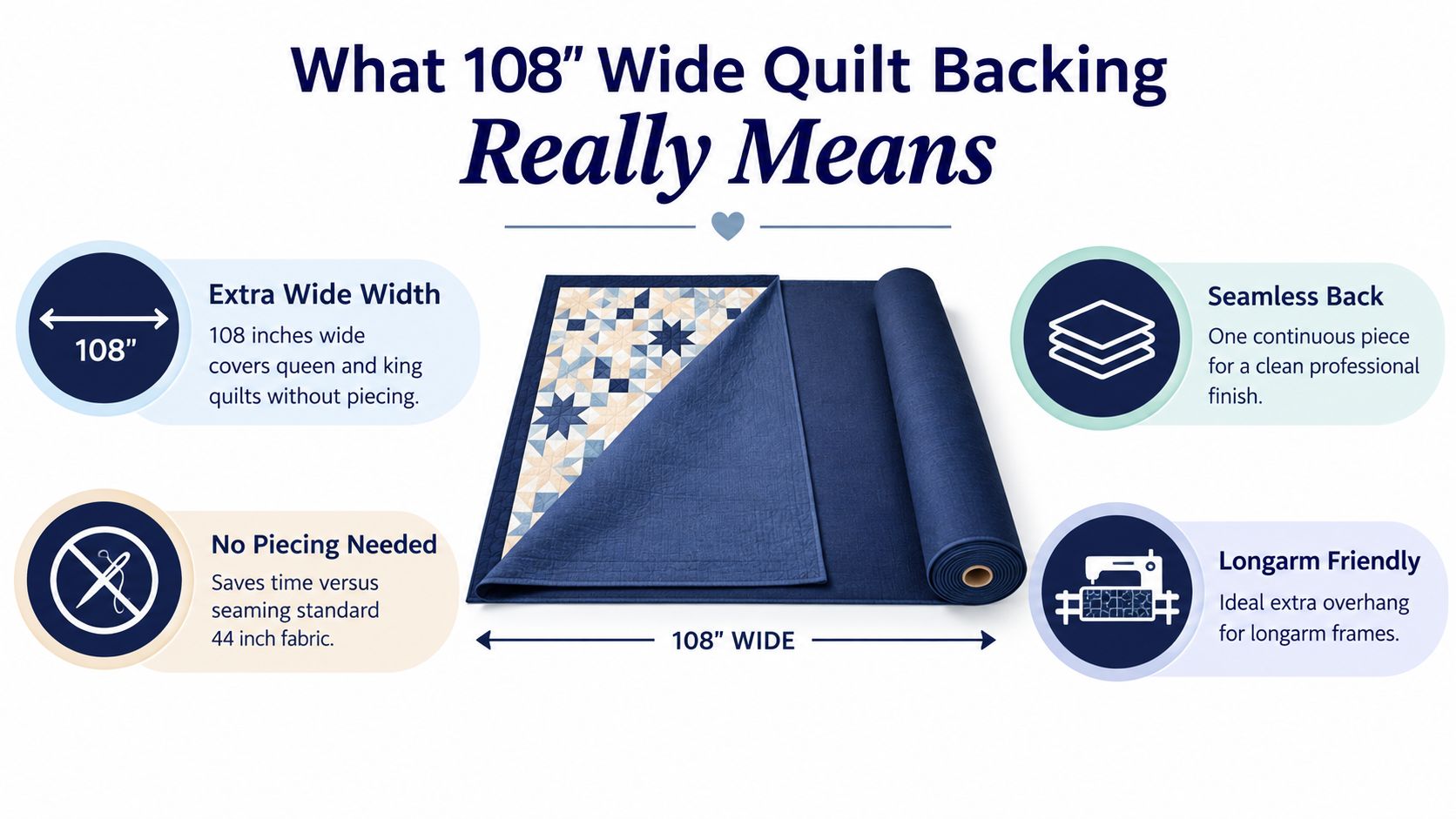
Standard quilting cotton is usually 42 to 44 inches wide, while 108-inch backing is commonly 108 inches wide, or roughly 2.5 times wider. Think of the difference as covering a bed with one wide sheet instead of sewing several smaller sheets together. The wide fabric gives you a broad, continuous surface for the back of the quilt.
That's what quilters mean by a seamless backing. It doesn't mean the fabric has no selvage or that it has been specially joined. It means you can often cut one panel large enough to cover the quilt top without adding a center seam. For a queen or many king projects, that single-panel approach removes one of the most time-consuming finishing steps.
Why the width matters
A queen quilt around 90" × 108" and a king quilt around 108" × 108" are both large enough that standard-width fabric usually needs to be joined. A 108-inch panel may cover the quilt's full width, so the quilting surface stays smoother and the longarm needle doesn't cross a long backing seam.
The phrase 108 wide quilt backing describes the fabric's width, not a required quilt size. You can use it for smaller projects, but the extra width may be unnecessary for a wall quilt, baby quilt, or modest throw. It becomes especially practical when the finished top is wide, the quilting design is detailed, or you want a clean back with minimal construction.
A seamless back is one continuous piece of backing fabric, not a back that has been pieced from narrow quilting cotton.
Before ordering, check the finished measurements of your quilt top, the fabric's fiber content, and the print direction. The width gives you options, but you'll still need enough length and longarm overhang.
Why Wide Backing Saves Fabric Time and Seams
The biggest advantage of wide backing appears when you compare the amount of standard fabric needed to build a large quilt back. A queen quilt around 90" × 108" generally needs about 8.25 yards of 44-inch fabric, compared with about 3.25 yards of 108-inch fabric for a single-piece back, according to this quilt backing yardage guide. A king quilt around 108" × 108" generally needs about 9.75 yards of 44-inch fabric, compared with about 3.25 yards of 108-inch wideback from the same calculation.
| Quilt Size | 44 Inch Fabric Needed | 108 Inch Fabric Needed |
|---|---|---|
| Queen, around 90" × 108" | About 8.25 yards | About 3.25 yards |
| King, around 108" × 108" | About 9.75 yards | About 3.25 yards |
The yardage difference also changes the work at the sewing machine. Standard-width fabric may require multiple panels, long seams, pressing, and print-direction decisions. A 108-inch panel often needs only measuring, squaring, and cutting before it's ready for basting.
Fewer joins, fewer problems
Every seam adds another place where fabric can shift, ripple, or create extra thickness. Seams may also show through thin batting, especially when the quilt is stretched across a longarm frame. A single wide panel reduces those interruptions and gives the quilting design a cleaner foundation.
That matters for prints, too. With standard-width fabric, you may need to decide whether to align a directional pattern across joined panels. With a wideback, there are fewer pattern-matching decisions and less bulk to manage under tension. You can review more practical options in this guide to piecing quilt backing.
The longarm allowance changes the cut
A quilt backing needs to extend beyond the quilt top so it can attach securely to the frame. A common longarm loading allowance is 4 inches per side, so a queen quilt around 90" × 108" may need a practical backing size of about 100" × 118". That size still fits comfortably across 108-inch fabric, leaving the length to be purchased by the yard.
The key lesson is simple. Don't calculate only from the finished quilt top. Calculate from the top plus the overhang your longarmer requires, then confirm the usable fabric width after accounting for selvages and squaring.
Choosing the Right 108 Inch Backing Fabric Type
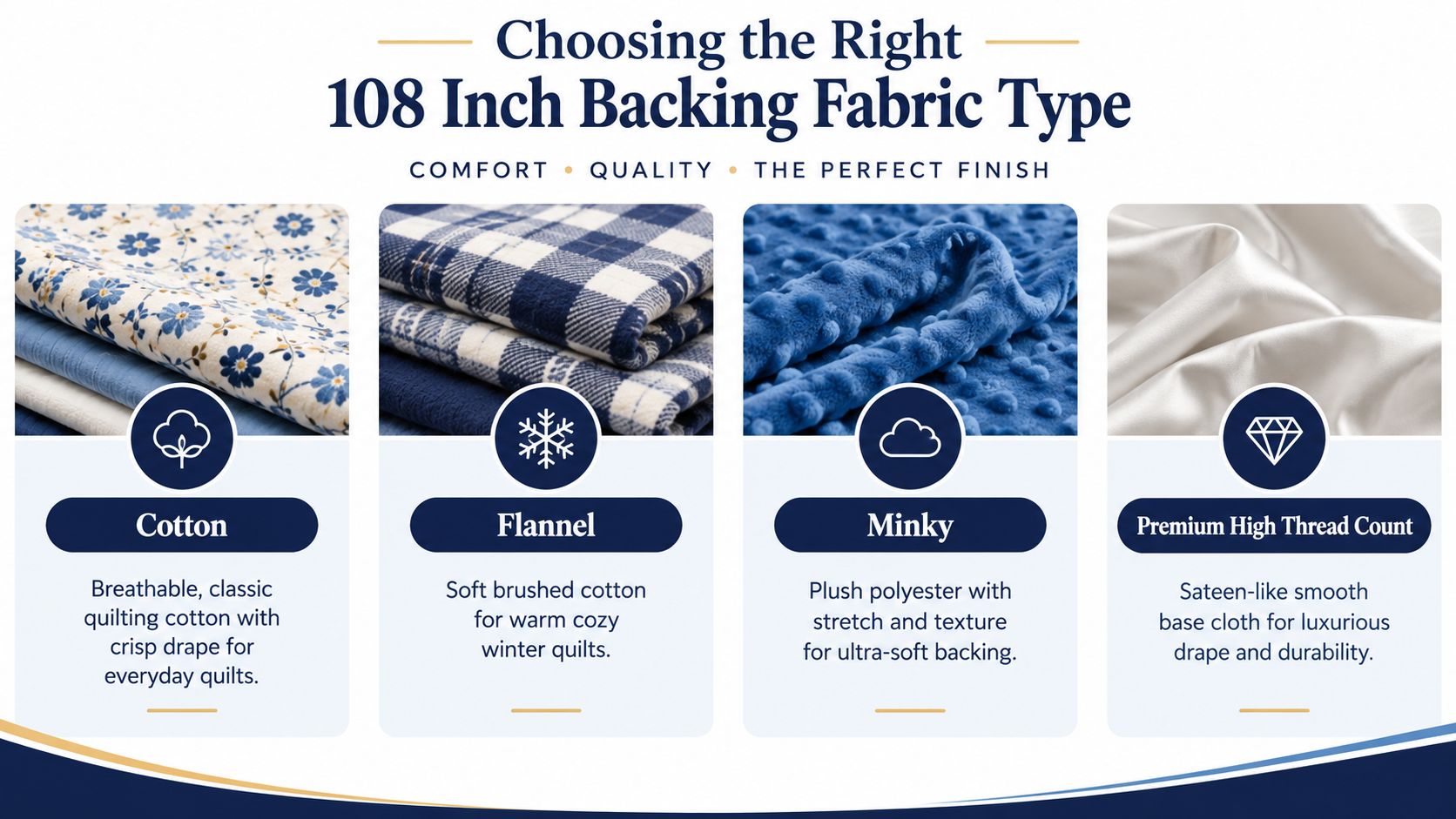
Width solves the seam problem, but the base cloth determines how the quilt feels and quilts. Cotton, flannel, minky, and premium widebacks each bring a different hand, drape, warmth, and response under the needle. Your choice should match the quilt's use, batting, quilting density, and washing plans.
Cotton for an everyday quilt
Cotton is the familiar starting point. It's breathable, stable, and generally straightforward to load, baste, and quilt. A crisp cotton wideback works well when you want the quilting stitches to read clearly without adding plush texture to the back.
Print scale also affects the finished look. A quiet blender or solid can highlight free-motion quilting, while a busier print can soften the visibility of small tension variations. Look for collections from established manufacturers such as Robert Kaufman and Cloud9, and compare the fabric hand rather than choosing only by color.
Flannel and minky for softness
Flannel adds a brushed, cozy feel and can make a quilt more inviting for cool-weather use. It may also behave differently from quilting cotton during loading, so pressing, squaring, and careful tension checks matter. For a deeper look at the planning details, read this guide to 108-inch flannel quilt backing.
Minky offers a plush polyester surface with stretch and texture. It's popular for soft baby quilts and snuggle quilts, but it requires a thoughtful pairing with the quilt top and batting. The stretch can make shifting more noticeable, so secure loading and an appropriate quilting design are important.
Premium base cloths and thread count
Some premium 108-inch backings use a denser base cloth than typical quilt-shop cotton. One manufacturer's commentary gives an example of about 200 thread count for a premium backing compared with about 60 x 60 threads per inch for standard quilting cotton, as described in Moda Fabrics' discussion of extra-wide backings.
A denser cloth can feel smoother and more stable, but it can also change the drape, hand, and needle resistance. That difference may be noticeable with fine needles, dense quilting, or a lightweight batting. A dense backing paired with a lofty batting can produce a different finished hand than a lighter cotton paired with needle-punched cotton.
Before cutting, verify:
- Fiber content: Confirm whether the backing is cotton, polyester, or a blend.
- Print orientation: Check whether the design runs across the width or along the length.
- Shrinkage behavior: Decide whether prewashing fits your project plan.
- Batting compatibility: Consider show-through, loft, scrim, and the final drape.
When to Use 108 Inch Backing for Large Quilts and Longarms
A large quilt top doesn't automatically require wide backing, but the format becomes a smart studio choice when the quilt is broad enough to make standard-width piecing awkward. Because 108-inch fabric is about 2.5 times the width of standard 42 to 44-inch quilting cotton, one cut often covers the full width of queen and many king quilts, reducing or eliminating backing seams, as explained in this wide backing calculator.
Use it when the workflow benefits
108 wide quilt backing is especially useful for:
- Queen quilts: The wide fabric can cover the top's width while leaving room for frame loading.
- King quilts: A 108-inch quilt width aligns closely with the fabric width, making the format highly practical.
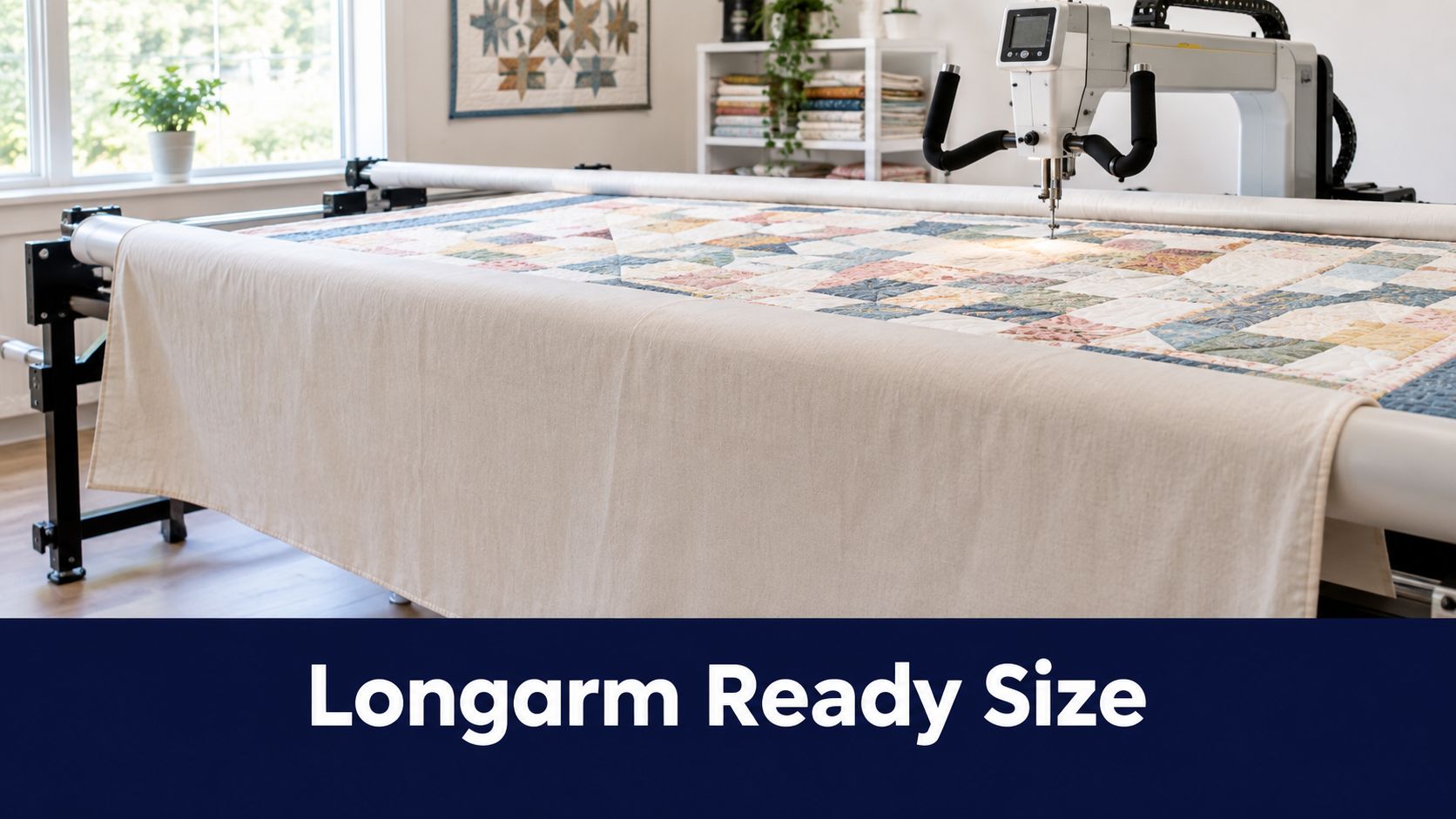
- Longarm quilting: A panel avoids loading over bulky horizontal seams.
- Client and guild projects: Fewer construction steps make repeated finishing work easier to organize.
- Detailed quilting: A smooth back can showcase the texture and stitch pattern.
A standard-width pieced back still makes sense for a smaller project, a scrappy design, or a quilt where you want the backing to become a second pieced composition. Stash builders may also prefer to combine remnants, orphan blocks, Layer Cakes, or 2.5-inch strips rather than purchase a new wideback.
Think about the frame, not just the top
Longarm quilting commonly needs 4 to 6 inches of overhang per side, depending on the machine, frame, and quilter's loading method. A back made without a seam makes that allowance easier to manage because you aren't adding a seam right where the quilt layers need to stay flat.
The backing still needs to be squared. A wide piece can be oversized and still load crooked if the cut edge is uneven. In Our Springfield, Tennessee showroom, you can bring your measurements and talk through the fabric weight, orientation, and loading plan before committing to a large cut.
This short demonstration can also help you visualize how the backing sits in a longarm workflow:
How to Measure Calculate and Match Your Backing
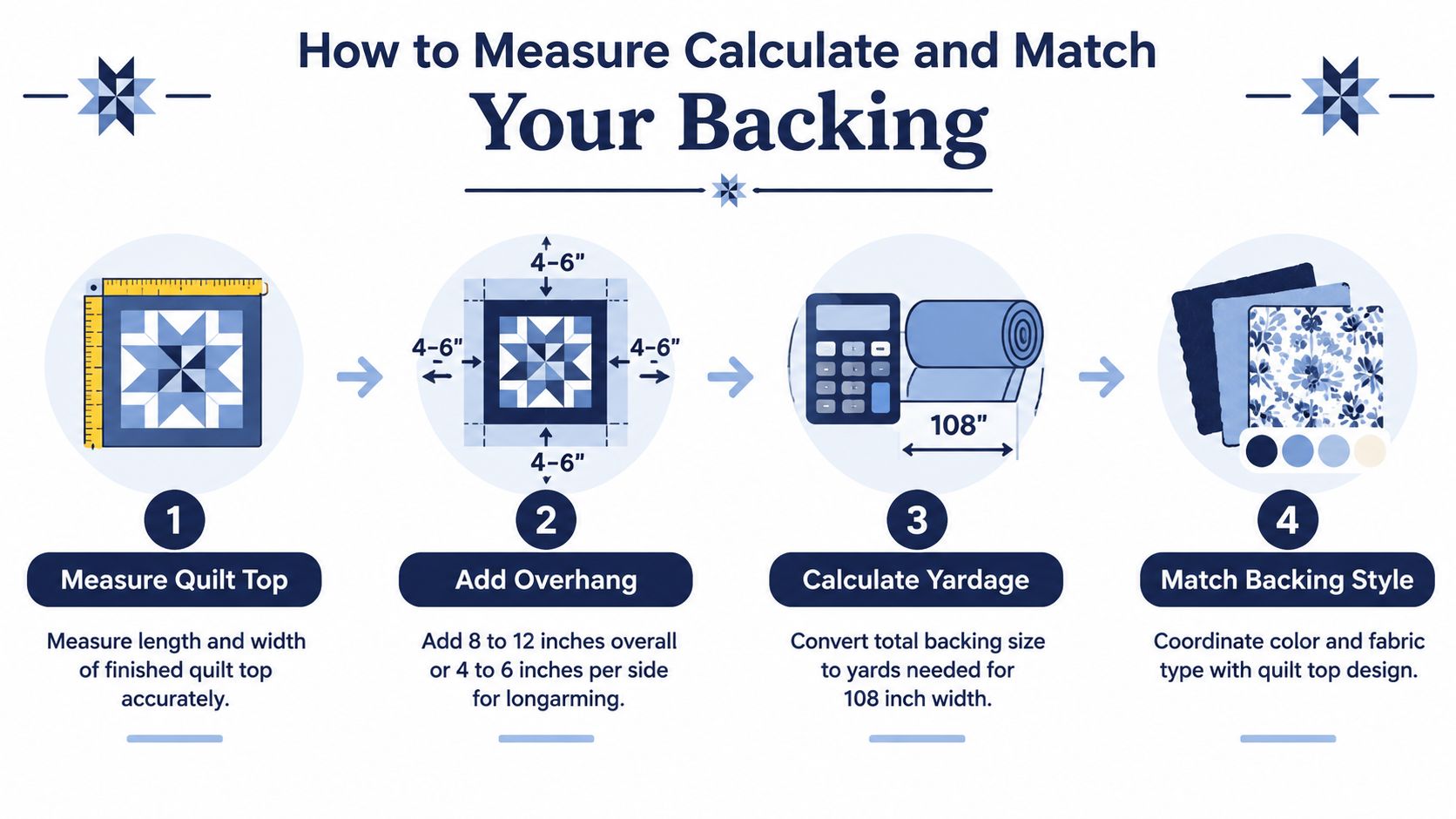
Start with the finished quilt top, not the pattern size. Measure the width and length through the center and compare those measurements with the edges. If the top isn't square, correct that issue before calculating the backing, because a crooked top can make a correctly measured backing seem too small.
Add the longarm allowance next. Professional guidance commonly uses 8 to 12 inches larger overall, or about 4 to 6 inches per side, so the backing can attach to the frame and remain covered during quilting. The exact amount depends on your longarmer's equipment and preference.
A repeatable measuring routine
- Measure the quilt top. Record the finished width and length after borders are attached and pressed.
- Add overhang. Add the loading allowance to both dimensions. For example, 4 inches per side adds 8 inches to the total width and 8 inches to the total length.
- Check the usable width. Treat 108 inches as the advertised width, then inspect the selvages and confirm how much fabric is usable.
- Convert the length to yards. Divide the required length in inches by 36, then round up to the next practical cut.
- Review direction and repeat. A directional print may need extra planning if you want the design to run a particular way.
For a queen project around 90" × 108", a 4-inch-per-side allowance creates a backing target around 100" × 118". Since the fabric is 108 inches wide, the width is covered by the fabric's crosswise measurement, while the 118-inch dimension determines the length you purchase.
Match the back to the quilt top
A modern quilt with large negative space may look striking with a low-contrast solid. A scrappy quilt made from Charm Packs, Layer Cakes, or 2.5-inch strips may pair well with a calm blender that keeps the back from competing with the piecing.
Press the backing before loading, inspect for flaws, and square the cut edges. For more yardage guidance, use this resource on calculating fabric yardage. If you need help preparing an exact cut, ask whether fabric cut to size is available for your project.
Shipping Handling and Cost Tips for Studios and Longarmers
Wideback fabric can look expensive when you compare only the price per yard. That comparison misses the main efficiency: you often purchase far fewer yards because the fabric covers a much larger area. Compare the total project yardage, the time spent piecing, and the cost of handling a large sewn back instead of judging the bolt price alone.
The category also has an interesting history. A 2017 Moda Fabrics note described wide quilt backing production worldwide as a “tiny fraction” of fabric production, showing that widebacks remained a niche segment even as quilters adopted them for large projects. The background is summarized in this wide quilt backing guide.
Plan purchases around the whole project
For a studio, backing rarely travels alone. You may also need batting, thread cones, needles, binding fabric, and packaging. A backing roll and a batting roll can be efficient for repeated work, but they need room to stay clean, dry, and easy to measure.
Use a simple purchasing system:
- Group client work: Order fabrics for scheduled quilts together so you can compare color and weight.
- Track usable yardage: Record the width, fiber content, and remaining length of each wideback.
- Separate project cuts: Label cut backing with the quilt name and loading dimensions.
- Watch weekly offers: Clearance and weekly deal sections can help stretch a studio budget.
- Compare shipping thresholds: The Fabric Company offers free shipping on orders of $49 or more, according to the publisher's store information.
For wholesale or repeated studio orders, review wholesale prices on 108 wide backings. In Our Springfield, Tennessee showroom, you can also inspect the true color, surface, and drape before purchasing fabric for a client quilt or guild batch.
Your Project Ready Plan and Next Steps
A good backing decision comes down to fit, fabric behavior, and workflow. Before you cut into a 108-inch wideback, write down the quilt top's finished dimensions, the overhang your longarmer needs, and the fabric qualities that suit the batting and final use.
What You'll Need
- Precuts, such as Charm Packs, Layer Cakes, Fat Quarters, Jelly Rolls, and 2.5-inch strips for the quilt top or binding.
- Batting, including cotton, wool, polyester, and needle-punched options with different loft and scrim characteristics.
- 108-inch quilt backings for a broad, low-seam finish.
- PFAFF sewing machines for piecing, binding, and preparation work.
- Hobbs batting when you want a recognized batting brand for your finishing plan.
Keep your selection practical. Cotton is a dependable everyday choice, flannel adds cozy softness, and minky brings plush texture with more stretch to manage. A premium, denser base cloth may feel smoother, but check its needle response and drape before pairing it with dense quilting.
The final checklist
- Measure the finished top: Record both dimensions after pressing.
- Add frame allowance: Plan for the required overhang on every side.
- Confirm width: Make sure the usable backing width covers the quilt.
- Check direction: Decide whether the print needs to run lengthwise or crosswise.
- Inspect the cloth: Look for flaws, confirm fiber content, and consider shrinkage.
- Press and square: Prepare clean, straight edges before loading.
- Coordinate the batting: Match loft, scrim, and hand to the backing's weight.
- Ask for help: Our Springfield, Tennessee showroom can help you compare options in person.
Once the backing is ready, your quilt moves into the satisfying part of the finish. The fewer seams you have to manage, the more attention you can give to loading, tension, thread color, and quilting design.
Shop our latest 108-inch quilt backing collection here. Join The Weekly Thread for more tips and 10% off your first order.
Notice the stitch quality on this PFAFF expression™ 710.
The Fabric Company offers 108-inch backings, batting, precuts, fabric by the yard, and longarm-ready project supplies online and in Our Springfield, Tennessee showroom. Visit The Fabric Company to choose a backing that fits your quilt, your quilting method, and your finishing plan.