

A fat quarter bundle is a curated collection of fabric pieces, each cut to a squarer size of about 18 by 22 inches instead of a long, thin quarter-yard strip. That wider shape gives quilters more flexibility for cutting blocks, appliqué pieces, and small project components.
You may have seen these neatly folded stacks in a fabric shop, tied with a ribbon and arranged by color. Perhaps you paused at one in Our Springfield, Tennessee showroom and wondered whether it was a pattern kit, a fabric sample pack, or enough material for a quilt. It's fabric, but it's also a shortcut to coordinated color, efficient cutting, and a more enjoyable start to your project.
Your Introduction to the World of Precuts
A fat quarter bundle is a coordinated set of fat quarter cuts, usually organized by a designer, collection, theme, or color palette. Each piece contains the same nominal quarter-yard amount as a traditional quarter-yard cut, but its wider rectangle is more useful for quilting.
A standard quarter yard can be a long, narrow strip. A fat quarter keeps more crosswise width, so you can arrange squares, rectangles, appliqué shapes, and quilt blocks in more ways. That difference is why fat quarters have become such a familiar part of quilting vocabulary, alongside Charm Packs, Layer Cakes, Jelly Rolls, and other precuts.
If you're learning about quilting cotton, this guide to cotton fabric for quilting is a helpful place to begin. Then you can use this guide to understand what a bundle contains, compare it with other precuts, estimate project potential, and choose the right collection for your stash.
Defining the Fat Quarter Cut
You find a bundle with prints you love and start planning quilt blocks. Before choosing a pattern, check what each rectangle contains. Quilting cotton commonly measures around 41 to 45 inches wide, though the finished cut can vary by manufacturer and after selvages are removed, as explained in this fabric size guide. The dimensions printed on the bundle are the reliable starting point.
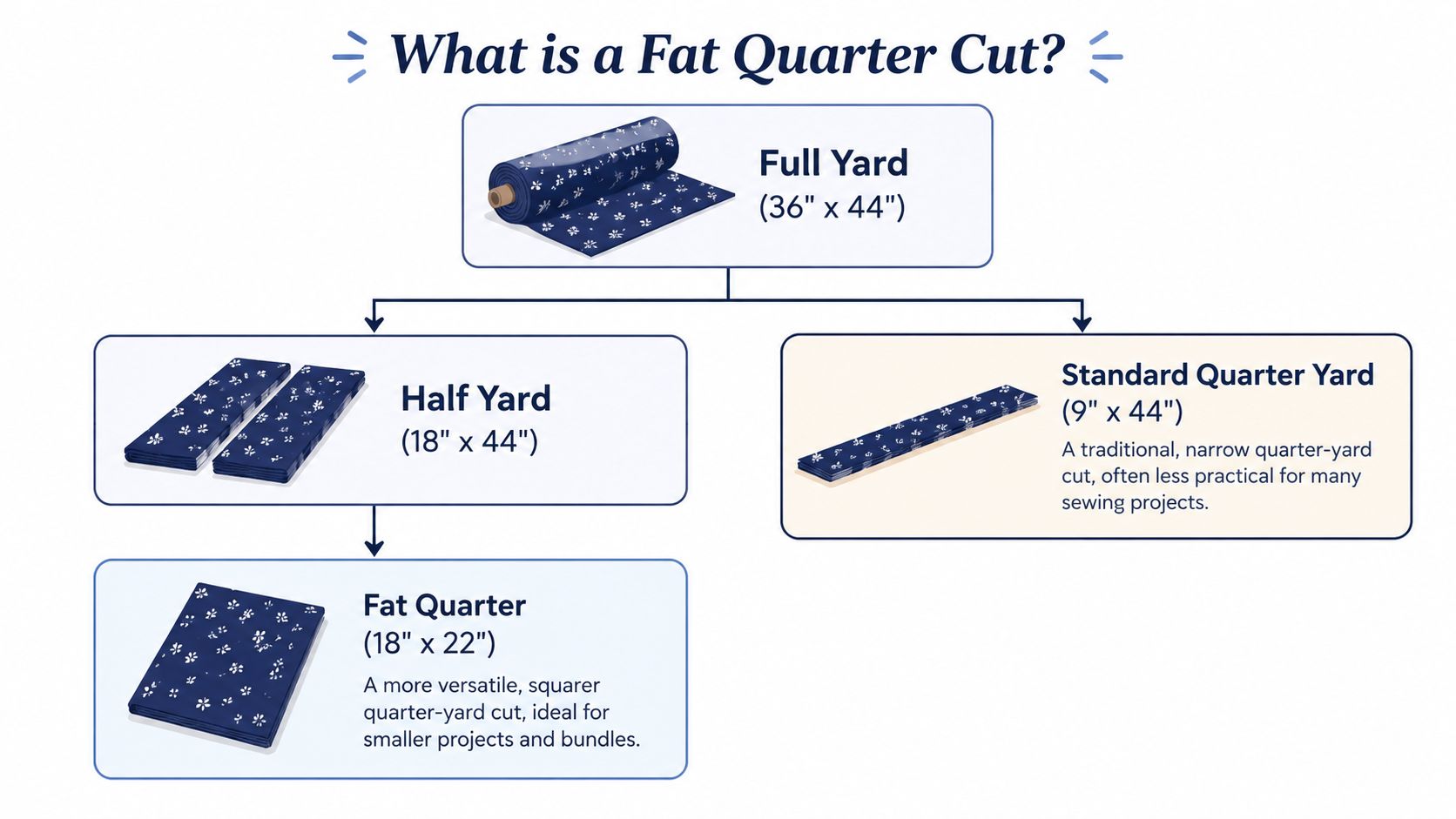
A traditional quarter yard is cut across the fabric's full width. In a common U.S. example, it measures about 9 by 44 inches. The fabric quantity equals one quarter yard, yet the long, narrow shape limits which blocks, templates, and motifs will fit.
A fat quarter follows a different cutting path:
- A half-yard is cut from the bolt.
- That half-yard is divided in half along its width.
- Each resulting piece measures about 18 by 22 inches in the U.S.
The amount of fabric remains a quarter yard. “Fat” describes the wider shape, not extra material. The same idea works like cutting a brownie from one pan. One piece can be long and skinny, while another is shorter and wider. The wider piece gives you more room to position a ruler, template, or selected print motif.
Why the rectangle matters
An 18 by 22 inch rectangle can hold pattern pieces that would not fit across a 9-inch strip. That extra width supports patchwork blocks, appliqué, scrappy layouts, and fussy cutting, where you place a motif deliberately rather than accepting whatever fits.
A fat quarter is therefore a quilting precut that turns a quarter yard into a more versatile rectangle. For a fuller explanation, see this guide to what a fat quarter is in quilting. This quilting explanation of fat quarters notes that bundles commonly contain 10, 16, 20, or 42 pieces, and a 42-piece bundle often represents a full designer collection.
Bundle size gives you a rough sense of project potential. A smaller set may provide enough variety for blocks, appliqué, or a small accessory. A larger collection offers more color and print choices for a coordinated quilt, though your pattern's cutting requirements still decide whether the fabric is sufficient.
Check the stated measurements before cutting. Selvages reduce usable area, and fabric width varies. Follow a pattern's fat-quarter requirements using the bundle's actual dimensions. For a coordinated example, browse a Robert Kaufman fat quarter bundle and consider how its prints might work together in a quilt block.
Fat Quarters vs Other Fabric Precuts
Quilters choose precuts based on shape as much as color. A Jelly Roll gives you long strips for strip-piecing, while a Layer Cake gives you ready-cut squares. Fat quarters sit between those options, offering a larger rectangle that can be cut into many different shapes.
The comparison below focuses on practical use, not just packaging.
Fabric Precut Comparison
| Precut Type | Typical Dimensions | Best For |
|---|---|---|
| Fat Quarter | About 18 by 21 to 22 inches | Blocks, appliqué, fussy cutting, bags, small projects, scrappy patchwork |
| Standard Quarter Yard | About 9 by 44 inches | Long narrow cuts, bindings, and patterns written for quarter-yard strips |
| Yardage | Cut from the bolt by the yard | Large pieces, borders, backing, garments, and projects needing continuous fabric |
| Jelly Roll | 2.5-inch strips | Strip-piecing, log cabins, rail fence blocks, and linear designs |
| Layer Cake | 10-inch squares | Fast square-based patchwork and patterns designed for pre-cut squares |
A Layer Cake quilting guide can help if you're deciding between pre-cut squares and rectangles. Layer Cakes reduce cutting for square-based patterns, but they don't offer the same freedom to place a larger template or select a motif from a print.
A Jelly Roll is efficient when the pattern depends on 2.5-inch strips. It's less flexible when you need varied rectangles, larger patches, or an appliqué shape. A fat quarter bundle from Cloud9, for example, can support more varied cutting layouts because each print arrives as a wider piece.
Yardage remains the right choice when you need a continuous length, such as a border, garment panel, or backing. For a finished quilt, you may also want to compare fabric choices with 108-inch quilt backings so the back can be planned separately from the pieced top.
Why Quilters Love Fat Quarter Bundles
The biggest appeal is coordination. A bundle groups fabrics that already share a visual relationship, whether that relationship comes from a designer's collection, a theme, or a carefully selected palette. You can still rearrange the pieces, but you won't need to begin with a large pile of unrelated yardage.
Bundles also make stash building more intentional. Instead of buying a full yard of every print, you can sample a collection and save the remaining cuts for future blocks, pouches, table runners, or scrappy patchwork. That approach is useful for quilters who want variety without filling their shelves with large amounts of fabric they may not use.
Bundle size varies widely. Coordinated sets can contain anywhere from 5 pieces to over 50 pieces, depending on the manufacturer and collection size, according to this fat quarter bundle overview. Always read the product description before choosing a pattern.
Practical benefits for your sewing table
- Color is already organized. You can spend more time planning the quilt design and less time testing every possible fabric pairing.
- Cutting options stay open. The rectangle supports squares, strips, rectangles, triangles, and appliqué pieces.
- Collections are easy to sample. You can explore a designer's full color story without purchasing full yardage of every print.
- Leftovers remain useful. Selvage-free remnants can become binding pieces, crumb blocks, pincushions, or accents.
- Bundles suit group sewing. Guild members can work from a shared collection while arranging pieces in individual ways.
For a broader selection, explore The Fabric Company's Precuts collection, where fat quarters sit alongside other ready-to-cut formats.
Practical rule: Buy the pattern first when possible. The required fat quarter count, background fabric, and cutting layout determine whether a bundle is a complete project or only the colorful part of one.
Project Ideas for Your First Bundle
A fat quarter bundle becomes easier to understand once you connect it to a real project. The same group of prints can become a quilt top, a set of accessories, or a collection of small gifts, depending on the pattern's cutting plan.
A beginner-friendly patchwork quilt is a natural starting point. Select a design with clearly labeled fat quarter cuts, then separate the prints into light, medium, and dark groups before cutting. That simple sorting step helps the block pattern remain visible when the fabrics are arranged together.
A bundle can also support projects that need variety rather than a large continuous piece:
- Patchwork tote bags can use different prints for exterior panels, pockets, and handles, with interfacing added for structure.
- Table runners benefit from repeated blocks or alternating strips, especially when the collection has a clear seasonal theme.
- Zippered pouches are a good way to practice precise seams, lining, and zipper installation while using smaller cuts.
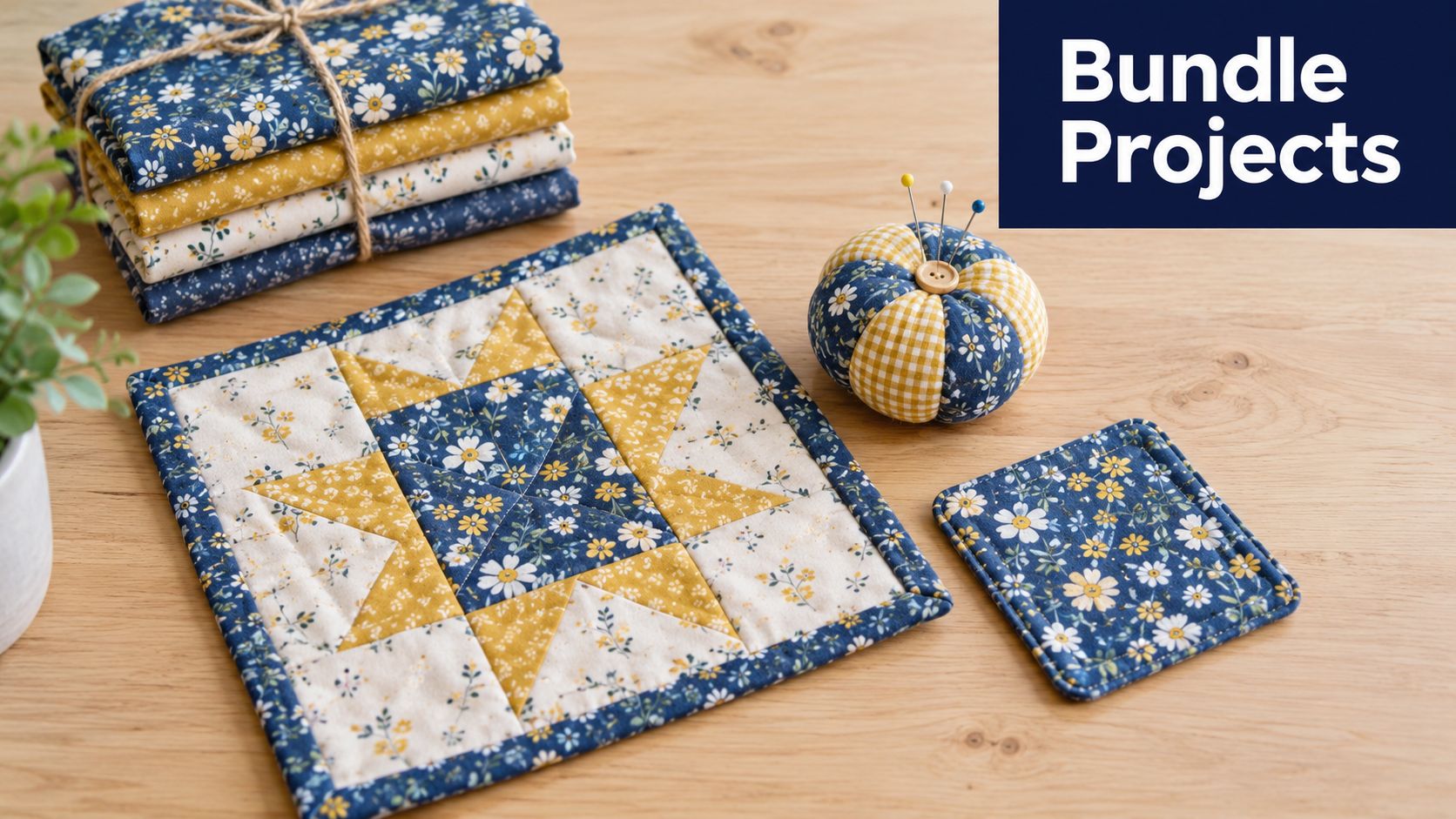
- Pincushions and coasters turn remnants into useful gifts and let beginners test color combinations before committing to a quilt.
- Appliqué projects benefit from the wider shape because you can position motifs carefully instead of working around a narrow strip.
Is one bundle enough for a quilt?
The answer depends on the pattern, quilt size, block dimensions, and background fabric. A typical bundle containing 18 to 20 fat quarters can make anything from a lap or throw quilt to a queen-sized quilt when the pattern and additional background fabric are taken into account, as noted in this fat quarter project FAQ.
That range is why a bundle count alone doesn't guarantee project yield. A pattern may use one fat quarter for several blocks, while another may use a print sparingly and require more background yardage. Check the cutting chart, not just the bundle photograph.
The background fabric often creates the visual breathing room between prints. After piecing, you'll need batting, backing, quilting thread, and binding. Hobbs Batting can provide the loft and structure inside the quilt, while a wide backing can simplify the finishing stage for a larger quilt.
For accessible starting points, browse fat quarter projects for beginners and match the project requirements to the bundle you already have. If you're planning a larger quilt, compare Hobbs batting options and 108-inch quilt backing fabrics before you begin cutting the top.
How to Choose the Perfect Bundle
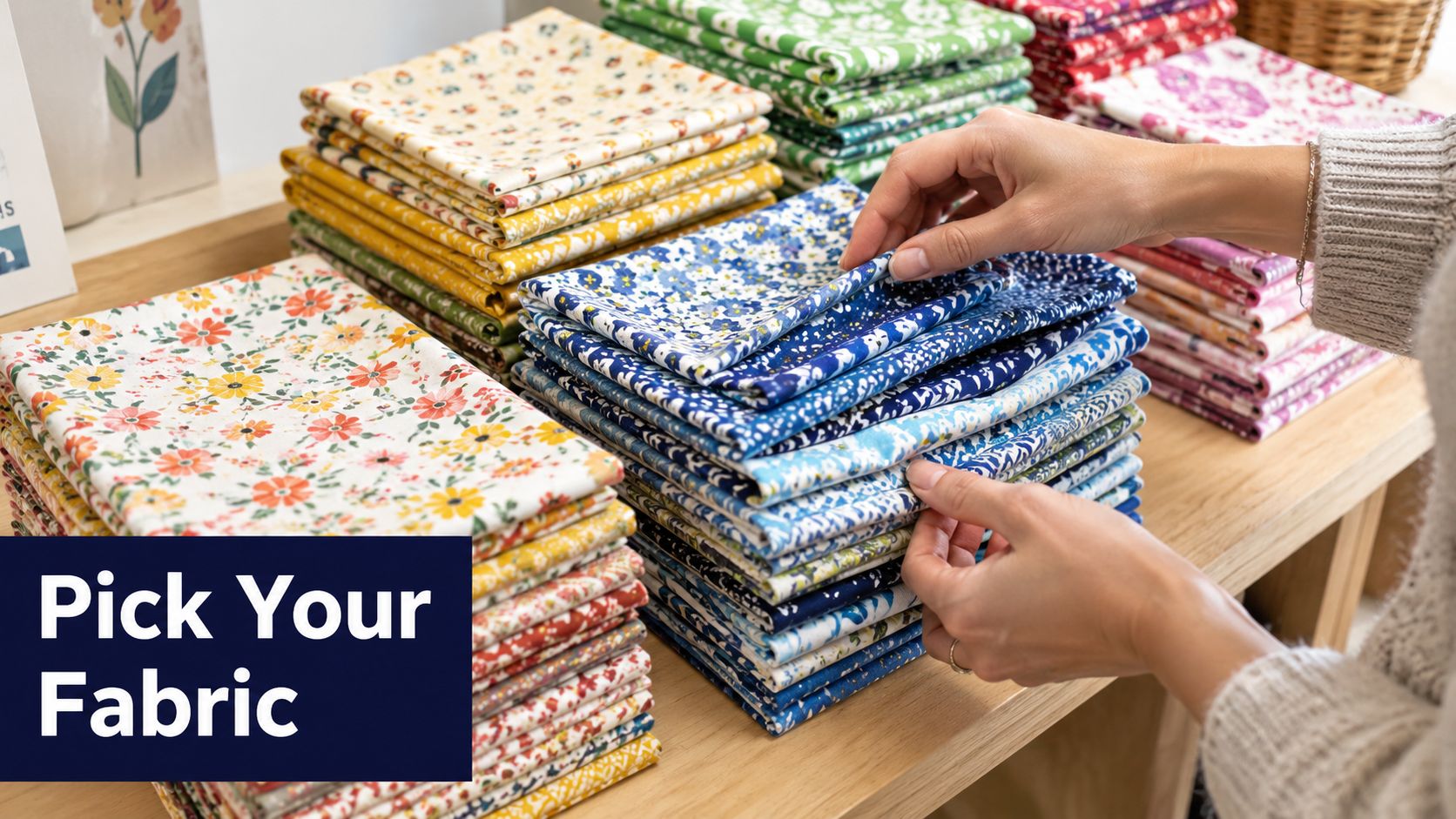
Start with the finished project, not the prettiest stack on the shelf. A nursery quilt, seasonal table runner, tote bag, and gift pouch may all need different color energy and print scale.
Match the bundle to your design
Use these checks before placing an order or carrying a bundle to the cutting table:
- Choose the palette first. Softer colors can create a calm quilt, while stronger contrast makes blocks easier to read.
- Check print scale. Small motifs work well in tiny patches. Larger motifs may need a fat quarter's wider layout for fussy cutting.
- Look for a visual anchor. One favorite print can guide supporting solids, blenders, and directional fabrics.
- Plan the background. A busy bundle often benefits from a calmer background, while low-contrast prints may need a stronger separation.
- Read the dimensions. About 18 by 21 to 22 inches is common, but the actual bundle description should guide your cutting plan.
Recent 2025 trend commentary highlights softer palettes, earthy tones, and textured fabrics. A fat quarter bundle lets stash builders and slow-fashion sewists test those color directions without committing to full yardage, as described in this curated fat quarter color-matching guide.
The staff in Our Springfield, Tennessee showroom can help you compare a bundle with background fabric, batting, thread, and a suitable backing. You can also organize your selections online, then confirm the cutting requirements against your pattern.
Here's a visual guide to choosing colors and arranging a coordinated collection:
The right bundle is the one that fits both your creative idea and your cutting plan. Once you understand the shape, count, and background requirements, you can shop with confidence and keep every remaining piece useful.
The Fabric Company offers fat quarter bundles, Jelly Rolls, Layer Cakes, quilting cotton, batting, and 108-inch backings for projects from small gifts to full quilts. Visit The Fabric Company online or stop by Our Springfield, Tennessee showroom to coordinate your next collection, then join The Weekly Thread for more quilting tips and 10% off your first order.