

The lime cotton on your cutting table looked perfect online, but beside your binding it suddenly looks yellow. Lime green fabric is a bright yellow-green, not a leafy forest green, and the useful purchase is a named shade plus a fiber, not the word lime alone. Before you buy project yardage, match a physical sample under the lights where the finished piece will live, then test how it washes.
What Lime Green Fabric Is and Why Bolts Clash
Two lime bolts sit side by side under store lights. One looks yellow, the other almost olive. Their shared label does not guarantee they belong in the same quilt, because “lime” can cover a broad range of yellow-green shades.
Synthetic dyes developed in the nineteenth century made brighter greens possible, and saturated lime gained popularity in the twentieth century, as described in The Colors Meaning's lime history. Dye development changed what manufacturers could produce, but it did not make every lime fabric fluorescent or colorfast.
Modern lime is an industrial color achievement, not just a stronger version of leaf green. Fluorescent finishes and ordinary lime dyes are different: one can appear to glow under certain lighting, while the other gets its color from dye without necessarily having that effect. Even ordinary lime fabrics can look different from bolt to bolt because their shades and dye lots vary.
The Fabric Company's Springfield, Tennessee showroom lets shoppers compare fabrics in person. Bring the binding, backing, or stash print you want to match. Judge the cloth beside it under the showroom lights, since lighting can change which undertone seems strongest.
Shade Chart for Buying the Right Lime
Lime shades, undertones, and first uses
| Shade | Undertone | Loudness | Best first use |
|---|---|---|---|
| Chartreuse | Strong yellow | Medium | Vintage quilts with cream |
| Apple lime | Balanced yellow-green | Medium | Kids' quilts and aprons |
| True lime | Fruit-rind yellow-green | High | Binding and solids |
| Acid or neon lime | Yellow-green, sometimes fluorescent | Very high | Costumes and safety accents |
| Blue-leaning lime | Cool, toward teal | High | Modern quilts with gray |
| Grayed lime | Muted, near olive | Low | Apparel that should not shout |
Use these names as shopping descriptions, not universal color standards. One manufacturer's apple lime may sit close to another's true lime. The cloth in your hand makes the final decision.
Chartreuse carries a strong yellow note. It works well when you want a vintage-looking quilt with cream rather than a sharp white background.
Apple lime feels more balanced and approachable. For a child's quilt or a cheerful apron, it's a good starting point when acid lime seems too forceful.
Separate undertone from loudness
Undertone tells you which direction a shade leans. Chroma describes its intensity, like the volume on a radio: you can keep the same note and turn the loudness up or down.
True lime makes a clear binding when the quilt needs a bright edge. Place a folded strip around a corner of the top before committing, because a narrow edge can look stronger than a loose swatch.
Acid or neon lime is the loudest option. Treat neon as a visual description until the seller identifies whether the material has a fluorescent finish.
Blue-leaning lime moves toward a cooler green. Pair it cautiously with aqua or teal, and don't assume its relationship to those colors will stay unchanged under warm bulbs.
Grayed lime sits closer to olive. It's often easier to wear across a whole garment because it doesn't demand the same attention as a highly saturated solid.
Practical rule: Choose the undertone first. Decide how loud you want it only after the undertone works.
Turn a color name into a buying record
A phone screen can push acid lime toward yellow or blue. Texture, camera exposure, and nearby colors also affect what you think you're seeing, so this chart can help you describe a shade but can't replace a swatch.
Before buying beyond a trial Fat Quarter, write down:
- Manufacturer: Record Robert Kaufman, Cloud9, or the actual brand on the selvage.
- Exact color name: Copy the wording instead of shortening it to lime.
- Product identification: Keep the item label or order confirmation.
- Intended job: Note whether it's binding, background, backing, or an apparel accent.
A stash note reading bright green cotton won't help much when you need more. A saved label gives you a useful starting point, even though a later dye lot still needs checking.
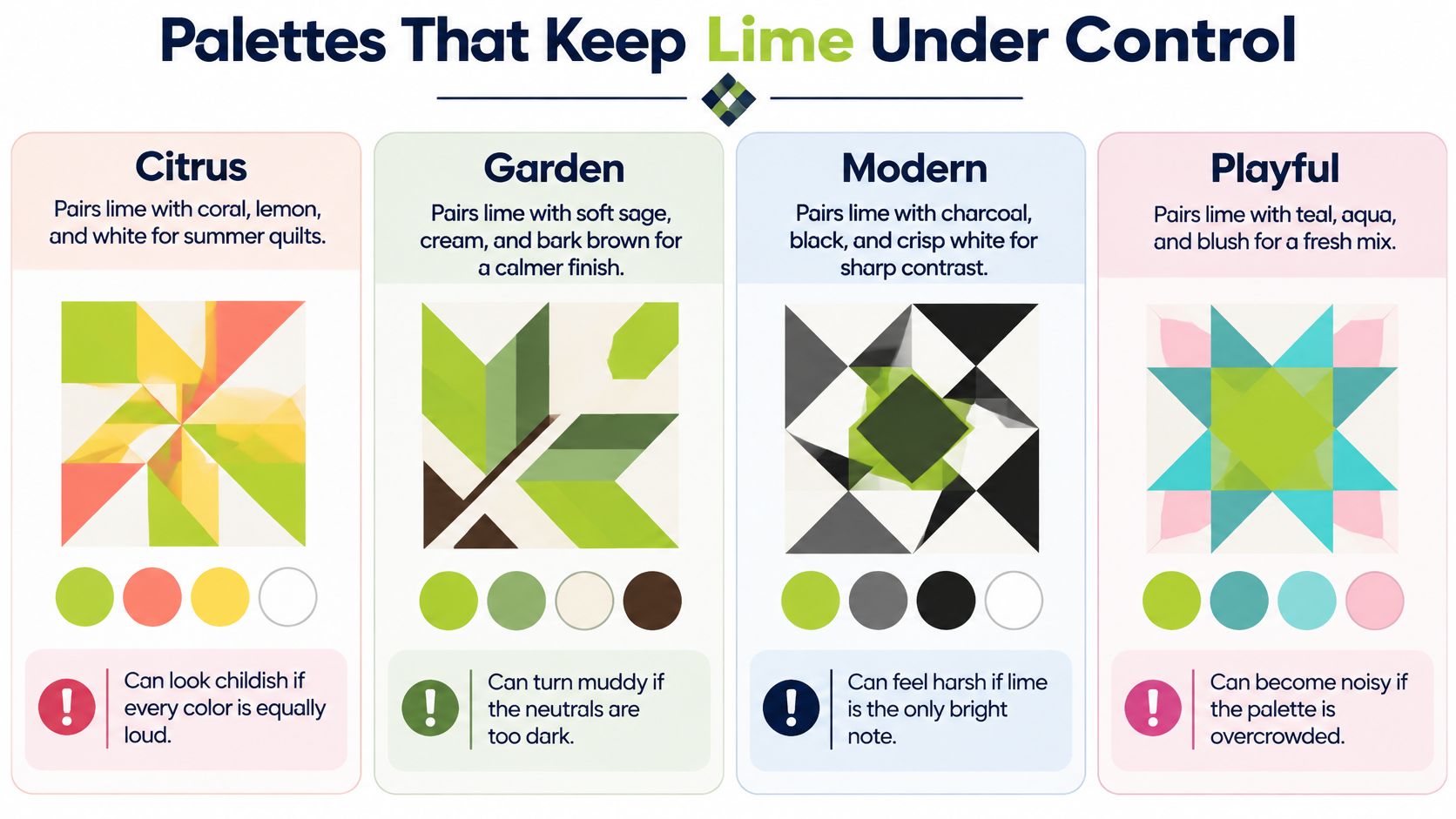
Palettes That Keep Lime Under Control
| Palette | Partner colors | Best effect | Watch-out |
|---|---|---|---|
| Citrus | Coral, lemon, white | Fresh summer quilts | Equal-strength colors and matching print scales can feel childish |
| Garden | Leaf green or soft sage, cream, bark brown | A calmer, grounded finish | Olive can make a clear lime look dull |
| Modern | Charcoal, white, a little black | Strong graphic contrast | Too much black can make the result harsh |
| Coastal | Aqua, sand, navy | Cool color with a steady dark anchor | Warm indoor lighting can upset a close green-blue match |
For Citrus, vary the print scale as well as the color. Let a large floral, a small dot, and a quiet solid do different jobs instead of asking every fabric to attract equal attention.
A Garden palette is the gentler choice for someone who likes lime but doesn't want a neon-looking quilt. Use cream to separate lime from a brownish olive if they look muddy when touching.
Give lime a clear role
In a Modern quilt, start with charcoal and white, then use lime as the accent. The guide to curated Fat Quarter sets for color matching can help you plan a small palette trial before buying background yardage.
For Coastal, navy provides a firm anchor while sand softens the aqua and lime. Reserve extra-bright magenta or cobalt for deliberately playful children's quilts and costumes rather than adding them automatically.
If the quilt will stay in a particular room, Lott's Furniture's color palette inspiration for living spaces offers another useful starting point: coordinate the quilt with the room's larger surfaces, not just its smallest accessories.
The infographic offers additional Garden and Playful combinations to audition.
Let the room lighting decide
Lime cloth is like a mirror that prefers some lamps. Metamerism means fabrics that appear to match under one light can look different under another.
A 2025 textile-color study in Vlakna a textil found moderate green-fabric color shifts under fluorescent sources and greater perceptual distortion under ultraviolet light. Use daylight as a practical starting point, then check the actual indoor lighting rather than treating daylight as a guarantee.
Keep the samples touching during that comparison. A gap between them can hide a mismatch you'll notice immediately after sewing the seam.
Fabric Types That Hold a Lime Color
Lime fabric types and best jobs
| Fabric | Hand | Best job | Main risk |
|---|---|---|---|
| Quilting cotton | Crisp woven surface | Piecing and binding | Pigment may crock |
| Flannel | Brushed and soft | Baby quilts and pajamas | Shrinkage; directional nap |
| Minky | Plush pile | Quilt backs and loveys | Creeps while sewing |
| Fleece | Lofty | Throws | Bulky seams |
| 108-inch wideback cotton | Similar to quilting cotton | One-piece quilt back | Dye-lot mismatch |
| Linen | Crisp, breathable | Dresses and tops | Wrinkles |
| Polyester taffeta | Shiny | Costumes | Heat sensitivity and static |
| Metallic spandex | Stretchy | Stretch costumes | Unsuitable for ordinary quilt piecing |
Fiber alone doesn't promise color retention. Dye, printing, finishing, and care all matter, so choose the construction for the job and test the actual cloth.
Quilting cotton from houses such as Riley Blake, Moda, and Robert Kaufman is the straightforward choice for piecing and binding. The quilting cotton by the yard guide explains what to consider when choosing that woven foundation.
Match your sewing method to the surface
Flannel feels forgiving, but its brushed surface can hide an inaccurate cut. Prewash yardage, square it carefully, and keep any directional nap consistent across the project.
Shannon Fabrics minky needs a different approach. Its pile can disguise movement between layers, so baste generously, support the weight beside the machine, and avoid pulling it through the presser foot.
Fleece works well for a simple throw, not intricate blocks with many seam intersections. Warm Fleece batting is an internal construction material, not a substitute for woven piecing fabric.
Linen gives a summer garment a relaxed surface, including the wrinkles. Taffeta gives costume sheen, while metallic spandex provides stretch; neither should be treated as interchangeable with a quilting cotton because the green looks right.
Choose the fabric that behaves correctly in the project. Then choose the lime shade within that fabric type.
Ordinary lime and fluorescent lime aren't the same
Fluorescent colorants absorb shorter-wavelength radiation, including ultraviolet, and re-emit some energy as visible light. A Textile Institute study of fluorescent textiles describes this mechanism and the loss of visibility performance that can follow washing and ultraviolet exposure.
That glow isn't the same as stored light that continues shining in darkness. Nor does a bright costume fabric automatically qualify as protective clothing.
For workwear or roadside use, require documented testing to the applicable high-visibility standard. A lime color label isn't a safety certification.
If your costume project also includes decorated hard accessories, the Raccoon Transfers UV DTF guide is a separate reference for that transfer process. Don't confuse UV DTF terminology with fluorescent cloth or assume a hard-surface transfer belongs on a washable garment.
Quilt Backs and Clothes That Suit Lime
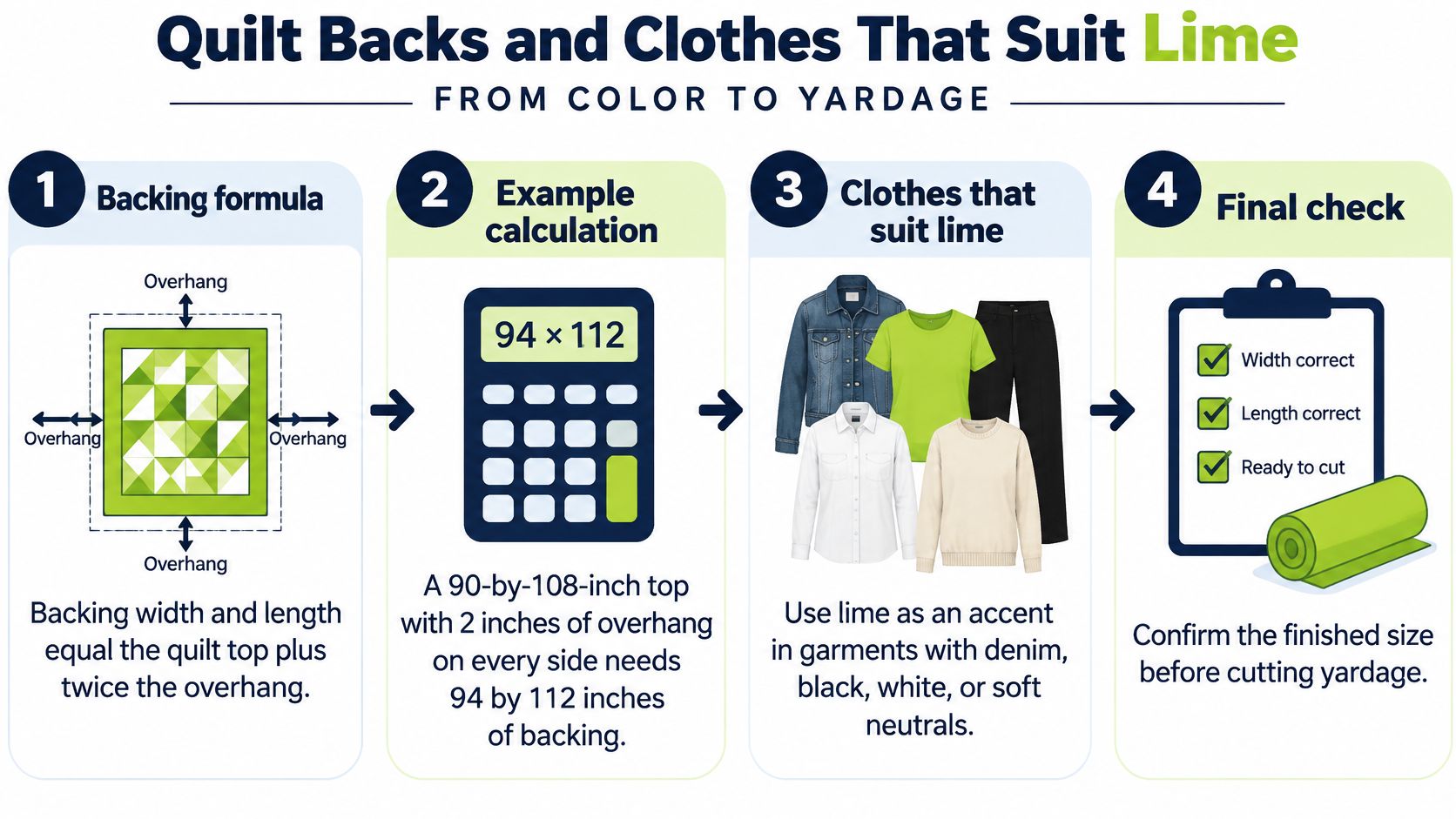
A quilt backing can make lime patches look warmer, duller, or more yellow depending on the surrounding colors and the room's lighting. Check the backing and lime together under the light where the finished quilt will be used. Also compare the fabrics' dye lots: two bolts with the same color name can still look different side by side.
Calculate backing width and length by adding twice the required overhang to each quilt-top measurement. The SewingTrip backing calculation guide gives an example: a 90-by-108-inch top with 2 inches of overhang on every side needs backing at least 94 by 112 inches.
A wideback can avoid a pieced seam if its usable width covers the shorter required dimension. Sketch the layout before cutting, and check the fabric's usable width after preparation. Nominal width is only a starting point. Ask your longarmer how much overhang is required before buying, especially if the backing is close to the minimum.
What You'll Need
- Lime face fabric: Quilting cotton or a strip precut works for a simple strip-based throw.
- Coordinating Precuts: Fat Quarters suit larger patches; Charm Packs and Layer Cakes suit patterns designed for those formats. Check the cutting plan before substituting.
- Wideback: For a 108-inch quilt, plan around the prepared fabric's usable width.
- Batting: Needle-punched cotton has a flatter hand; polyester batting offers more loft. Choose according to the feel you want.
- Thread: Aurifil thread in a tested neutral or coordinating shade helps keep seams from competing with the lime.
- Cutting tools: Use a rotary cutter, cutting mat, and quilting ruler. A fresh blade helps make clean edges.
Size the batting to cover the backing or make it larger, then trim after quilting. Check whether it has scrim and follow its orientation instructions. The process illustration keeps the calculation and final size check together.
Use lime where it earns its place
Long backing seams need support and a steady seam guide. Before sewing across the full width, make a sample sandwich to check how the layers feed and how the thread looks against the lime.
For apparel, an apron pocket, child's top, or summer dress panel gives lime a clear role. An all-over business shirt can be harder to coordinate. A grayed lime or a smaller accent is the easier choice when you want less visual intensity.
The soft quilting cotton apparel sewing guide explains how to choose cotton for garments. A fabric that holds an apron's shape may feel too stiff for a flowing dress, so match the cloth's drape to the pattern. Luca & Charlize collection pricing offers fashion collection context, rather than a yardage estimate for a sewing pattern.
For charity quilts, keeping lime patches within the same purchased batch can make the color more consistent across the group. It also makes assembly and care planning easier.
How to Test Lime Before You Cut
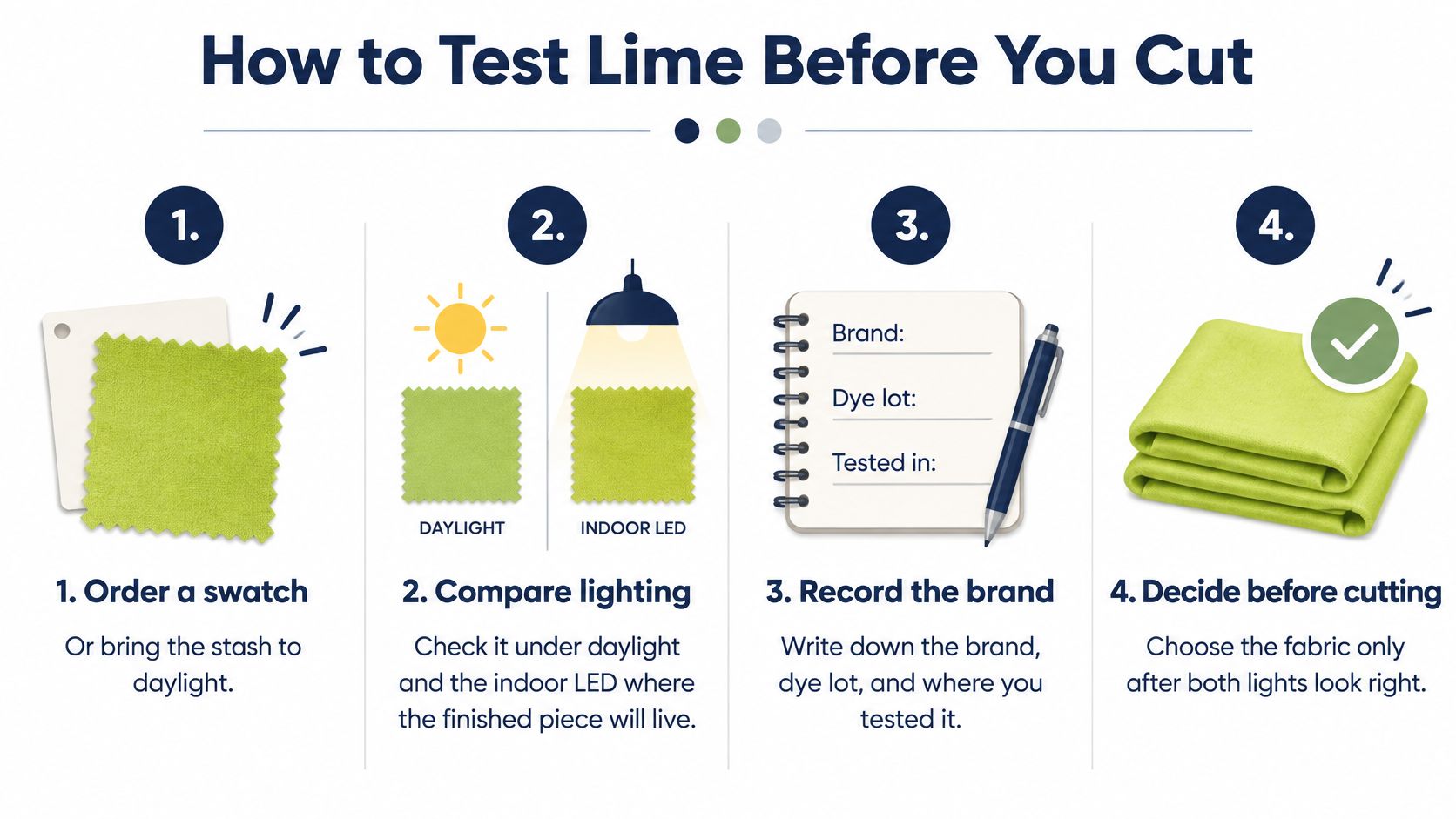
- Get a physical sample. Order a swatch or bring the actual stash fabric into daylight. Include the intended background and binding, not just the lime.
- Compare the lights. Lay the samples together under daylight and the indoor LED lighting where the finished piece will live. Reject a pairing that works in only one setting.
- Record the identity. Save the brand, manufacturer color name, dye lot when available, and the lighting used for your comparison.
- Buy project yardage together. Order the complete amount once you've checked the pattern and backing needs. Separate purchases increase the chance of receiving different lots.
- Prewash before cutting. Test yardage using the care method you intend for the finished piece. Don't put loose precuts through a machine wash without considering fraying and the pattern's size requirements.
- Check rubbing and bleeding separately. Rub a damp white cloth against the lime to check crocking, which is color transfer through friction. Wash a sample with a white cotton scrap to check whether released dye stains another fabric.
The true-to-color online fabric shopping guide can help you evaluate product photographs, but the physical test should settle a close match.
Use the visual checklist to organize the lighting decision before moving on to washing.
Bright doesn't mean durable or sustainable
The brightest lime isn't automatically the most colorfast. A Textile & Leather Review paper on textile coloration discusses continuing fastness and performance challenges in bio-based and natural dye systems.
A pigment print can also look excellent yet transfer color when rubbed. Don't cut a whole quilt while assuming a color-catching laundry product will solve an unsuccessful sample test.
Buying check: Green describes the color. It doesn't describe the fiber's origin, the dye chemistry, or wastewater treatment.
A review of textile dye sustainability describes environmental concerns associated with untreated synthetic-dye effluent and challenges with natural-dye consistency and scale. Check fiber content, supplier disclosures, and the actual scope of OEKO-TEX or GOTS certification rather than assuming natural, recycled, or green means the same thing.
Keep finished-project care simple
- Wash gently: Use cold water with similar colors and avoid bleach.
- Limit heat: Air dry or tumble dry low when the fabric's care instructions permit it. Never use a hot iron on minky or polyester taffeta.
- Reduce sun exposure: Keep a cherished lime quilt away from prolonged direct sunlight.
- Store dry: Fold loosely in a clean, dry space, away from heat and damp, rather than packing tightly in plastic.
For mixed-fabric projects, follow the requirements of the most delicate component. A cotton face doesn't make a plush backing safe to press.
Buy the Yardage That Matches Your Project
Lime and project-fabric price checkpoints
| Fabric | Brand or seller | Price | What you are paying for |
|---|---|---|---|
| Cotton print benchmark | Cloud9 Fabrics American Bold | $9.99 per yard, regular $19.99 | Sale-priced quilting cotton, not a confirmed lime match |
| Lime stripe cotton | Spoonflower Petal Signature Cotton | $20.00 per yard, historical listing | Printed lime stripes |
| Lime polyester taffeta | Ice Fabrics | $4.99 per yard, regular $5.99, historical listing | Costume sheen |
| Lime metallic spandex | Solid Stone Fabrics | $10.95 to $11.95 per yard, historical listing | Stretch costume fabric |
| Lime linen | Organo Linen | About $29.26 per yard, historical listing | Linen apparel fabric |
| 108-inch cotton wideback | Andover Fabrics Blue Sky Windswept Cadet | $17.54 per yard, regular $26.99 | One-piece backing option, not a lime shade match |
The table separates budget benchmarks from actual lime options. American Bold and Blue Sky are The Fabric Company sale-price checkpoints, not promises that their colors will match your lime project.
Spoonflower's lime stripes listing recorded $20.00 per yard for a 42-by-36-inch piece in 2026. Ice Fabrics' polyester taffeta listing recorded $4.99 per yard, reduced from $5.99, in 2024.
Solid Stone Fabrics' lime metallic spandex listing recorded $10.95 to $11.95 per yard in 2025, while Organo Linen's pure linen listing recorded $32.00 per meter, equivalent to $29.26 per yard, in 2024. These are dated comparisons, not guaranteed checkout prices.
Buy for usable fabric, not the cheapest yard
Taffeta can cost less than quilting cotton and still be the wrong bargain for a quilt. Likewise, linen's price makes more sense for a garment whose pattern needs its particular hand.
Use the fabric yardage calculation guide before ordering. Account for print direction, preparation, and the cutting layout rather than rounding down to fit a budget.
- For piecing: Choose tested quilting cotton and let lime serve a defined role.
- For backing: Compare usable width and total required length, not yard price alone.
- For apparel: Choose the pattern-compatible fiber before chasing the closest photograph.
- For costumes: Decide whether you need sheen, stretch, or genuine fluorescence.
Buy the face fabric and backing in the same planning session, then add suitable batting. They don't need to share a dye lot with each other, but repeated cuts of the same lime should come from a consistent lot whenever possible.
Our Springfield, Tennessee showroom gives you a place to make that side-by-side decision. Bring a sample and your finished-size notes so you can choose with the project, rather than the screen, in front of you.
The Fabric Company offers quilting cotton, widebacks, batting, and sewing essentials to help you carry a lime project from color matching through finishing. Shop our latest quilting cotton collection here at The Fabric Company, and choose your yardage with a tested swatch beside you. Join The Weekly Thread for more tips and 10% off your first order.