

You've basted a few hexies, started joining them by hand, and then noticed the problems: bulky intersections, frayed edges, or corners that no longer line up. The right English paper piecing fabric is usually a stable, similar-weight 100% cotton, prepared and cut with care. This guide will help you judge weight, weave, print scale, grain, pre-washing, seam allowance, and thread before you commit to a quilt, bag, garment, or gift.
Introduction What Makes English Paper Piecing Fabric Different
English paper piecing can look simple until the first small shape refuses to behave. A hexagon may seem neatly cut, yet the fabric edge frays while you baste it. Another piece may fold smoothly, but several layers create a hard, bulky point where the shapes meet. These frustrations usually aren't signs that you lack skill. They often begin with fabric that stretches, shrinks, or adds more bulk than the template can handle.
In machine piecing, the fabric travels under a presser foot and seams receive fast, even stitching. With EPP, your hands fold fabric around a paper template, hold the shape during basting, and join the folded edges with whip stitches. Every part of that process depends on fabric behavior. A stable weave supports a sharp fold. A similar fabric weight helps adjoining pieces sit flat. Pre-washing can reduce surprises from shrinkage and dye bleed when the finished project is washed.
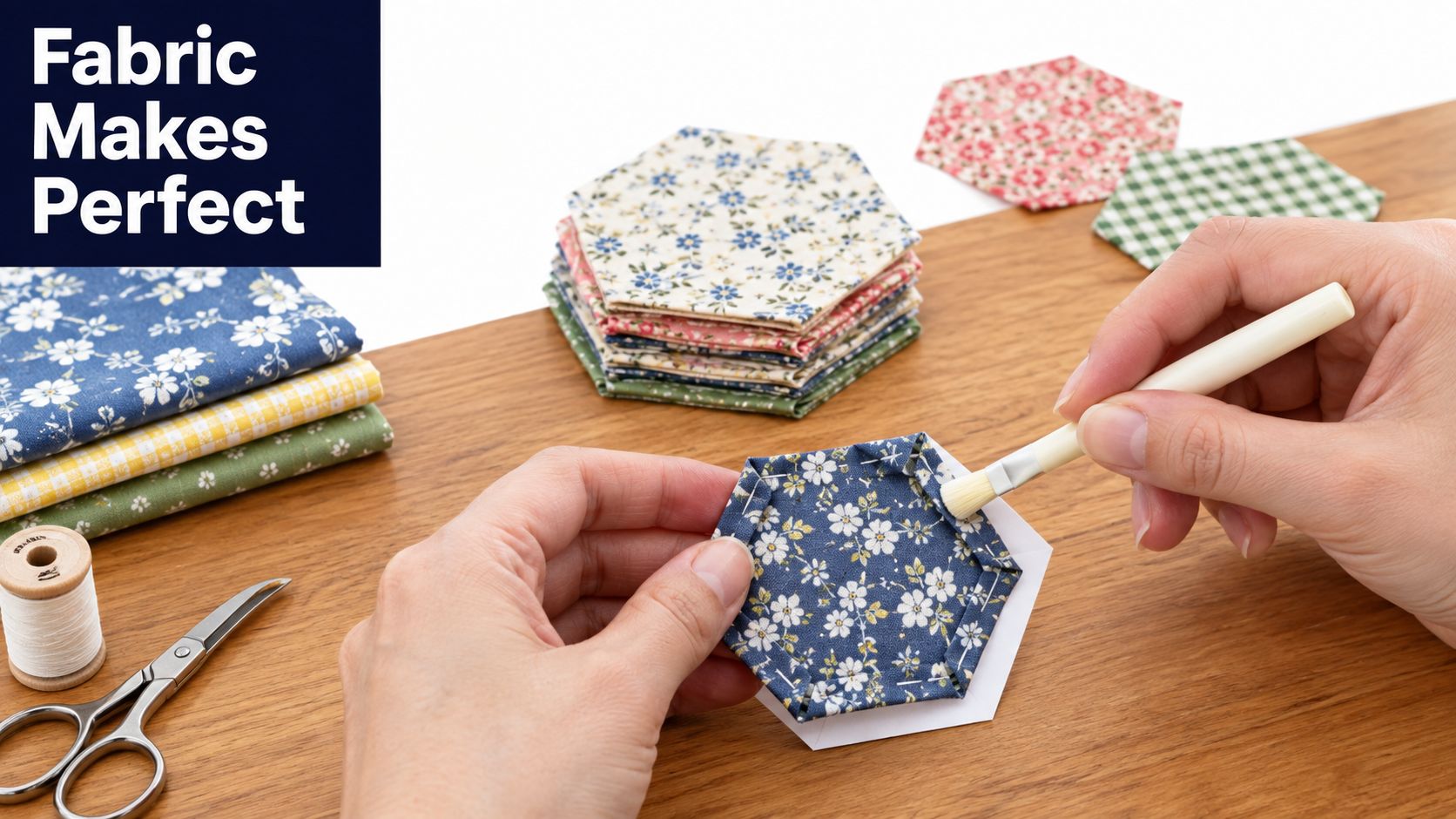
If you're new to the method, learn how English paper piecing works before shopping for a large project. Then you can look at your Stash with a more useful question than “Is this cotton?” Ask whether the fabric will fold cleanly, hold its shape, and remain comfortable to sew through.
Our Springfield, Tennessee showroom is a practical place to compare fabrics by hand. You can feel the difference between a firm quilting cotton, a smooth poplin-like cotton, and a lighter lawn instead of trying to judge drape from a screen.
The short answer: Choose pre-washed, tightly woven 100% cotton in similar weights, select prints that suit your template size, and test a sample before cutting a full set.
By the end, you'll be able to choose English paper piecing fabric with confidence, prepare it for clean folds, and plan materials for washable quilts, useful bags, and slow-fashion projects.
How English Paper Piecing Works and Why Fabric Matters
English paper piecing follows a small, repeatable loop. You place fabric over a paper shape, fold the fabric edges around the paper, and secure the folds with thread or glue basting. Once several pieces are prepared, you place their folded edges together and hand sew them with whip stitches. The paper stays inside long enough to support the geometry, then comes out when the adjoining sides are secure.
Think of each template as a tiny box and the fabric as wrapping paper. Wrapping paper that is too stiff fights the corners. Paper that stretches or tears won't hold a clean package. EPP fabric needs the same balance, it must fold around the template without losing control.
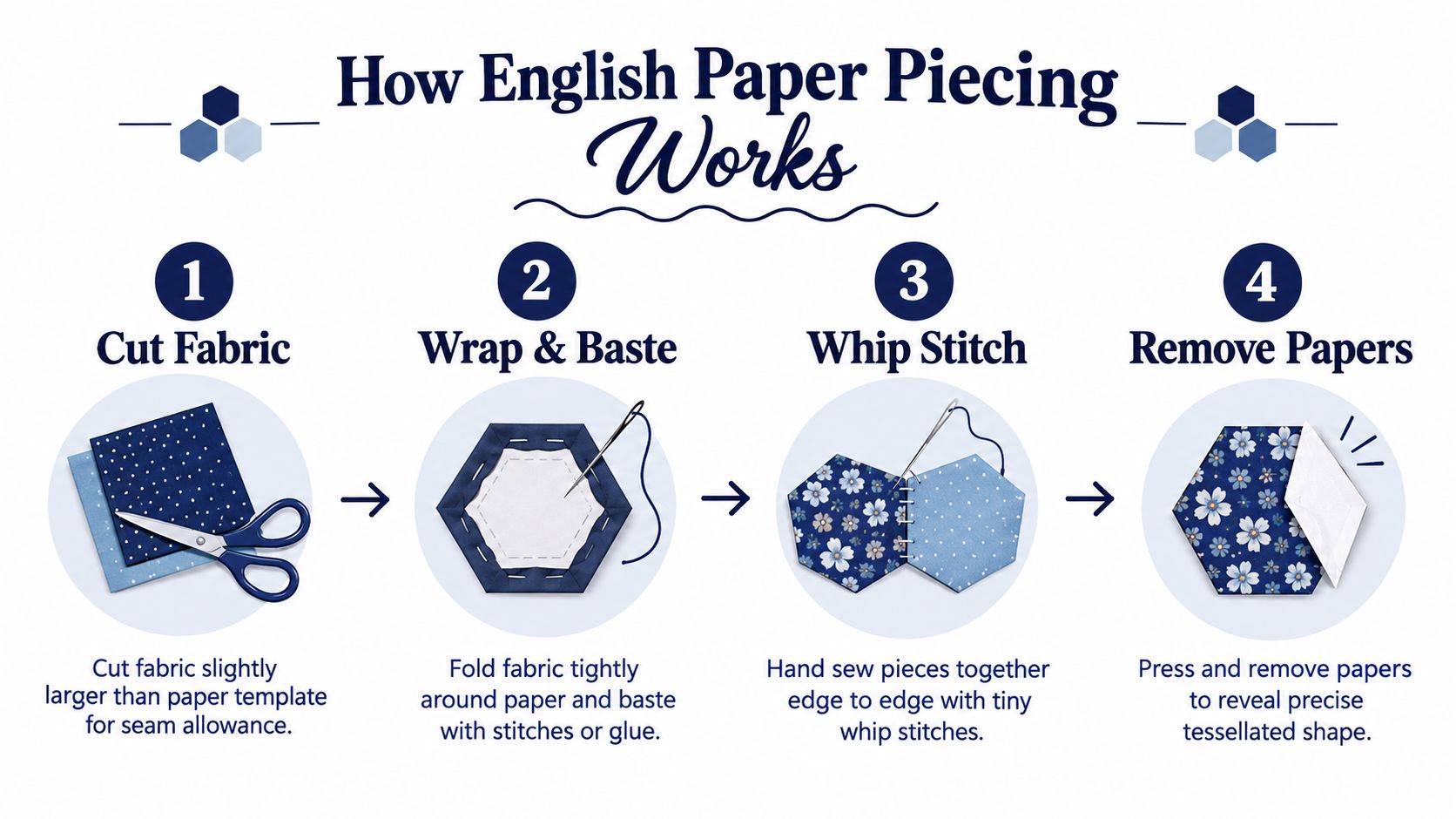
The fabric controls the shape
When the weave is stable, the folded edge follows the paper template closely. If the fabric has too much bias stretch, a hexagon can become uneven during basting. A loose weave may also fray before you finish joining the pieces, while a thick fabric creates extra layers at every intersection.
This is why good-quality cotton is such a common choice. Its predictable structure makes small geometry easier to manage, especially when several shapes tessellate into a larger design. Lightweight cotton lawn can also work well when you want a pliable fabric that's easier to sew through by hand.
EPP has a long history. Its origins trace to England in the 1770s, and the oldest known hexagon template is dated to 1770 and was found in England. The technique spread into the United States by about 1800, with the first U.S. publication reference appearing in 1831 and the first printed U.S. pattern in 1835. You can read more about this history in this account of English paper piecing and its origins. The method's connection to hexagon quilts and Grandmother's Flower Garden designs shows how well the process has endured.
Core principle: The paper defines the shape, but the fabric determines how faithfully that shape survives folding, stitching, pressing, and washing.
For a closer look at the familiar hexagon format, explore this guide to English paper piecing hexagons. Start with one small test unit rather than cutting your entire Stash. That simple sample lets you see whether the fabric frays, whether the seam feels bulky, and whether your stitches disappear into the join.
Choosing the Right Weight and Weave for Crisp Folds
A fabric can be 100% cotton and still be a poor match for a small EPP project. The useful distinction is how the cotton is woven and how much body it has. For most quilts, look for a stable, tightly woven fabric that folds without stretching and feels similar to the other fabrics in the group.
The table below gives a practical starting point.
EPP Fabric Weight and Weave Comparison
| Fabric Type | Best For EPP | Watch Out For |
|---|---|---|
| Quilting cotton | Everyday hexies, quilts, bags, and coordinated patchwork | Very dense prints can hide the shape, while a heavy cotton can add seam bulk |
| Poplin-like cotton | Crisp folds, structured small shapes, and projects needing a smooth surface | Mixing it with a much lighter or heavier fabric can make adjoining pieces sit unevenly |
| Lightweight cotton lawn | Tiny shapes, delicate hand sewing, and pieces that need extra pliability | Its lighter structure may need careful handling during basting and joining |
Similar-weight fabrics behave more consistently when you fold them around templates. That matters at the point where several seams meet. If one fabric is thick and another is fine, the layers may not press evenly, and the finished tessellation can feel lumpy even when your stitching is accurate.
A loose weave deserves extra caution. It may fray more readily along the cut edge, and the fabric can shift while you turn the seam allowance over the paper. A stable weave gives you a cleaner fold line and makes it easier to keep the paper corner covered.
Use your Stash with a fabric test
You don't need to reject every Remnant or scrap. Place a paper template on the wrong side of a candidate fabric, cut the allowance, and fold the edges around the paper. Check three things:
- Fold behavior: Does the edge stay sharp after finger pressing?
- Fraying: Do threads pull away as you handle the piece?
- Seam bulk: Does the folded edge feel too thick when placed against another piece?
Robert Kaufman and Cloud9 cottons can be useful choices when their individual weight and weave suit the project. Fabric by the yard gives you more control for a coordinated color plan, while Remnants can add variety to a scrappy arrangement. For more background on selecting quilting cotton, read this cotton fabric guide for quilting.
Avoid assuming that one fabric weight works for every part of a project. A quilt may welcome regular quilting cotton, while a small garment detail may be easier with lawn. Choose the fabric for the shape, the seam density, and the way you expect the finished item to be used.
Print Scale Color and Direction for Beautiful Tessellations
EPP shapes are small, so a print's scale changes its appearance. A large floral may lose its main motif when cut into a small hexagon. A tiny dot, stripe, or blender can show evenly across the shape and help a group of hexies read as a connected surface.
Color also affects the design. High-contrast fabrics make individual shapes easy to see. Related colors create a quieter field, especially when the shapes repeat closely. Solids and blenders can give busy prints room to breathe without taking attention away from the hand-pieced detail.
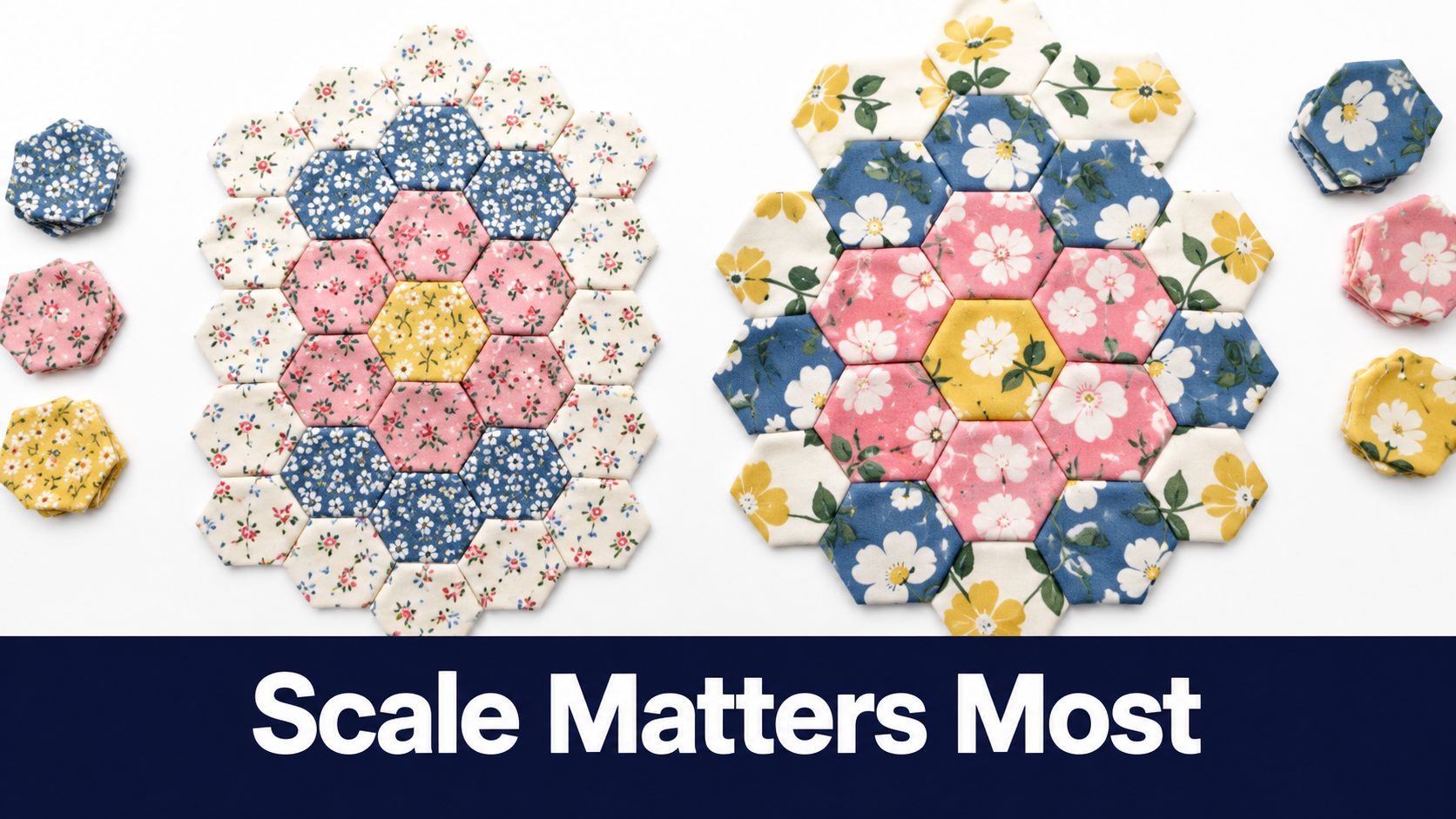
Let the template guide the print
Directional fabric requires a little more planning. Stripes, checks, vines, and motifs with a clear top and bottom may need fussy cutting, where you position the template to control what appears inside each shape. That can create a strong repeating pattern, but it also uses fabric differently from random cutting.
Before cutting, place the paper or acrylic template over the fabric and move it across the print. Look for the area that will make the finished hexagon easy to read. If you're working from online photos, check the true-to-color image as carefully as possible, since screen settings can change how a fabric appears in your sewing room.
Precuts can make color planning easier. Charm Packs, Layer Cakes, Fat Quarters, Jelly Rolls, and 2.5-inch strips offer coordinated variety, but each format suits a different cutting plan. Fat Quarters give you room for fussy cutting. Charm Packs can provide a controlled group of small prints when your paper shapes are compatible with the available fabric area.
A print doesn't have to be loud to be useful. A quiet blender can become the visual thread that connects a lively collection.
Use the pieces you already own, then fill gaps with targeted purchases. If your Stash has many florals but few resting colors, add solids or low-volume cottons instead of buying another full assortment. For broader fabric-planning ideas, use this guide to choose quilt fabric.
The following video can help you study the movement of the method before you begin cutting.
Suggested caption: Notice how fabric placement changes the finished shape, just as careful stitch placement affects the clean look of a project sewn with a PFAFF expression™ 710.
Prepping and Cutting Your Fabric for Clean Precise Seams
Preparation determines how calmly the sewing goes. A fabric that looks fine on the bolt may shrink or release excess dye during washing. Pre-washing similar-weight cottons helps reduce those surprises, especially when your finished EPP project will become a washable quilt, bag, or garment. Review this fabric preshrinking guide before you begin a large set of pieces.
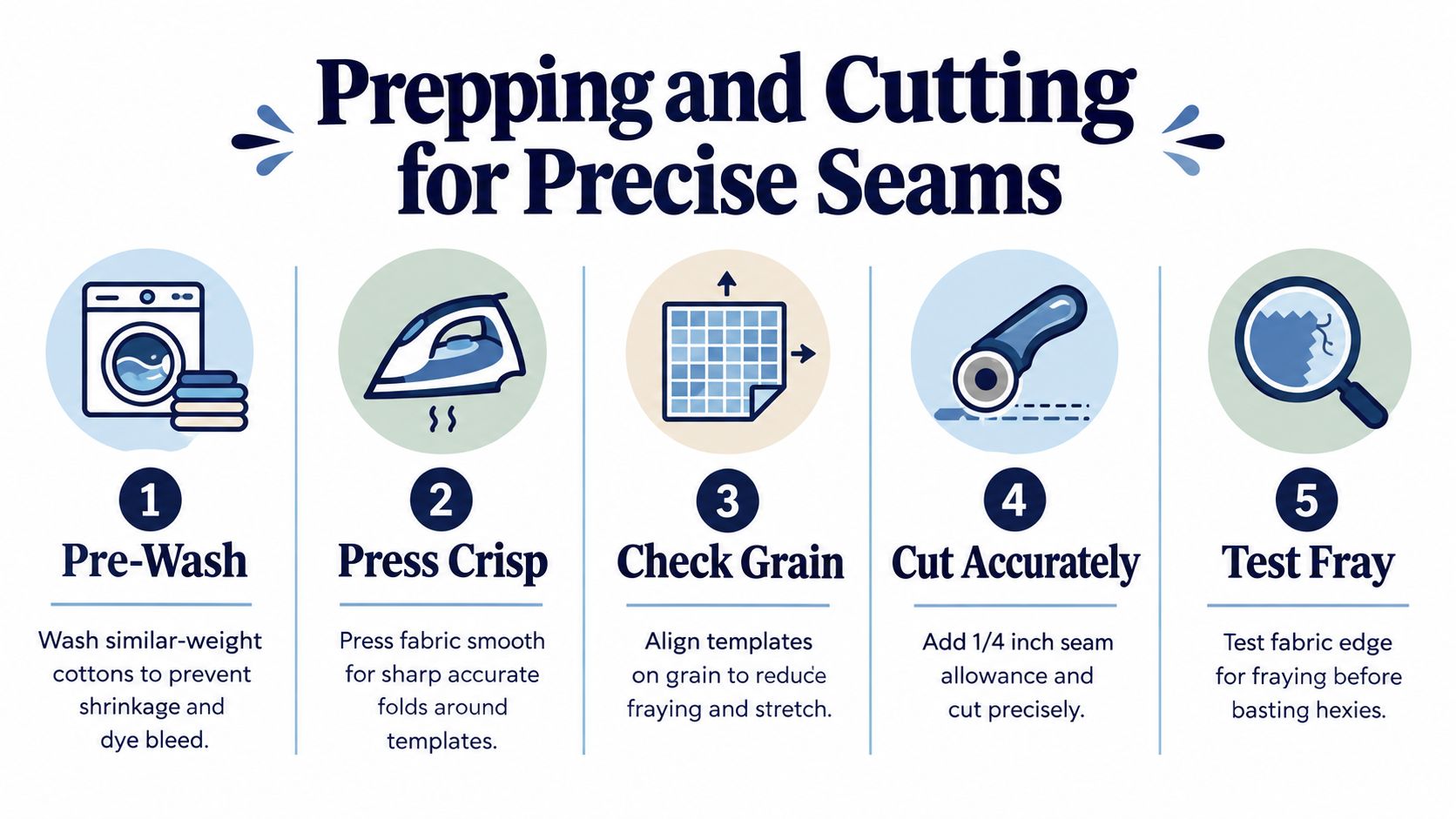
Prepare the cloth before the template
Wash fabrics that are similar in weight together when practical, then dry and press them in the way you expect to care for the finished item. Pressing removes wrinkles that can shift your template and gives the fabric a smooth surface for folding.
Check the grain before you cut. Keeping the template aligned with the fabric grain can reduce unwanted stretch and help limit fraying. This becomes especially helpful when the paper shape has short sides or pointed corners.
A simple preparation checklist keeps the process consistent:
- Wash compatible fabrics: Control shrinkage and dye bleed before the pieces are joined.
- Press the fabric: Smooth the surface so the template sits flat.
- Inspect the weave: Set aside cloth that stretches easily or sheds threads.
- Test an edge: Fold and handle a sample before cutting the complete set.
Cut the allowance with purpose
Place the paper template on the wrong side of the fabric. Cut around it with a seam allowance. The standard allowance is 1/4 inch, and that extra fabric is what folds over the paper edge during basting. For hexagons, one quilting source describes cutting fabric 1/4 inch larger than the paper hexagon on all sides, then turning and basting the excess before whip stitching the pieces together. See the technical hexagon EPP instructions for that approach.
Some specialty tutorials and template systems use a 3/8-inch seam allowance instead. That larger allowance can give you more fabric to wrap around the paper, but it also creates additional bulk. Follow the allowance that matches your template system rather than changing it halfway through a project. You can compare the two approaches in these English paper piecing tutorials.
Keep the joining area secure
When joining hexies, one guild guide recommends a fat 1/4-inch seam allowance, basting only the fabric around the paper, and using roughly 12 to 15 whip stitches per inch. The same guide advises keeping the papers in place until all adjoining sides are sewn. Those details work together, the allowance protects the paper corner, dense stitches secure the seam, and the paper supports the shape during assembly. Read the guild EPP sewing guide for the full technical sequence.
Choose a 50 wt to 80 wt thread when you want less bulk at dense intersections. Fine cotton or thin polyester can help preserve crisp joins. An Aurifil 80wt cotton spool is one option for fine hand sewing, provided the thread works comfortably with your needle and fabric.
A small rotary cutter and a pressing tool can make repeated pieces easier to manage. An Oliso iron is useful for preparing fabric and setting folds. When the EPP top is complete, consider the rest of the project early, including Hobbs batting and 108-inch quilt backings for an appropriate finishing plan.
What You Will Need for Your English Paper Piecing Project
A good project kit doesn't need every tool on the shelf. It needs supplies that match the template size, the fabric weight, and the intended use of the finished piece. Start with the papers and fabric, then add tools that make accurate cutting and comfortable hand sewing easier.
Project list
- Templates: Paper hexagons or other shapes sized for your design, plus a storage method that keeps the papers flat.
- Fabric: Pre-washed quilting cotton, poplin-like cotton, or lightweight lawn in compatible weights. Browse fabric by the yard when you need yardage for a planned color field.
- Precuts: Shop Precuts for Fat Quarters, Charm Packs, Layer Cakes, Jelly Rolls, and coordinated 2.5-inch strips.
- Thread: Fine cotton or thin polyester in the 50 wt to 80 wt range, including an Aurifil 80wt option for low-bulk seams.
- Cutting tools: A rotary cutter, ruler, and mat, with small scissors for trimming thread and handling corners.
- Pressing tools: An iron and a stable pressing surface for smoothing fabric and setting completed sections.
- Batting: Choose Hobbs batting in packages or rolls according to the finished project's size and desired Loft. Look for needle-punched cotton or a suitable Scrim when those construction details fit your quilt.
- Backing: Plan for 108-inch quilt backings when you want wide fabric for finishing a larger quilt.
- Notions: Needles, clips, basting supplies, a seam guide, and a small container for finished paper-backed units.
Riley Blake Designs, Robert Kaufman, and Cloud9 offer different print styles, so compare weave, scale, and hand rather than choosing by label alone. Gift makers may prefer an exclusive quilt kit, while a Stash Builder may get more use from individual Fat Quarters and Remnants.
The Fabric Company lists fabrics, notions, batting, backings, and sewing equipment online, and shoppers can also visit Our Springfield, Tennessee showroom to handle cloth and compare machines from SINGER and PFAFF. Orders of $49 or more qualify for free shipping, according to the publisher's store information.
Bring Your English Paper Piecing Project to Life
Good English paper piecing fabric gives you control before the needle ever reaches the seam. Choose a stable weave for dependable folds, keep fabric weights compatible, and use lightweight lawn when a smaller shape needs extra pliability. Then consider print scale and direction so the finished tessellation looks intentional rather than accidental.
Preparation is just as important as selection. Pre-wash compatible fabrics when wash durability matters, press them smooth, align templates carefully, and test the seam allowance on a sample. A small test piece can reveal fraying, stretch, or unwanted bulk before those problems spread through a full quilt.
EPP also works beyond traditional quilts. Stable cotton can create panels for bags and household items, while lighter fabrics may suit selected apparel details when the construction supports them. Pair the hand-pieced top with suitable Loft, batting, and a practical backing so the finished item receives the same care as the patchwork.
Visit Our Springfield, Tennessee showroom if you'd like to compare fabric hand, print scale, threads, and pressing tools in person. You don't need a perfect Stash or advanced skills to start. A carefully chosen group of cottons, accurate paper templates, and patient stitching can take you from the first hexagon to a durable handmade gift.
Shop our latest Precuts collection for coordinated Fat Quarters, Charm Packs, Layer Cakes, and strips that make English paper piecing easier to plan. Visit The Fabric Company online or in Our Springfield, Tennessee showroom for fabric, fine thread, Hobbs batting, and 108-inch backings, then Join The Weekly Thread for more tips and 10% off your first order.