

Buying fabric by the bolt makes the most sense when you need consistent yardage, repeat the same projects, or want a lower per-yard cost than cut fabric. The practical questions are straightforward: a bolt is a packaged length of fabric wound for retail or wholesale handling, widths commonly run from 42–45 inches to 54–60 inches with some 108-inch specialty goods, and total yardage often falls anywhere from 8 to 40 yards depending on fabric type.
What You'll Need:
- A reliable source for quilting cottons from brands like Robert Kaufman or Cloud9.
- High-quality Batting for finishing your quilts.
- A selection of Precuts like Jelly Rolls and Fat Quarters for smaller projects.
- A great sewing machine, like a PFAFF, to bring it all together.
How We Evaluated Fabric Bolt Sizes and Yardage
To make the size and yardage ranges useful, I based them on the overlap between common retail listings, wholesale conventions, and the fabric categories shoppers buy most often: quilting cotton, apparel fabric, flannel, home décor fabric, canvas, and wide quilt backing. The goal was not to force one universal number where none exists, but to identify the ranges that show up often enough to help you plan before you buy.
I treated a range as “typical” only when it matched how these categories are commonly packaged and sold in stores and online. For terminology, I also leaned on standard textile usage: a bolt generally refers to fabric wound around a board or core for handling and sale, while “roll” is often used more broadly for bulk packaging. Textile references note that bolt length is not globally fixed and can vary substantially by fabric and seller, even though certain lengths are common in trade and retail textile terminology).
That is why this guide gives ranges instead of pretending every bolt is identical. Exact yardage can change with fabric thickness, fiber content, width, brand packaging standards, and whether the product is sold as quilting fabric, apparel fabric, utility cloth, or a wide backing.
What Buying Fabric by the Bolt Really Means
A bolt of fabric is a measured length of cloth wound around a flat board or core so it can be stored, displayed, shipped, and sold efficiently. In retail sewing and quilting, “bolt” usually means the packaged unit you see standing on a shelf or table, while a yard cut is fabric taken off that unit and cut to the amount you order. Textile references also note that bolt length is not fixed across all fabrics or sellers, even though many commercial bolts are packaged in larger standard lengths bolt definition).
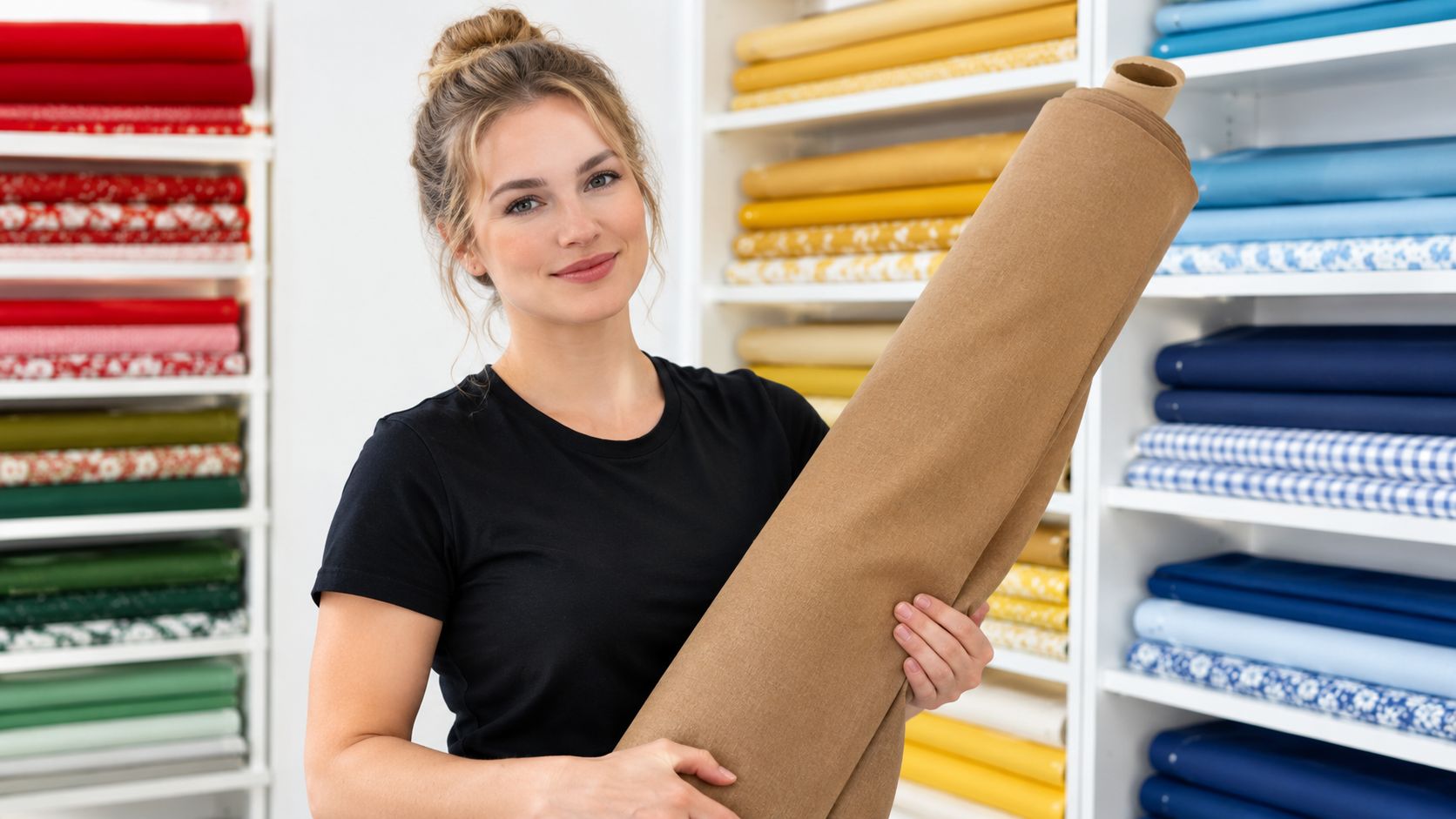
A roll of fabric is a broader term. Stores and shoppers sometimes use “bolt” and “roll” casually to mean the same thing, but “roll” is often used for larger commercial packaging, batting, upholstery materials, or utility fabrics that are wound for transport rather than displayed as a retail shelf unit. In other words: a bolt is usually a retail- or wholesale-ready packaged length of cloth, a roll can mean almost any bulk-wound fabric package, and a cut piece is the amount removed from that package for an individual order.
Bolt vs. Roll vs. Cut Piece
- Bolt: A packaged length of fabric wound around a board or core, commonly used in fabric shops and online product listings.
- Roll: A general bulk term often used for larger commercial quantities, batting, utility fabric, or warehouse packaging.
- Yard cut or piece of cloth: A custom amount cut from a bolt or roll for one customer.
In practice, shoppers usually see bolt on quilting and apparel listings, roll on batting and some wholesale products, and yard or cut when ordering smaller quantities. That terminology matters because it affects what you are buying: the whole packaged unit, or just a portion removed from it.
If you’ve ever run back to the store for just one more yard of fabric, only to find the new cut doesn't match, you've met the enemy: mismatched dye lots.
A dye lot is a single batch of fabric dyed at the same time. Even with the same color code, different dye lots can have slight, but noticeable, variations in shade. Buying a full bolt guarantees your entire project—from the blocks to the backing—comes from the same dye lot for perfect color consistency.
Key Benefits of Buying in Bulk
For frequent sewists, the advantage is less about “having more fabric” and more about reducing friction. A full bolt gives you one consistent source for repeated cuts, eliminates reordering risk on core fabrics, and makes production planning easier if you quilt for others or make products to sell.
- Lower per-yard cost: Sellers often price full packaged units below cut-yardage pricing because there is less handling involved.
- Color consistency: One bolt reduces the chance of mixing dye lots inside the same project or product batch.
- Fewer interruptions: If you repeatedly use the same neutral, backing, or utility fabric, keeping a bolt on hand prevents mid-project shortages.
- Cleaner planning: It is easier to estimate binding, borders, backing, or repeat production when you know the whole lot is already in your studio.
Whether you're building a reliable stash of neutrals or stocking up on a favorite print from a top brand like Robert Kaufman or Cloud9, buying a bolt is most useful when the fabric is something you know you will use repeatedly rather than just someday.
How to Navigate Bolt Sizes and Fabric Yardage
Bolt size varies by fabric type rather than following one fixed industry standard. A practical rule of thumb is this: 42–45 inches is common for quilting cotton, 54–60 inches is common for many apparel and décor fabrics, and 90–108 inches shows up in specialty wide goods like quilt backings. Typical packaged yardage often falls into these ranges: 8–10 yards for bulkier fabrics, 10–15 yards for many quilting and backing products, 15–25 yards for many apparel fabrics, and 20–40 yards for utility or décor fabrics sold in longer runs.

Understanding Fabric Bolt Length
The term “bolt” answers the packaging question, not the exact yardage question. The amount on a bolt changes with how the manufacturer packages that fabric and with how bulky the cloth is once wound. Thick fabrics take up space faster, while thinner fabrics can be wound in longer lengths. That is why flannel and minky are often on shorter packaged lengths than broadcloth, muslin, or some utility fabrics.
Width also changes the buying math. A wider product may carry fewer linear yards than a narrow one and still contain more usable material overall. The basic textile reference point is that bolt length can vary widely, often from 40 to 100 yards in commercial contexts, while width varies heavily by category cloth bolt reference). In everyday quilting retail, the numbers are often smaller than those larger commercial benchmarks, especially for printed cottons and specialty backings.
From Standard Widths to Wide Backs
The fabric's width, measured from selvage to selvage, is just as important as its length because it determines how efficiently you can cut pattern pieces, borders, backing panels, or home décor sections. The width ranges most shoppers run into line up with long-standing category norms: many quilting cottons are sold around 44/45 inches, while many apparel and decorating fabrics are sold in wider widths such as 54 inches or 60 inches fabric widths overview.
Pro Tip: Fabric is often wound onto bolts with some tension. Before cutting, it's a great idea to let your fabric "relax" after unrolling it, or better yet, pre-wash it. This lets the fibers settle back to their true grain and helps prevent distorted blocks later on.
For quilters, wide backing is the outlier that changes project planning. A 90-inch or 108-inch backing can eliminate a center seam on many larger quilts, which is why longarmers and batch quilters often buy those products in bolt quantities rather than by the yard.
Standard Fabric Bolt Yardage and Width Comparison
This table gives you a general guide for buying different types of fabric by the bolt. Keep in mind these are typical ranges, and actual sizes can vary by manufacturer.
| Fabric Type | Typical Bolt Yardage | Standard Width | Best For |
|---|---|---|---|
| Quilting Cotton | 10-15 yards | 42"-45" | Quilt tops, apparel, small projects |
| Flannel & Minky | 8-10 yards | 42"-60" | Cozy blankets, baby items, apparel |
| Apparel Fabric | 15-25 yards | 54"-60" | Dresses, pants, shirts, large garments |
| Home Decor Fabric | 20-40 yards | 54" | Curtains, upholstery, pillows |
| Canvas/Utility | 20-40 yards | 45"-60" | Totes, bags, durable home goods |
| Wide Backing | 10-15 yards | 108" | Seamless quilt backs for large quilts |
These ranges are meant to help you plan, not to override a product listing or bolt-end label. A quilting cotton bolt listed at 12 yards is still normal; so is a utility fabric bolt listed at 25 or 40 yards. The right way to read the table is as a category guide: use it to estimate, then confirm the exact yardage and width on the product page, shelf label, or the paper tag at the end of the bolt.
The reason for the spread is simple. Fiber weight, fabric thickness, manufacturer packaging standards, and intended end use all affect how much cloth is wound into one sellable unit. A compact cotton print and a plush backing fabric are not packaged the same way, even if both are called bolts.
Why Buying Fabric by the Bolt is a Smart Financial Move
The price of a bolt is usually calculated from the per-yard rate multiplied by the total yardage on that packaged unit. That means there is no universal answer to “how much is one bolt?” A bolt of quilting cotton may be far cheaper than a bolt of wide backing, even when the yardage is similar, because width, substrate, finishing, and brand matter more than the word “bolt” itself.
When you buy fabric by the yard, part of what you pay for is custom cutting and handling. Full-bolt pricing often lowers the per-yard rate because the seller is moving one packaged unit instead of measuring and cutting multiple smaller orders. The savings can be real, but the honest way to evaluate them is to compare the actual cut-yard price to the actual full-bolt price for the same fabric.
Breaking Down the Savings
Here is the simplest way to estimate bolt cost:
- Per-yard price × bolt yardage = approximate total bolt price
- Adjust your expectation upward or downward based on width, fiber, brand, and whether the fabric is a premium print, a utility solid, or a specialty wide good.
Worked example for quilting cotton: if a quilting cotton is priced around $8 to $14 per yard and the bolt holds 10 to 15 yards, the total packaged cost lands roughly between $80 and $210. Worked example for wide backing: if a 108-inch backing is priced around $16 to $25 per yard and the bolt holds 10 to 15 yards, the total can fall roughly between $160 and $375. Those are planning ranges, not fixed promises, but they show why total bolt price varies so much by category.
A second factor is shrinkage. If you pre-wash before sewing, your usable dimensions may reduce slightly, especially with cotton. The quilting industry commonly recommends prewashing when shrinkage, dye bleed, or finish removal matters, and cotton fabrics can change size after laundering prewash guidance care label overview. That matters because a low sticker price is less useful if you did not buy enough usable yardage for the project.
Scenarios Where Bulk Buying Pays Off
The value of buying fabric by the bolt becomes clear when you look at how different creators work.
- The Professional Longarmer: If you run a longarm quilting business, your biggest recurring costs are 108-inch backings and batting rolls. Buying these in bulk can make cost forecasting easier and reduce supply gaps between client quilts. Having a full Choice Supreme Batting 80/20 Cotton-Poly Blend 15-Yard Roll on hand means you’re always ready for the next client.
- The Charity or Guild Quilter: Making quilts for a charity drive or guild challenge? A bolt of a go-to neutral or a classic print gives you repeatable, matching fabric for multiple tops without hunting for another cut from the same run.
- The Small Business Owner: For anyone with an Etsy shop, consistency is key. A full bolt of your most-used fabric helps keep color and hand feel consistent across a small production run.
More Than Just Money
The hidden savings are often operational rather than dramatic. One bolt can reduce reorders, separate shipping charges on small cuts, and the time cost of sourcing the same fabric over and over. I would not buy a full bolt just because the product page says “bulk savings”; I would buy it when the fabric is something I know I will cut repeatedly enough to use the whole package within a reasonable time.
Is Buying a Full Fabric Bolt Right for You?
Taking the leap to buy your first fabric by the bolt is a major step, but for many sewists, it’s a natural and exciting part of the journey. A key question is whether you’ve hit the "bolt-buying" stage in your creative life. It often happens when you realize that frequent trips to the fabric store for small cuts just don't make sense anymore.
Let's figure out if buying in bulk is the right move for you.
The Strategic Stash Builder
Are you constantly running out of that perfect white-on-white, a go-to gray blender, or a specific navy that works with everything? If so, you might be a Strategic Stash Builder. Instead of grabbing a few yards at a time, you can buy a whole bolt and know you’re always ready for your next project.
- Your Win: You’ll have a reliable supply of your most-used fabrics, perfect for creating matching sashing, borders, and bindings without worrying about mismatched dye lots.
The Professional Longarmer or Studio Owner
When quilting is your business, every minute counts. Time spent piecing backings or making an emergency run for more batting is time you aren't quilting for clients. As a professional, buying your essentials in bulk is one of the smartest business decisions you can make.
- Your Win: Grabbing 108-inch backings and batting rolls by the bolt seriously cuts down your prep time and lowers your cost per quilt. It's a direct investment in your bottom line. We love helping longarmers stock their studios when they visit our Springfield, Tennessee showroom.
The Charity and Guild Quilter
Do you find yourself making quilt after quilt for donation drives or guild challenges? If you’re a high-volume quilter, you know how fast you can burn through fabric. Buying fabric by the bolt is the most cost-effective way to fuel your generous craft.
Buying a bolt of a cheerful print or a versatile solid means you can batch-produce quilts efficiently, guaranteeing you always have enough material to complete your charitable goals.
The Apparel and Small Business Sewist
If you’re sewing garments or running a small handmade business, consistency is everything. Using the same high-quality fabric from a brand like Robert Kaufman is what defines your finished product.
- Your Win: A full bolt guarantees every item in your collection is identical in color and feel. You'll have plenty of yardage for a whole production run, without the stress of reordering.
If you see yourself in one of these descriptions, it's a strong sign that you’re ready for the value of buying bolts. If you're still building your toolkit, our guide on quilting supplies for beginners is a helpful place to start.
How to Calculate Your Fabric Needs for Bulk Buys
The biggest fear when buying in bulk is getting the math wrong. We've all been there—staring at a half-finished project, realizing we're just a few inches short. Let’s walk through how to confidently calculate exactly how much fabric by the bolt you need.
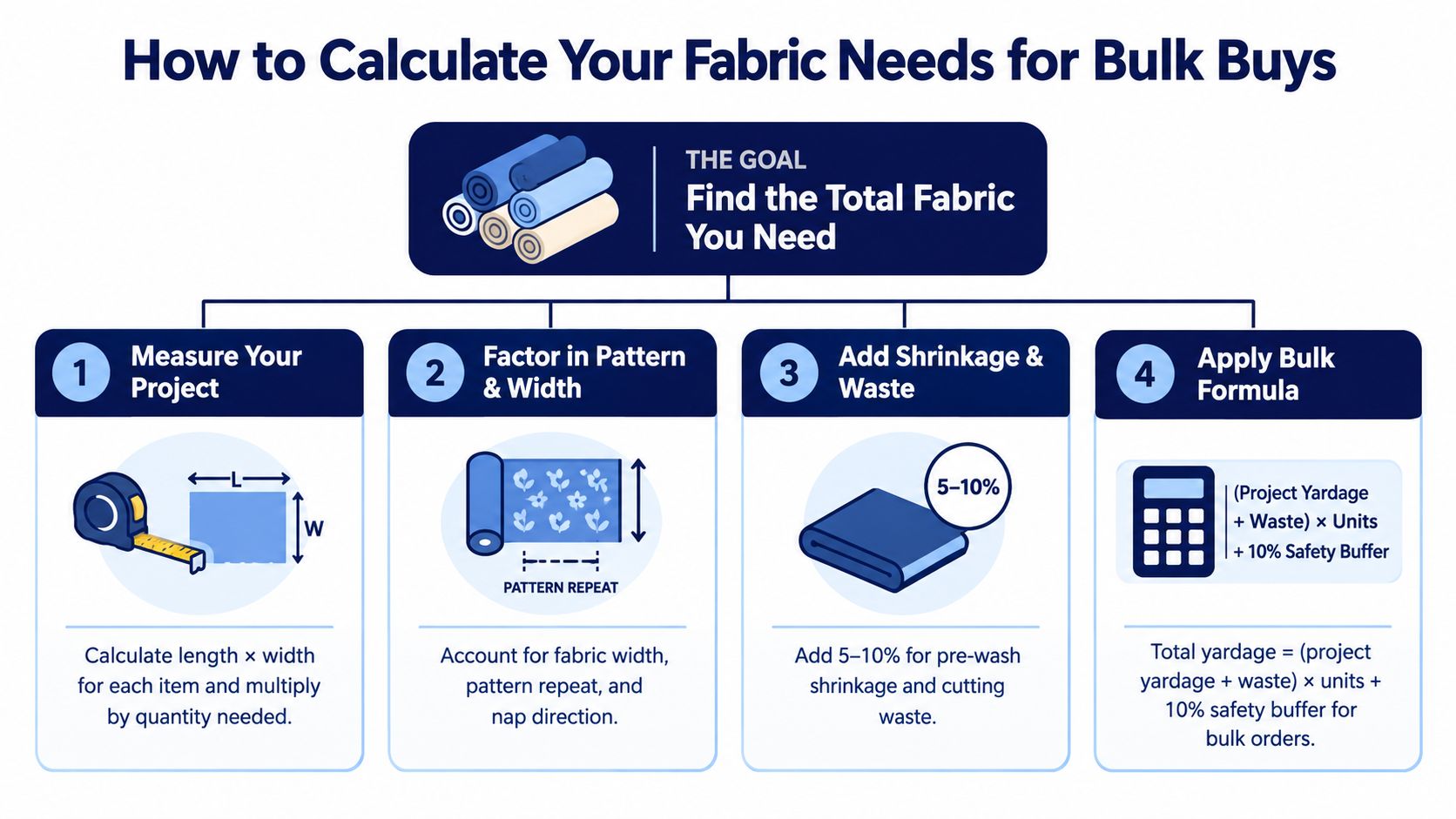
This visual breaks down who we see buying bolts most often. It’s a smart move for a wider range of creators than you might think.
As you can see, buying full bolts is a go-to strategy for serious quilters, from dedicated hobbyists to small business owners.
Essential Factors in Your Calculation
Before you pull out the calculator, account for these key variables:
- Pre-Washing Shrinkage: Most quilting cottons shrink about 3-5%. If your project calls for 10 yards, plan on buying at least 10.5 yards to be safe.
- Pattern Repeats: If you’re working with a directional print, you’ll need extra yardage to make sure the pattern lines up correctly across seams.
- "Fussy Cutting": This is the art of cutting a specific motif out of the fabric. It creates stunning blocks but also more waste. If you plan to fussy cut, add 15-25% more fabric to your order.
Real-World Calculation Examples
Let's run the numbers for a couple of common scenarios.
Example 1: Sashing and Borders for a King-Size Quilt
Imagine your quilt top is 90" x 100" and you want to add 3" sashing strips and a final 6" border.
- Calculate Total Length: First, add up the total length of all sashing strips and border pieces needed. Let's say it adds up to 1,580 inches.
- Convert to Yards: Divide that by 36 (the number of inches in a yard): 1,580" ÷ 36 inches/yard = 43.9 yards.
- The Bottom Line: For a massive project like this, buying three 15-yard bolts of a blender or solid is the perfect solution. You’ll have what you need plus extra for binding or your stash.
Example 2: A Longarmer Stocking Up on Backing
A professional longarmer quilts about five queen-size quilts (around 90" x 108") a month. To save time, they only use 108-inch wide backing fabric.
- Yardage per Quilt: A queen quilt needs about 3 yards of 108" wide fabric (108" length / 36" per yard = 3 yards).
- Monthly Need: Multiply that by the number of quilts: 3 yards/quilt x 5 quilts/month = 15 yards per month.
- The Bottom Line: For this longarmer, ordering one 15-yard bolt of 108" wide backing each month is a no-brainer. Seeing these large rolls in person at our Springfield, Tennessee showroom often helps pros visualize just how much fabric they're getting.
Expert Tip: When calculating backing, always add at least 4-6 inches of overage on all four sides. This extra fabric is essential for loading the quilt onto a longarm frame. To dive deeper, check out our guide on how to properly make a quilt sandwich.
By planning ahead, you can confidently invest in a full fabric by the bolt, knowing your creative flow won’t be stopped by running out of your favorite print.
How to Store and Care for Your Fabric Bolts
So you've made a smart investment by buying fabric by the bolt. Now, let's talk about how to protect it. Good storage is about more than just keeping your sewing space tidy; it’s about making sure your fabric's quality and color are perfect years from now.
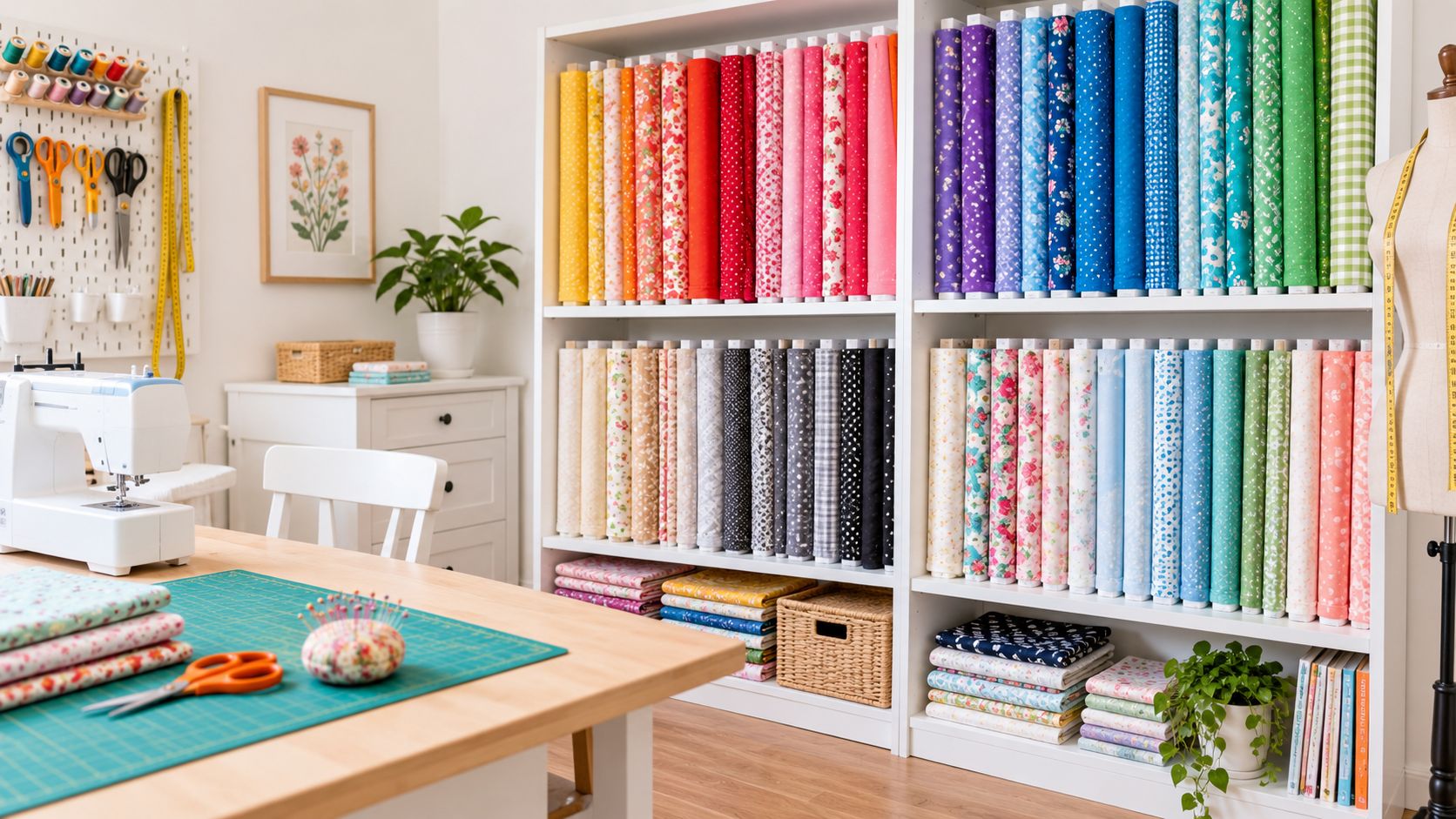
The number one rule is to keep your fabric out of direct sunlight. UV rays will fade vibrant colors over time. Find a spot for your fabric away from the windows.
Creating the Right Environment
The perfect spot for your fabric stash is cool, dry, and clean. This protects it from moisture and dust. While it seems like a good idea to seal bolts in plastic, this can trap humidity and lead to mildew.
Instead of using airtight containers, look for storage that lets your fabric breathe. Open shelving or fabric-lined bins will protect your investment without creating a moisture problem.
For long-term storage, the most useful advice is surprisingly simple: keep textiles clean, dry, protected from light, and away from trapped moisture. That same principle shows up in broader textile-storage guidance, including household clothing storage recommendations via MG Self Storage. I would also avoid storing heavy bolts where they can be crushed under other supplies for months at a time.
Best Practices for Rolling and Storing
- Prevent Creases: Avoid stacking bolts horizontally for long periods. The weight can press hard folds into the fabric on the bottom. Storing them upright in cubbies is a better solution.
- Embrace the Mini-Bolt: For smaller cuts, wrap the fabric around comic book boards. This creates neat "mini-bolts" that look great on a shelf and make it easy to see your collection.
- Fight Dust and Odors: Keep your sewing space clean. You can also tuck cedar blocks or lavender sachets onto the shelves to keep pests away and ensure everything smells fresh.
Finally, pre-washing your fabric before a project helps relax the fibers. Give it a good press with a quality iron, and you’ll have pristine material ready for your machine.
Your Questions About Buying Fabric by the Bolt Answered
What is a bolt of fabric?
A bolt is a packaged length of fabric wound around a board or core so it can be handled, displayed, and sold as one unit. In a fabric shop, the bolt is the full package; when you order a few yards, the seller cuts that amount off the bolt.
How many yards are on a bolt of fabric?
There is no single fixed yardage. Typical consumer-facing ranges are often 8–10 yards for bulkier fabrics, 10–15 yards for many quilting fabrics and wide backings, 15–25 yards for many apparel fabrics, and 20–40 yards for some home décor or utility fabrics. Larger commercial bolts can run longer than that.
How wide is a bolt of fabric?
A bolt can be many different widths because width depends on the fabric category, not the packaging term. Common widths are 42–45 inches for quilting cotton, 54–60 inches for many apparel and décor fabrics, and 90–108 inches for specialty quilt backing products.
What size is a bolt of fabric?
When people ask about bolt size, they usually mean both width and total yardage. A practical answer is that many bolts sold to quilters and home sewists fall somewhere between 8 and 40 yards, with widths commonly ranging from 42 inches up to 108 inches depending on the fabric. Always check the listing or bolt-end label for the exact dimensions.
What is the difference between a bolt and a roll of fabric?
A bolt usually refers to a packaged retail or wholesale unit of fabric wound around a board or core. A roll is a broader term that can include bolts, batting rolls, upholstery goods, or larger warehouse packaging. In casual use they may overlap, but “roll” is generally less specific.
How much does one bolt cost?
The total price depends on per-yard price × total yardage, then changes again with width, fiber, and brand. A quilting cotton bolt might land around $80 to $210 if the fabric runs $8 to $14 per yard and the bolt holds 10 to 15 yards. A 108-inch backing bolt can cost much more because wider fabric usually has a higher per-yard price.
Frequently Asked Questions
Is there a difference between a bolt and a piece of cloth?
Yes. A bolt is the whole packaged unit of fabric as sold by the store or wholesaler. A piece of cloth is a general term for any cut or section of fabric and may be just a few inches, a yard cut, or an unfinished remnant.
How much is in a bolt of cloth?
For most home sewing categories, think in ranges rather than a single number: 10–15 yards is common for quilting cotton and some backings, while 20–40 yards is more common for some utility and décor fabrics. Commercial packaging can be longer than what many retail shoppers see.
Why can two bolts have the same yardage but very different prices?
Because total cost is driven by more than linear yards. Width, fiber content, weave, finish, brand positioning, and whether the product is a printed quilting cotton or a wide specialty fabric all affect price.
Should I buy a full bolt for one project?
Only if the project uses enough yardage to justify it or if you know the leftovers will be useful. I usually think a bolt makes the most sense for backings, neutrals, business production, guild sewing, or any fabric I expect to cut repeatedly.
Shop our latest quilting cottons collection here.
Join The Weekly Thread for more tips and 10% off your first order.